
If you follow our blog, you know that we have focused heavily on Balkan food and recipes in the past, especially on Serbian recipes and in this article, we’re doing a bit different approach and covering some Serbian drinks that you can use to wash down all that tasty Serbian food. From the bubbling pots of strong, aromatic Serbian tea, to the fiery depths of rakija, here are some of the country’s most popular drinks.
Brief History Of Serbian Drinks


Dating back to the Middle Ages, the foundations of Serbia’s drinking culture were laid with the cultivation of grapes and the ensuing fermentation miracles. Monastic vineyards became the cradles of what is now an established wine industry, with Prokupac and Tamjanika holding their own against global varietals.
As for the renowned Serbian rakija, well, its birth is as fiery as the drink itself. Homemade distillation practices sprouted like fruit trees across the rural landscape in the 19th century. This gave birth to countless local varieties of this potent spirit, from the plum-based Slivovitz to the delicate Kaisieva made from apricots.
Non-Alcoholic Serbian Drinks
Serbia is mainly famous for its alcoholic beverages but we’ll start this list of the best Serbian drinks with a few non-alcoholic beverages that can satisfy everyone’s flavor just to show that Serbian cuisine has plenty of other non-alcoholic choices too.
Turkish Coffee


We’re starting off this list of the best Serbian drinks with Serbian coffee (read Turkish coffee) often referred to as ‘domaća kafa’ or ‘domestic coffee’, courtesy of the Ottomans who, introduced coffee to the region. It’s a drink that’s as rich in flavor as it is in tradition, prepared in a long-handled pot known as ‘džezva’. The coffee is strong, aromatic and full-bodied, often served with a sugar cube and a glass of water to cleanse the palate before consuming.
Boza


Boza is a delicious fermented beverage that is popular in several countries, particularly in the Balkan region and the Middle East made from various grains, but most usually wheat, barley, corn, or millet with the exact recipe varying depending on the region where it’s being prepared. The traditional boza recipe involves fermenting the grains via a specific strain of yeast or lactic acid bacteria, a process that gives the drink a slightly fermented flavor and small percentage of alcohol with a creamy texture with a sweet, tangy and slightly sour flavor.
Salep

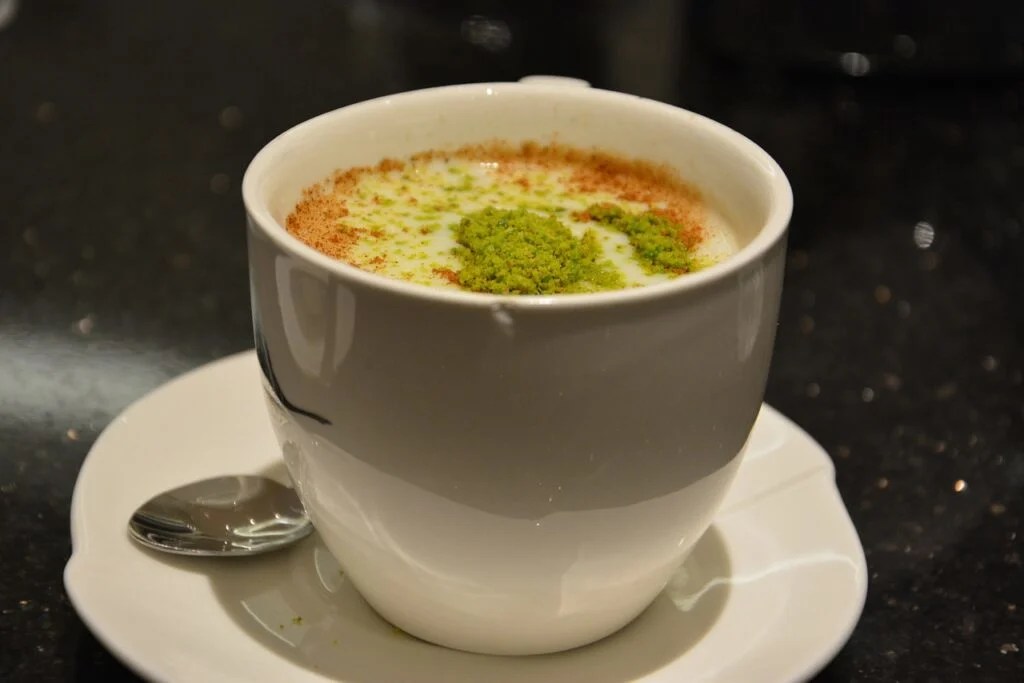
Salep, or sahlep, is a warm, creamy drink made from orchid tubers that was also introduced to the Balkans by the Turks. The tubers are ground into a fine powder that when boiled in water and milk makes up a perfect warm beverage for the cold winter days.
Elderflower Syrup


For Serbians, these delicate blossoms are more than just pretty flowers- you see Serbians have used these for centuries to make a refreshingly sweet syrup that’s traditionally drank to celebrate the arrival of summer. The blossoms are soaked in water for a couple of days and after straining and boiling the mixture with sugar, a fine syrup that’s one of Serbia’s most popular drinks is produced.
Natural Fruit Juices


Serbia has a lot of fertile land and a lot of fruits, so over the years, locals have used these fruit to make some delicious fruit juices. If you thought that all they make here is rakija, you were wrong. You can find sokovi from practically anything, including apples, plums, peaches, sour cherries, raspberries, and so on (just like rakija). These juices are natural refreshing, have a longer shelf life and are much healthier than the ones you get in the supermarket.
Alcoholic Serbian Drinks
Finally, we have gotten to the kinds of drinks Serbia is famous for across the world. With its exotic flavor and spicy kick, Serbia’s alcoholic drink scene offers a lot of heavy hitters, so unless you’ve tried similar drinks before, go easy when you try it.
Rakija


Rakija is a distilled fruit brandy originating from the Balkan Peninsula, used as an aperitif, a medicine, as a window cleaner, as a spirited elixir, and so much more. Its usage is basically unlimited. It’s made of fermented fruits, basically any fruits, think plums, apricots, apples, grapes, quince, cherries, pears, walnuts- the list is basically endless, as you will be able to see in some of the examples below, starting with…
Šljivovica


The most popular and internationally recognized type is Šljivovica or Slivovitz (which is also popular in neighboring Macedonia, Bulgaria, Montenegro, and Bosnia), a potent Rakija made from plums. It’s traditionally consumed neat and sipped slowly (I know it’s served in a shot glass but if you rush with it, you’ll get drunk faster thank you can say slivovitz).
Rakije Od Kajsija

This rakija variety is made of the ripest, most flavorful apricots, that are left to ferment and once the apricots have fermented adequately, the mixture is distilled to produce rakije od kajsija, a full bodied apricot brandy with 40% to 50% alcohol with a slightly sweeter flavor than most other fiery rakija varieties. but don’t be fooled by its strength.
Dunjovača

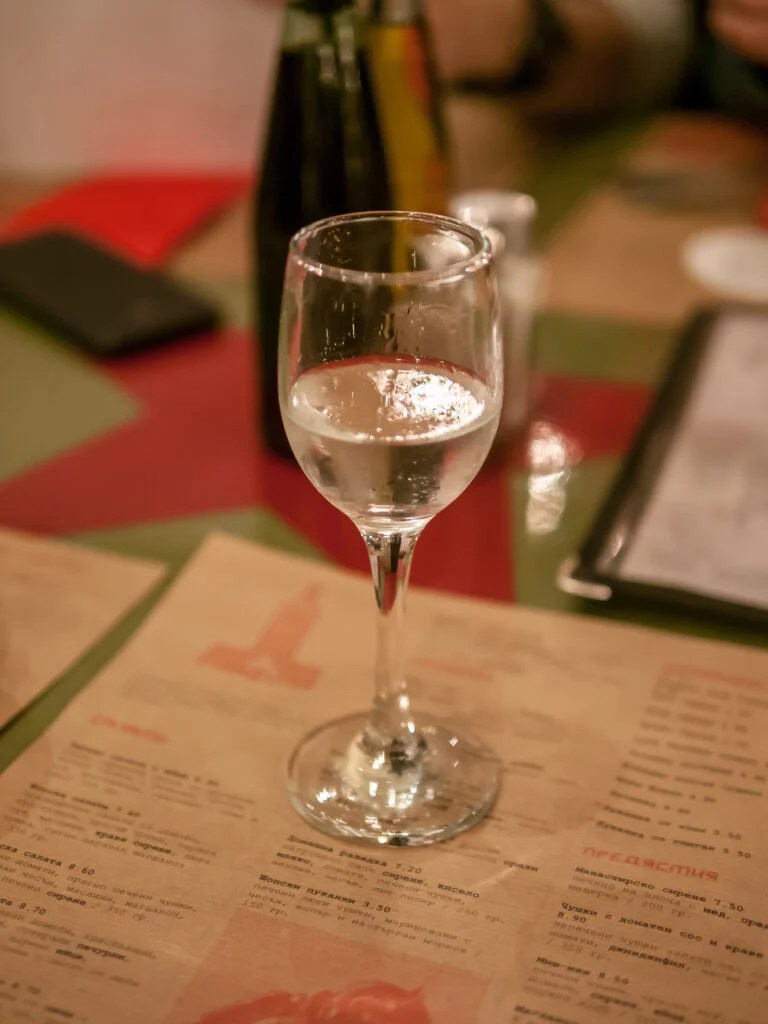
Dunjovača, is a rakija made of quince, a fruit that looks like it couldn’t decide whether to be an apple or a pear and decided to be neither. The fruit is just tarty and has no flavor and its fermentation results in a dry rakija variety with very strong and smoky flavor which does require having a bit of an acquired taste in order to drink it (so not everyone’s cup of tea).
Komovica

Komovica is yet another rakija variety usually made of grape or pomace, is a special kind of Serbian spirit that is often considered to be a poorman’s rakija because it’s made from the pomace, which includes the grape skins, seeds, and stems. It’s a hard rakija, more robust and with a strong smoky flavor and smell.
Pelinkovac


Pelinkovac is a kind of a brandy a bit different than the other rakija varieties because it comes with a dark color and a bittersweet flavor. It’s made of wormwood brandy, a herb known for its bitter taste and medicinal properties. The result is a richly aromatic, deeply bitter, and incredibly nuanced drink that often catches you off guard when you’re trying it for the first time because you probably never tried anything like it before.
Vilijamovka


Vilijamovka, as its name suggests is a rakija made of Williams pears. It’s a sophisticated rakija variety with a very distinguishable, peary smell and sophisticated, slightly sweet flavor, all while bieng as fiery as the strongest rakija varieties out there.
Medovača

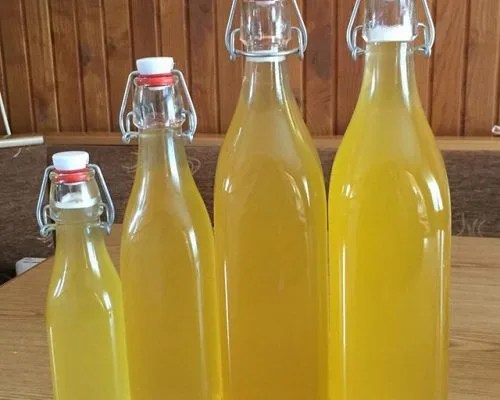
Medovača is technically a type of rakija that combines the robustness of brandy with the soothing sweetness of honey. It’s the sweetest rakija variety out there but it’s not entirely made of honey. It usually uses a slivovitz or a grape rakija and infuses it with honey for a unique sweet flavor that can often trick you, so be careful, this one is as strong as the other ones.
Vinjak

Vinjak is Serbia’s Ali Express version of cognac. With its pinkish color, strong smell, and distinct flavor profile, Vinjak is one of the most popular Serbian drink among local drunks. It’s made of grapes, often homemade and without passing standardisation tests, it has a stronger, more robust flavor, more rustic edge compared to Cognac, and a higher alcohol percentage.
Serbian Wine

This list of the best Serbian drinks couldn’t be complete without writing a few words about local wine. Serbia’s wine culture dates back over 1,000 years, making it one of the oldest winemaking regions in Europe. Serbia is home to around 70,000 hectares of vineyards, with the most popular local grape varieties being Prokupac and Vranac for reds and Smederevka and Tamjanika for whites.
Serbian Beer

While wine and rakija might dominate the Serbian drinks scene, the country’s beer culture is also worth mentioning. Serbia’s brewing traditions date back to the 18th century and since then it has become home to several established breweries, including Apatinska Pivara, known for its popular Jelen Pivo, the Belgrade Brewery, producer of the widely loved Lav Pivo, and of course the Zaječar Brewery, producer of the famous Zaječarsko.
Kvass

Kvas is a fermented brew with an earthy personality popular in some Eastern European countries, Serbia being one of them. This traditional drink starts its journey as simple rye bread given a second life transformed through fermentation into a thirst-quencher with a tang. The bread is fermented in a mixture of yeast and sugar and then mixed with herbs-infused water in a surprisingly refreshing drink with a unique twist.
Medovina (Mead)

Last but not least, we wrap up this list of the best Serbian drinks with Medovina. Not to be confused with Medovača which is technically a honey-based rakija/brandy, Medovina is a sweet liquor created by fermenting honey with water (and sometimes mixed with other fruits and herbs). Medovina can range from sweet to dry in flavor, still to sparkling in texture, or low to high in alcohol content, depending on one’s preference.
How did you like our list of the best Serbian drinks? Did you ever try any of them? Did you fall in love with any of them? Do you know of any other Serbian drinks we didn’t include in this list? Let us know in the comments below.
Like it? Pin it.
