
Rakija is like the Balkan spirited answer to the world’s love for diversity in a glass and the Balkan is home to many different types of rakija. But why so many Rakija varieties, you ask? Well, if you ask a Balkan person, they would tell you that you can make rakija from any fruit you can get your hands on, and then some and in this article, we’ll not only introduce you to the most popular rakija varieties but also teach you everything there is to know about this delicious Balkan brandy.
What Is Rakija?


Rakija (or “rakia” if you prefer to sound less like your gargling marbles) is the Balkan answer to “How do we make fruits more interesting?” Spoiler alert: they ferment them into oblivion. So, you can basically take any fruit, be it grapes, plums, apples, berries, and so on, you ferment it, let it stay for a while and you get a fierce, spicy brandy that packs a powerful punch.
How Many Rakija Varieties Are There?


It’s very hard to answer this question because rakija can be made from practically every fruit or even vegetable. In this article, we’ll discuss the 25 rakija varieties that are popular in different parts of the Balkan but that doesn’t mean that rakija can technically be made from another fruit or a combination of fruits and technically become another new type of rakija.
Now that we covered some basics let’s get to the meat and potatoes of this article- the most popular rakija varieties you can find in the Balkans.
Šljivovica


We’re starting this list of the most popular rakija varieties with Šljivovica, the superstar of the rakija family, made from, you guessed it, plums. The process starts with picking the right fruits suitable for processing, mashing them (a bit aggressively) and leaving the mixture to ferment before baking it and turning it into that spicy white liquor everyone in the Balkans adore.
Lozova/Lozovača


This list of the most popular rakija varieties couldn’t be complete without Lozovača, a rakija variety made from grapes and yellow in color. This rakija variety can be found in Serbia, Bosnia, Macedonia, and Montenegro but it’s most popular in Macedonia, especially in the southern parts that have a climate ideal for grape growing.
Komovica


Komovica is an often underrated rakija variety, kind of like the bass player of a rock band- not always in the spotlight, but oh, how you’d miss it if it wasn’t there. This rakija is made from what’s left after winemaking: the pomace, which includes the grape skins, seeds, and stems. Now, you might ask how does Komovica differ from Lozovača? And the parallel I’d tell you is that Lozovača is the smooth-talking diplomat in a silk suit, while Komovica is the rugged outdoorsman in a leather jacket. It’s harder, has a more robust, slightly smoky flavor and a stronger smell. Popular mainly in Serbia and Montenegro, Komovica has a special place in the hearts of those who appreciate a strong, honest spirit.
Vilijamovka


Vilijamovka is a rakija with a name that sounds like it should be wearing a top hat and monocle and it truly is a sophisticated variety made from a type of pears known as Williams pears. This pear rakija is particularly popular in Serbia and Bosnia and has a slightly sweet flavor while not sacrificing any of its spiciness at the same time.
Dunjovača


Dunjovača, is a rakija made of quince, a fruit that looks like it couldn’t decide whether to be an apple or a pear and decided to be neither. The fruit is just tarty and has no flavor and its fermentation results in a dry rakija variety with very strong and smoky flavor which does require having a bit of an acquired taste in order to drink it (so not everyone’s cup of tea).
Medovača


Speaking of different rakija varieties, we can’t forget about Medovača, the sweet talker of the family. It’s basically rakija infused with honey, a drink perfect for winter that feels like a sweet warm hug. The honey is usually added to either sljivovica or lozovaca (but the one made of white grapes) resulting in probably the smoothest and easiest to drink rakija variety out there.
Višnjovača


Višnjovača is the cherry on top of the rakija world (pun intended). Visnje is a Balkan cherry variety that’s acidic in flavor but this rakija doesn’t quite have an acidic flavor. Mainly because the fermentation process takes that away and because a lot of sugar is added in the baking process which makes the rakija slightly sweet (but not as sweet as medovaca). Višnjovača is especially adored in Serbia, Croatia, and Bosnia.
Kruskovac/Kruškovača


Kruškovača is another rakija variety that’s made of pear extract or pear flavouring. Technically, this one is a liquor and not a brandy. As the photo suggests, its alcohol volume is lower, it’s much sweeter in flavor, a more sophisticated rakija variety if you will.
Jabukovača


Nexrt on our list of Irresistible types of rakija, we have Jabukovača, a spirit made of fresh apples that’s usually consumed in autumns coinciding with the apple harvest season in the Balkans. It has a clean, crisp apple aroma and light, slightly tarty finish in your mouth, and is usually drier than most other varieties. Jabukovača is particularly popular in Serbia, Bosnia, and Croatia. It’s the drink you reach for when you want something a bit lighter, a bit fresher, but still with that rakija kick.
Travarica


Travarica is the rakija variety that comes the closest to a botanical garden of the spirit world. It consists of regular rakija infused with a bunch of different local herbs, and supposedly has a lot of medicinal properties and according to locals, it’s quite an immunity booster. As far as taste goes, it’s still spicy but naturally comes with an herby aroma and a mild, herby flavor. Travarica is popular all around but is particularly beloved in Croatia
Borovniček/Borovička


Borovička, not to be confused with something you’d use to freshen up your car, is a rakija variety that’s made from juniper berries, but its flavor actually tastes nothing like berries. It’s sweet but not as sweet as one might expect, then it’s also very dry with a harsh alcoholic kick and an unusually tick texture compared to its other counterparts. Borovička enjoys its fame especially in countries closer to Central Europe like Slovenia, Slovakia and the Czech Republic.
Kajsijevača
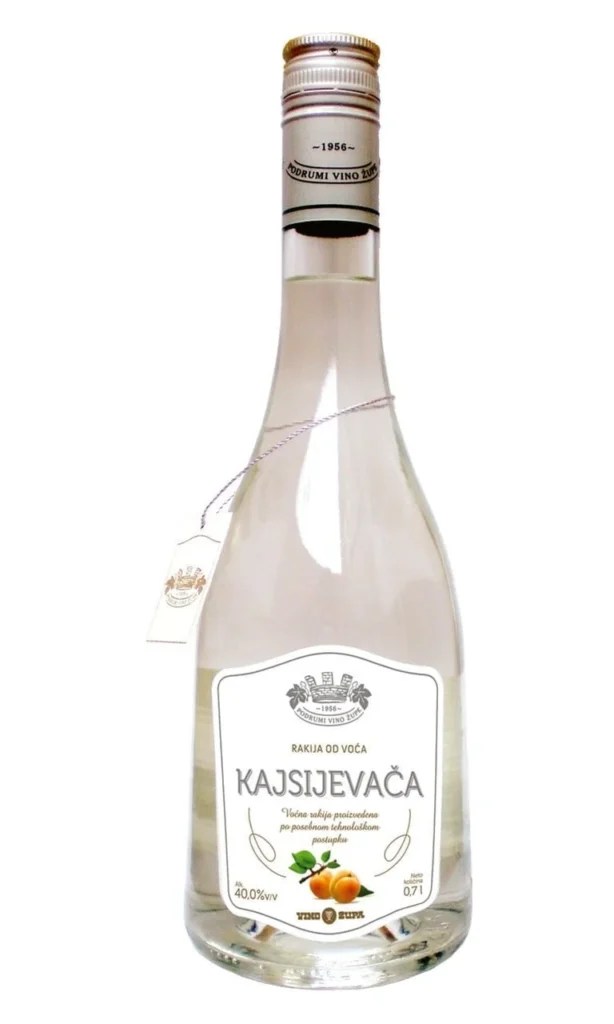
Kajsijevača, is a rakija variety made from apricots, for those who appreciate the finer, sweeter things in life, but still want a bit of a kick. Surprisingly, it’s not sugary — it’s dry, has a delicate aroma of apricots but not much of their flavor, and of course the mandatory alcoholic kick. Kajsijevača is particularly beloved in Serbia and Hungary. It’s the drink of choice when you want to impress your guests or when you’re trying to convince yourself that you’re having fruit for dinner.
Dudovača

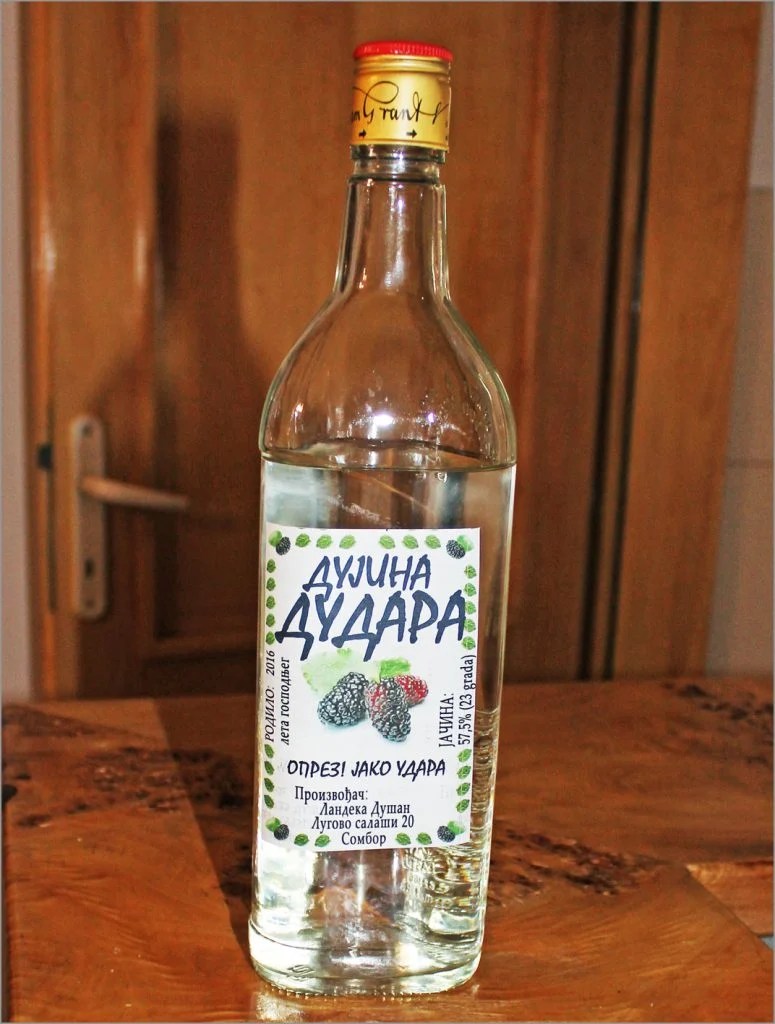
Dudovača, is a mysterious rakija variety made of a mysterious fruit that most people in the Balkans don’t even eat fresh, so I guess you could say that making rakija out of them is actually their primary purpose. This one is earthy, with a musky undertone, and a deep, almost jammy fruitness but it smells sweeter than it tastes. Dudovača is particularly popular in Serbia and Bosnia.
Drenja

Drenja is one of the lesser-known rakija varieties and this unique member of the rakija family is made from cornelian cherries (smaller in size and a lot more sour), an underrated fruit that’s been waiting in the wings for its moment to shine. This rakija variety has a very strong arome of red berries, it’s not sweet, it’s more of herbal and clean, tarty, slightly citrusy, and with an elegant finish.
Smokvovača
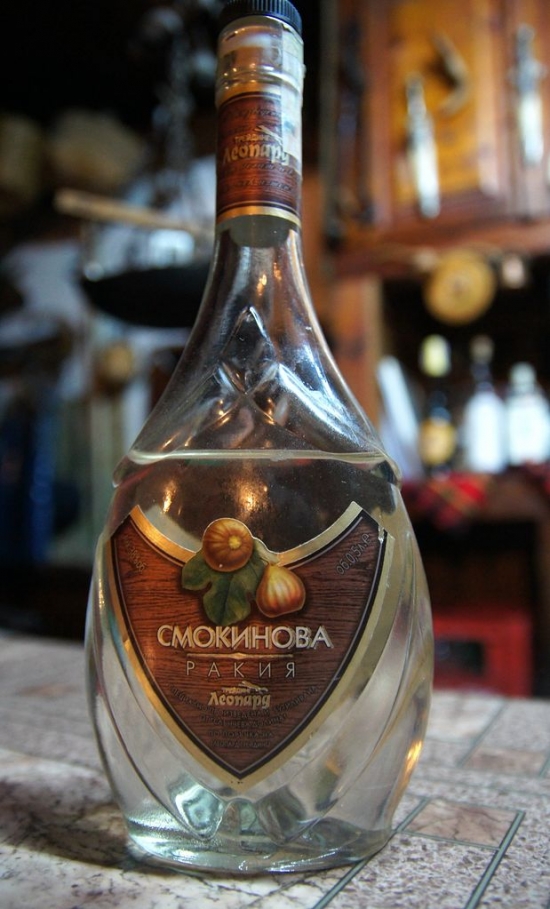
Smokvovača is one of the sweetest rakija varieties out there, and yes, that’s right, the Balkans make liquor out of figs too. This variety is like the sophisticated cousin who vacations in the Mediterranean. It comes with a rich flavor, natural sweetness, and feels slightly caramelized (but just slightly), carefully walking the line between liquor and rakija but choosing to stay on the rakija size. Smokvovača is particularly popular in coastal regions like Dalmatia.
Klekovača

Klekovača is one of the types of rakija made from juniper, which gives it a flavor that’s as enigmatic as it is invigorating. It has a smell of juniper and a very very mild taste of it with notes of resin and herbs but doesn’t really feel fruity. Good klekovača warms you from the inside out, kind of like a mountain bonfire. Klekovaca is particularly popular in Bosnia and Herzegovina, and according to locals, it has supposed medicinal properties.
Orahovača / Orahovac


Orahovaca is one of the most unusual types of rakija, made from (you’ll be surprised to hear this) wallnuts. The preparation starts with green walnuts, picked just before they get ripe. These walnuts are steeped in a base spirit, often grape or plum rakija, along with a blend of spices that might include anything from vanilla to cloves that gives this rakija variety a very distinct flavor. Orahovača is particularly beloved in Croatia and Serbia, where it’s often homemade and sipped on special occasions.
Mastika


Mastika is a rakija variety that’s like the intriguing character in a spy novel – a bit mysterious, definitely captivating, and with a hint of exotic. This spirit is made from mastic, a resin from the mastic tree which gives it a unique flavor – think pine, herbs, and a whisper of the Mediterranean. This said resin is mixed with a base spirit, often grape rakija, resulting in a drink that’s both refreshing and it hits you at the same time. Mastika enjoys its fame predominantly in the Balkan region, particularly in Bulgaria, Macedonia, and Greece.
Praskova

Praskova, the rakija variety that’s like the intriguing character in a spy novel – a bit mysterious, definitely captivating, and with a hint of exotic. This spirit is made from mastic, a resin from the mastic tree. The mastic resin gives it a unique flavor – think pine, herbs, and a whisper of the Mediterranean, all mingling at a classy soiree in your mouth. This resin is mixed with a base spirit, often grape rakija, resulting in a drink that’s both refreshing and a little enigmatic, like a breezy evening on a Greek island. Mastika enjoys its fame predominantly in the Balkan region, particularly in Bulgaria, Macedonia, and Greece.
Pleterski Brinjevec

Pleterski Brinjevec, now that’s a rakija variety with a name that sounds like it could be a character in a medieval epic. Pleterski Brinjevec is one more of the rakija varieties made of juniper berries. It’s similar to Bosnian klekovaca but a slightly smoother, more sophisticated version. Pleterski Brinjevec is particularly popular in Slovenia, especially around the Pleterje Carthusian Monastery, where monks have been perfecting the art of making this unique spirit for ages.
Prepečenica

Prepečenica is the rakija variety that’s basically the “double agent” of the spirit world; it’s rakija that’s been distilled not once, but twice, because sometimes once just isn’t enough. This one is the true test of Balkan liver endurance, it’s the strongest, cleanest, and most intense rakija variety. It’s not fruity, it’s not sweet, it’s quity smoky, it has a nutty finish and makes you feel it in your chest, your ears, and your ancestors.
Stomaklija

This list of rakija varieties couldn’t be complete without stomaklija, the rakija variety that’s essentially the Balkans’ answer to “How do we make a spirit that also doubles as a digestive? It’s typically made from a base spirit, usually grape rakija, which is then infused with a variety of herbs like mint, anise, fennel, and chamomile. Popular particularly in Serbia, Stomaklija is the drink you reach for after a hearty meal.
Zoval/Bozel

Zova or Bozel, depending on who you’re chatting with, is a type of rakija that’s made from the the botanical underdog, elderflower. The process of making this rakija involves infusing a base spirit, often grape or apple rakija, with elderflowers. Zova/Bozel is particularly beloved in parts of Croatia and Bosnia and it’s the kind of drink you turn to when you want to impress with something a little out of the ordinary.
Imela Rakija

Last but not least, we conclude this list of different types of rakija varieties with imela. It’s made from mistletoe – yes, the same stuff you find dangling in doorways during the holidays. It brings a different, herbal and somewhat earthy flavor but it smells a little bit like freshly cut wood. It’s slightly bitter with juniper-like notes, and supposedly has medicinal properties. Imela Rakija is particularly popular in Istrija (Croatia).
Which Dishes Go Well With Different Types Of Rakija?


Unlike most brandies around the world, rakija’s best friends are the local salads- sopska salad, Greek salad, mixed salad, and other popular Balkan salad varieties. However, rakija also goes well with different kinds of barbecue like pljeskavica or cevapi but most rakija varieties can also be combined with slow-cooked dishes like pasticada, peka, or even shkembe chorba.
However, let’s go a step further and give some more specific guidelines about what type of rakija goes well the best with which kind of food. For example, Šljivovica goes very well with grilled meats or hearty stews. Lozovača, Vilijamovka, and Mastika are rakija varieties you can have with light appetizers like a salad, cheese and charcuterie.
Medovača, Višnjovača, and the other sweeter rakija varieties go well with desserts like apple pie, vanilice, or baklava while travarica is the best kind of rakija to combine with Croatian seafood.
Kajsijevača and most of the berry-based types of rakija go perfect with most Balkan stews or stir fries, and Dunjovača/Orahovača go best with lighter meats like chicken or turkey. Last but not least, stomaklija, imela, zovel, and klekovača are types of rakija that go well after a meal, and Prepečenica is the kind of rakija you drink when you want to get hammered.
How did you like this list of rakija varieties? Did you ever try any of these types of rakija? Feel free to share your thoughts in the comments below.
Like it? Pin it.
