
Are you ready fond of South Indian cuisine? Then we have a special treat for you in the shape of a soft, fluffy pancake surrounded by a lace-like crisp edge; a dish that’s a simple meal. a conversation starter, and a significant part of South Indian cultural heritage. In this article, we’ll show you the traditional Vellayappam Recipe and teach you everything there is to know about this delicious dish, including its origin, history, cultural significance, and much more.
But first things first…
What Is Vellayappam?


Vellayappam is kind of like a fermented pancake using rice and coconut, South India’s most common staples. It’s you take a mix of a flatbread and a crepe, and use fermentation to give it a hint of tang and sweetness (and appearance with tiny holes that somewhat resembles Moroccan baghrir). It’s light, has a subtl flavor, crispy edge, and a pillowy interior.
It’s also versatile- you can serve it next to a stew or curry, replacing the flatbread for dipping, you can serve it on its own like a quick snack or you can combine it with a dab of coconut chutney.
Vellayappam Origin


Vellayappam originates from the lush, swaying palm landscapes of Kerala, a state whose cuisine is heavily reliant on coconuts and where fermentiation is a centuries-old culinary tradition. The vellayappam recipe—a seamless blend of ground rice and coconut milk, left to catch wild yeasts from the tropical air—was possibly influenced by the intermingling of local culinary practices with those of Portuguese colonists, who brought with them the art of leavening.
It’s this natural fermentation that gives vellayappam its characteristic puff and subtle tang, making it a local staple that has graced breakfast tables for centuries. Vellayappam may not have the worldwide fame of some of its Indian flatbread cousins, but in of Kerala, it’s as classic as the backwaters that are the pride and joy of the region.
Are you a fan of pancakes? Then you may also like our palacinke recipe (the Balkan pancake).
Vellayappam In South Indian Culture


In South India, vellayappam is a popular breakfast dish (but not just breakfast but more about this later), a cultural cornerstone in South Indian households, and a conversation starter. It’s a dish that starts the day, perfuming the air with the smell of its tangy fermenting rice batter, while non-stick pans sizzle in anticipation.
You’ll find it at family feast, communal gathering, and even at celebrations and festivities- it’s omnipresent and its versatility makes it one of the region’s most cherished staples.
Vellayappam Recipe Variations


From the coastal hug of Kochi to the spice-scented hills of Idukki, velyyappam comes in different variations. The traditional version sticks to the tried-and-true rice batter and coconut milk combo, while in other parts of India’s south, you can find varieties that feature toddy fermentation.
Go down to Thiruvananthapuram, and you’ll find people adding a spoonful of sugar, turning the humble vellayappam recipe into a sneakily sweet delight and an awesome dessert. In Thrissur, they use cumin and pepper, giving it a slightly spicy kick and in Kottayam, they don’t mix up the recipe but serve it with a side of chicken stew.
Are you a fan of Indian snacks? Then maybe you’ll also like our pani puri recipe, our paan recipe and our jhalmuri recipe.
Preparation Tips


- Yeasty Beastie: Getting that ferment just right is key, the traditional way is to go with a dash of toddy for or a pinch of yeast.
- Rice: Go for parboiled variety or raw rice and soak it long enough.
- Coconut: Fresh coconut milk is the only way to go.
- Sweet Spot: A hint of sugar isn’t a sin.
- Rest and Rise: Give your batter a good night’s rest and enough time to puff up nicely before it hits the pan.
- Prep: Your pan should be hot, but not a smoky mess. A medium flame will is perfect for making your vellayappam.
- Don’t flip: Vellayappam is a one-side affair, just let the top steam to perfection with a covered pan.
Serving
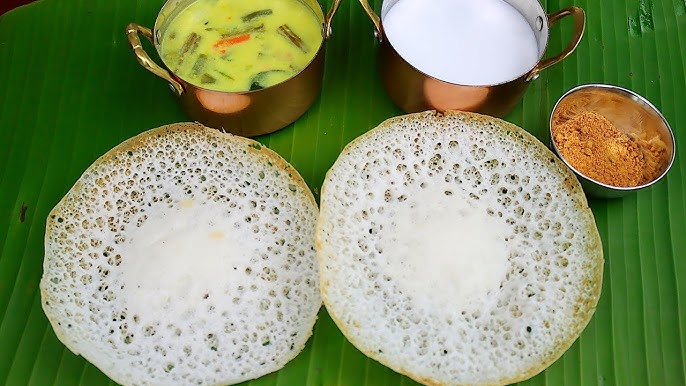
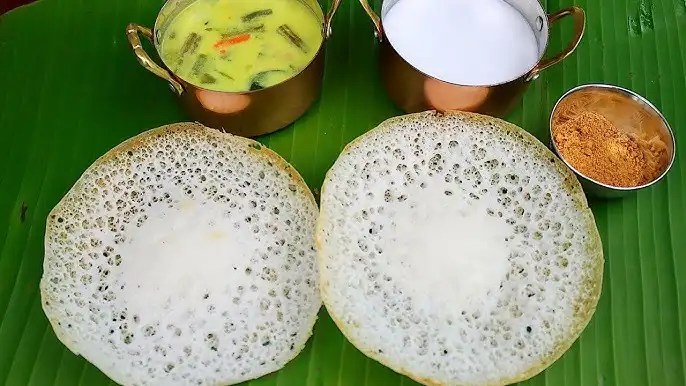
Now that we covered the most important basics, let’s get to the last step- serving. On the side dish front, vellayappam usually gets paired up with a rich and robust coconut stew or with kadala curry. Another popular option is the South Indian egg roast, a spiced masala of onions and tomatoes that can turn your vellayappam breakfast into a brunch, or the popular kappa (tapioca) us also always a nice choice.
As we already mentioned vellayappam is a versatile dish that can be eaten during any time of the day and it can even be eaten as an appetizer. If you’re having it for breakfast, you can combine it with a steaming cup of chai while if you have it later in the day, you can pair it up with a tangy glass of sambharam, local spiced buttermilk, or a glass of sweet lassi.
Enjoying this post? Then you may also like our guides:
A Few Things You May Nee


Mixer


Saucepan


Spatula
Vellayappam Recipe
So let's roll up our sleeves and dive into this article that will show you the traditional Vellayappam Recipe and everything there is to know about this delicious dish
Ingredients
- 2 cups of raw rice
- 1/2 cup of cooked rice
- 1/2 cup of grated coconut
- 1 teaspoon of active dry yeast
- 1 tablespoon of sugar
- Salt to taste
- Water as required for grinding
Instructions
1. Begin by soaking the raw rice in water for 4 to 6 hours, or overnight.
2. Drain the soaked rice and grind it in a blender with cooked rice, grated coconut, and water to make a smooth batter.
3. Transfer the batter to a large bowl, activate the dry yeast in lukewarm water with sugar, then add it into the batter. Cover and let it ferment in a warm place for 8 to 12 hours.
4. Once fermented, stir the batter gently and add salt to taste. The consistency should be slightly thicker than pancake batter.
5. Heat a non-stick pan on medium heat and pour a ladle full of batter into the center of the pan. Quickly swirl the pan to spread the batter out evenly in a circular motion.
6. Cover the pan with a lid and let the vellayappam cook for about 1-2 minutes.
7. Serving: Remove the vellayappam carefully using a spatula, repeat the process as many times as necessary, serve it alongside a glass of lassi, and enjoy!
Nutrition Information:
Yield:
5Serving Size:
1 ServingAmount Per Serving: Calories: 150Total Fat: 3gSaturated Fat: 2gTrans Fat: 0gUnsaturated Fat: 1gCholesterol: 0mgSodium: 150mgCarbohydrates: 28gNet Carbohydrates: 28gFiber: 1gSugar: 2gProtein: 3g
How did you like our vellayappam recipe? Did you ever try this South Indian delight? If you tried to make our recipe at home, don’t forget to leave us a rating and if you have any questions, feel free to ask in the comments below.
Like it? Pin it.

