
Pancakes are popular in all parts of the world with many countries coming up with their own variations of this delicious and always popular dessert. In this post, we’ll introduce you to baghrir- the Moroccan version of pancakes. So whether you like pancakes or are a fan of Moroccan cuisine, keep reading; in this post, we’ll share the traditional Moroccan baghrir recipe and teach you everything there is to know about this delicious pancake including its origin, variations, preparation (which takes around 1 hour), and much more.
But first things first…
What Is Baghrir?


Baghrir is a Moroccan spongy pancake (not to be confused with harcha which is also a type of Moroccan pancake but slightly different) riddled with tiny holes made of semolina flour and usually topped with sweet syrup, honey, or jam. Because baghrir is spongier than the average pancake, it’s lighter, and you can easily eat much more of it. Usually, baghrir is served for breakfast, as a Moroccan snack, in-between meals, or for Iftar during Ramadan.
Are you a fan of pancakes? Then you may also want to check out our lefse recipe and our syrniki recipe.
History & Origin


The ancient baghrir recipe was created by the Berbers, the native people of North Africa. Baghrir is a Tamazight (one of the Berber languages) word that translates to “too soft”. Since today’s borders didn’t exist back in the days, today, both, Morocco and Algeria claim dominion of the recipe but that’s a debate we won’t indulge in; we’re here just for the delicious pancakes.
Back in the day, the preparation method was a bit more complicated and time-consuming. The original baghrir recipe required letting the batter rise before it was ready to use but the introduction of baking powder to the batter made things a lot easier. In our baghrir recipe, we use baking powder but if you would like to try to make a batter the good, old-fashioned way, you’re welcome to do so.
In addition to Morocco and Algeria, baghrir is also very popular in North Africa and variations of it can be found in some other Arab countries. And since baghrir developed as a slightly different dessert in different regions, people’s approach to it is different. For example, Algerians usually eat it as breakfast while Moroccans eat it as a dessert and it’s especially popular during Ramadan.
Enjoying this post? Then you may also like our list of the best Moroccan breads.
Baghrir Variations


There are slight variations of the recipe in different regions but to be honest, most of them are fairly similar- all variations have a spongy texture and small holes that allow the pancake to absorb all the toppings you add. The dessert also has different names depending on the region or country.
For example, in the region around Constantine (Algeria), they use the name korsa. In Oranie (Algeria), it’s known as khringo, in Kabylia (Algeria)- tighrifin, while in Jijel (Algeria) it’s called tighrufine. Tunisians most often refer to the dessert as ghrayef while in Morocco, the dessert is also known as hatita (in the Eastern Rif region) and lahons (in western Morocco).
Similar variations of the baghrir recipe also appear in the Middle East where you can find similar crepes known as qatayef. The main difference is that this variation is filled with dates, walnuts, or shredded coconut. Lastly, there’s also a similar variation popular in Ethiopia and Eritrea known as injera, as well as in Somalia and Yemen known as lahoh but both of these variations are even lighter than baghrir because they use cornmeal and wheat flour instead of semolina.
And let’s not forget, different variations also feature different toppings. For example, in Morocco, the baghrir is usually topped with honey or sweet syrup, in Algiers, the crepe is usually topped with orange blossom water in cinnamon, in Kabylia- with olive oil and sugar, while in Southern Algeria, you can even find salty crepes topped with tomatoes and onion, and sometimes even dried meat.
Lastly, if you try all these variations, you’ll notice that there’s a difference in color among them. This is mainly because some recipes use only semolina flour while others use part semolina flour and part other flour and depending on the ratio, the yellow color associated with these pancakes can be lighter or darker (the smaller the ratio of semolina to other flours, the brighter the color will be). Our recommendation is to use only semolina flour or if you mix it with other flour to at least use a ratio of 3:1.
Preparation Tips


The two most important things for preparing the baghrir recipe are a special non-stick frying pan used only for making baghrir (if you struggle to find one, you can also use a regular pan for making American pancakes) and the right combination for the batter (we’ll give you all the detailed information about this in the recipe below). With that being said, here are a few important preparation tips about making baghrir.
- To make sure your batter is perfect, you’ll need a blender to blend the ingredients at high speed for at least 1 minute and then let the batter rest for at least 30-40 minutes before cooking
- The batter consistency is crucial- it should be similar to cream/crepe batter. Just follow the measured ingredients in our recipe and everything should be fine.
- Don’t forget to use active dry yeast when making the batter. Yeast helps semolina flour to rise faster and as a result, the pancakes are more spongy and airy.
- If you don’t have active dry yeast, you can substitute it with equal parts of vinegar/lemon juice and baking soda or with baking powder.
- If you use baking powder, don’t forget that it activates instantly and you’ll need to start cooking the pancakes right away (which means don’t wait for the batter to rest for 30-40 minutes before cooking as mentioned above).
- If you’re not getting the baghrir you imagined, try changing your pan. Don’t forget that not all pans are equal.
- If the bubbles don’t form properly, this might be a sign that the batter is too thick. Try thinning the batter with 1-2 tablespoons of water, stir it well, and give it a few more minutes to rest before trying again.
- If you have a good frying pan, you won’t have to use oil but you can use a lightly oiled paper towel to clean any residue between batches.
- Don’t worry about the size- there isn’t a standard size anyway. Baghrir is usually as big as your pan is.
Are you a fan of pancakes? Then you may also like our palacinke recipe (the Balkan pancake).
Serving


Baghrir is almost never eaten plain. Most usually, it’s topped with sweet syrup that transforms the simple pancake into a sweet breakfast or a coffee/tea-time treat. The most common topping options include syrup made of butter and honey, jam, orange blossom water and cinnamon, olive oil and sugar, or even ice cream. Many people also like to serve dried fruit after the syrup has been added to the top. Baghrir is usually eaten as a main breakfast dish alongside other light Moroccan dishes like taktouka, zaalouk, or as a snack alongside some amlou and a cup of coffee or Moroccan tea.
Storing Baghrir
Leftover baghrir can be kept at room temperature for up to 2 days when wrapped in plastic. In the fridge, it can stay up to a week, and in the freezer- up to 2-3 months. If you’re freezing baghrir, make sure to add a small piece of plastic wrap between every pancake to avoid sticking.
More Moroccan Recipes You Might Like
A Few Things You May Need
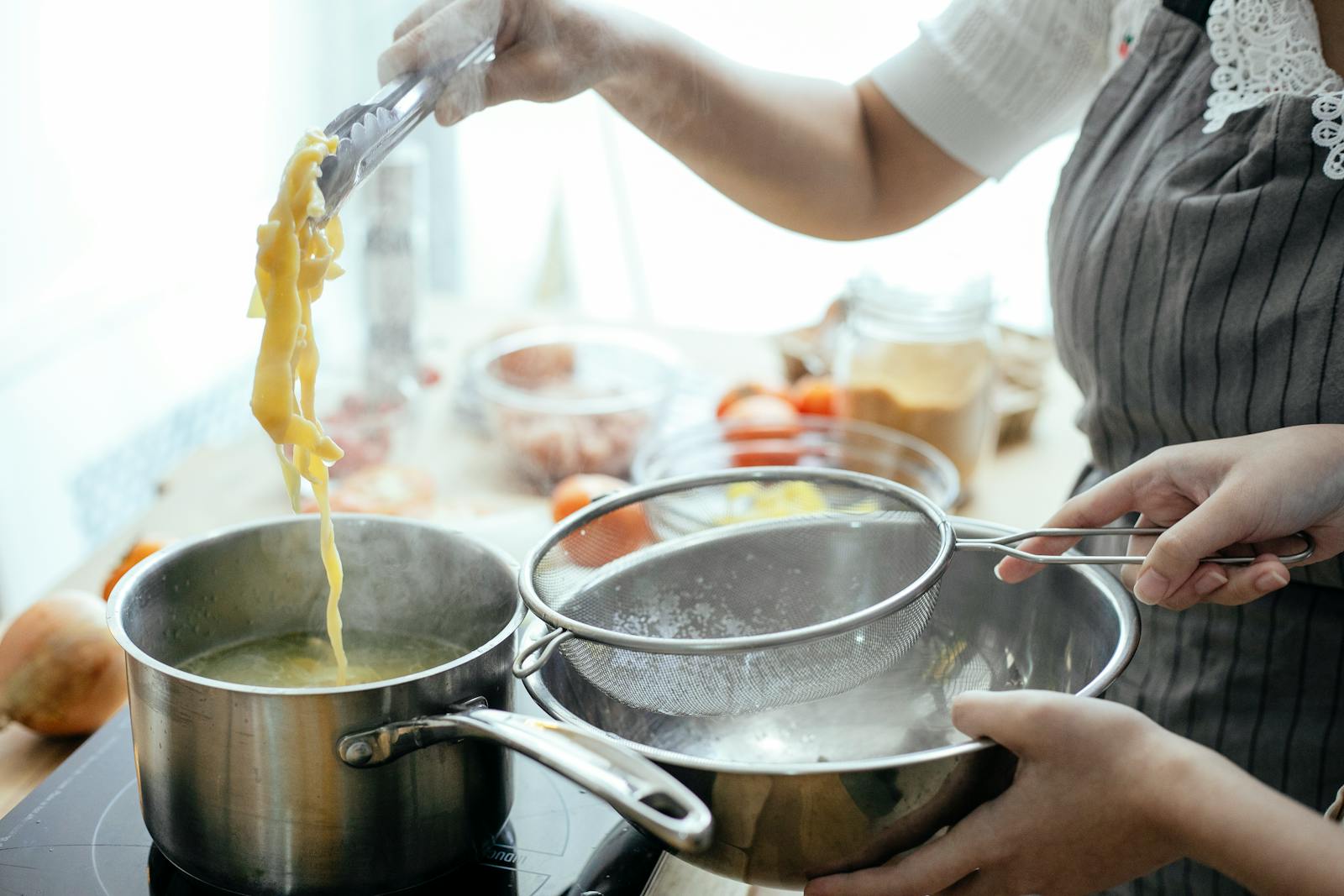

Mixing Bowls


Skillet


Blender
Baghrir Recipe- Moroccan Pancakes


In this post, we share the traditional Moroccan baghrir recipe and teach you everything there is to know about these delicious Moroccan pancakes including its origin, variations, preparation tips, and much more.
Ingredients
For the Pancakes
- 2 cups Semolina Flour
- 1/3 cup All-Purpose Flour
- 900 ml Water
- 1 tablespoon Sugar
- 1/2 tablespoon active dry yeast
- 1/2 tablespoon baking powder
- A pinch of Salt
For the Syrup
- 1/3 cup honey/maple syrup
- 1 Butter Stick
- Or
- 1/4 cup of olive oil
- 2 tablespoons Sugar
Instructions
- Take all the ingredients and add them to the blender.
- Blend the ingredients on high speed for 1-2 minutes until you get a smooth mixture. When done, your batter should have bubbles forming at the top.
- Pour the batter into a large bowl and cover it with a towel. Let it rest for at least 30-40 minutes.
- While you wait, you can prepare the syrup (in this recipe, we’ll use the honey-butter syrup). Start by melting the butter and honey in a saucepan on low heat.
- Stir well until the two ingredients are perfectly combined.
- Keep the sauce warm; it’s supposed to be added on top of the pancakes when still hot.
- After 30-40 minutes have passed, preheat your frying pan on medium heat, then remove the towel and start gently mixing the batter with a ladle but be careful not to overdo it.
- Once your pan is hot enough, pour one ladle of batter into the center of the pan. Move the pan around to make sure the batter spreads out evenly. At this point, you should start seeing small holes at the surface of the crepe.
- As a rule of thumb, the pancake is considered cooked when the top is dry and there are many holes on the surface.
- When you notice this, gently remove the pancake and place it on a large clean cloth until it cools down. Never stack hot pancakes one on top of the other because they might stick.
- Repeat the process as many times as the number of baghrirs you want to make.
- When done, soak your baghrirs with the sweet syrup and add other toppings/sides of choice (this is optional).
- Serve alongside a cup of tea or coffee and enjoy!
Nutrition Information:
Serving Size:
pancakeAmount Per Serving: Calories: 142Total Fat: 6.5gSaturated Fat: 4.2gTrans Fat: 0.15gUnsaturated Fat: 2.2gCholesterol: 18mgSodium: 182mgCarbohydrates: 26gNet Carbohydrates: 26gFiber: 0.8gSugar: 12gSugar Alcohols: 0gProtein: 3g
Did you ever try baghrir? How do you like it? Did you try to make our recipe at home? If so, don’t forget to leave us a rating and feel free to share any questions you may have in the comments below.
Like it? Pin it.

