
If you like Indian street food and Indian sweets, in this post, we’ll show you the mishti doi recipe (that happens to be one of my favorite Bengali sweets). The preparation method is quite easy and straightforward but the recipe does involve a long waiting period, so keep that in mind. With that being said, before we get to the recipe, let’s teach you some basic things about this creamy, mouth-watering sweet.
What Is Mishti Doi?

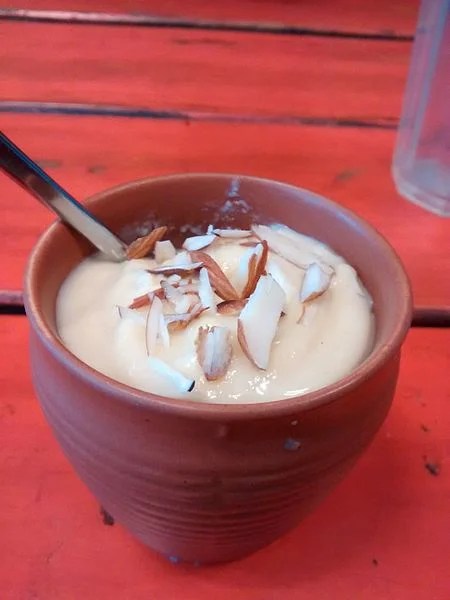
Mishti doi is a Bengali sweet made of milk, curd, and palm jaggery (or brown sugar). The sweet is popular in the eastern part of India (West Bengal, Orissa, and Bihar) and Bangladesh as well as New Delhi and Mumbai, and it can also be described as a sweeter, denser version of lassi. You can probably get mishti doi in other parts of India too but you’ll get the most authentic and tastiest version of this dessert in the above-mentioned regions. The creamy dessert is prepared by thickening milk and sweetening it with jaggery.
Do you like puddings? Then you may also want to check out our keshkul recipe and our asure recipe.
History


Jaggery-based deserts are very popular in the eastern part of India and Bangladesh and jaggery has been used in this region for centuries. However, the roots of this delicious sweet can be traced back to approximately 200 years ago and its origin are linked to the Bose family from Sherpur. The mishti doi recipe quickly became famous after the family was granted land for their shop in Sherpur and today, it’s one of the most famous Bengali sweets.
Traditionally, mishti doi is prepared for special occasions, such as Pohela Baisakh (Bengali New Year) and Durga Puja. It’s especially popular in the summer because it helps one’s body to cool down during the hot summer days that are typical for this region.
Origins Of Mishti Doi


As we mentioned above, this sweet originates from Kolkata. Its name is a simple merger of the words ‘mishti’ meaning sweet and ‘doi’ meaning curd. According to the Vedas, sweet curd or yogurt is often described as food for the Gods and hence, it’s no surprise that this dish is often prepared for all sorts of celebrations and festivities.
However, despite its incredible popularity, mishti doi is often prepared at home simply because you can find it in any mithai shop in most neighborhoods in Bengal and eastern India. Another big reason why people rarely prepare it at home is the long waiting time (of around 12 hours) for the yogurt to set. This brings us to our next point…
Method Of Preparation & Tips


The method of preparation is quite straightforward but the mishti doi recipe also includes a 12-hour waiting time for the yogurt to set. This is absolutely necessary because when you make mishti doi, you want the yogurt to achieve a certain level of density. Also, it’s very important that you use earthen bowls or pans for this step because earthen materials help absorb the moisture from the yogurt and help in making it thicker. If you use a normal bowl, the effect won’t be the same and your mishti doi will end up being too liquid.
Another thing to note is that the waiting time can also be related to the local climate. If you’re in a colder climate zone, you should keep your curd in a warm and dry place (near a heater or a stove but not on top of it) and do not mix it during the fermentation period. If the climate in your area is quite warm, you have nothing to worry about.
If you can’t find curd, you can use full cream milk but make sure the milk is full cream because your mishti doi might not be as creamy as it should be. And last but not least, if you can’t get jaggery, the best substitute would probably be brown sugar.
Enjoying this post? Then you may also like our kaymak recipe and if you like fermented dairy drinks, check out our ayran recipe.
How Is Mishti Doi Different From Yogurt?
The first and most obvious difference between the two is that mishti doi is made of thickened/full cream milk or fermented curd and the other difference is that it’s sweetened. The fermentation process reduces and thickens the milk, giving it a nice, thick creamy texture that’s perfect for desserts.
Variations

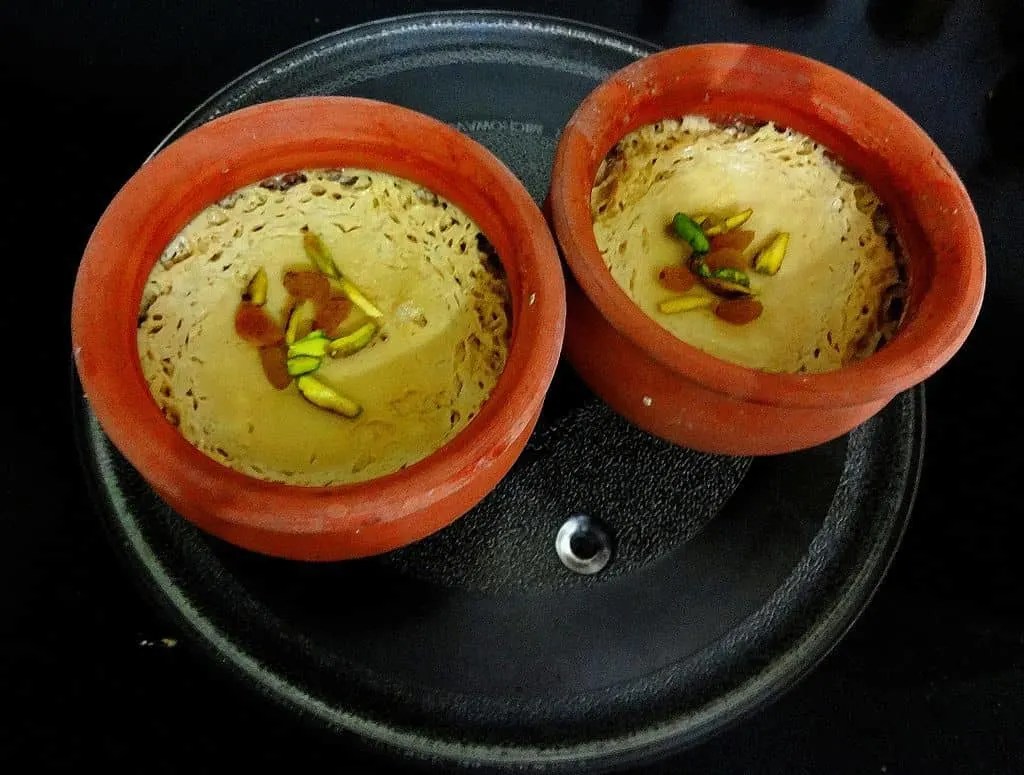
The most popular modified version of mishti doi is Bhapa Doi. The main difference between the two is that bhapa doi mixes curd with milk and this recipe features baking or steaming the mix on a stovetop. However, the final result is very similar. In addition to this, you can find some slight variations in different parts of India. For example, mishti doi is usually not flavored but some people add cardamom to enhance the flavor. Others use different types of fruit or spice-infused yogurt and if you want to do this, the options are endless.
Finally, in some parts of India, you may come across this same dessert but under a different name; meetha dahi. This isn’t a different dessert. It’s only the name of the dessert in Hindi.
Serving Mishti Doi


For serving, traditionally, the same earthen/clay pots are used. In addition to keeping the moisture away and thickening the curd, these pots also help in keeping the mishti doi cool and this dessert is tastiest when it’s cool. Usually, mishti doi is always served after a heavy delicious meal and is almost always consumed as a dessert after lunch.
If you’re a fan of Bengali cuisine, you may also want to check out our ghugni chaat recipe, our bhelpuri recipe, and our jhal muri recipe.
A Few Things You Might Need


Mixer


Saucepan


Spatula
Mishti Doi Recipe


If you like Indian street food and Indian sweets, in this post, we’ll show you the mishti doi recipe that happens to be one of my favorite Bengali sweets!
Ingredients
- 1 liter of milk, full cream
- 2 tablespoons jaggery/brown sugar
- 1 tablespoon sugar
- 1 teaspoon water
- 2 tablespoons curd /yogurt
- A handful of nuts, chopped
- A hint of cardamom powder
Instructions
1. Heat up 1 liter of milk in a thick, non-sticky pan and get the milk to boil.
2. Add 2 tablespoons of sugar and stir it up.
3. Let the milk boil under medium heat (but stir occasionally) until it starts thickening.
4. Scrape the milk solids from the sides of the pan and add them back into the milk.
5. Turn off your stove and let the milk simmer until it reduces into half.
6. Add 180 grams of palm jaggery or brown sugar and one tablespoon of water in a bottomed pan and mix well.
7. Keep the mix under medium fire until the sugar caramelizes.
8. Take out the caramelized sugar and add it to the milk. Stir until the sugar blends in.
9. Mix well and let the milk boil for a few more minutes.
10. Let the milk cool off for a couple of minutes until reaching a temperature of 40 degrees Celsius. It should feel warm when dipping your finger but it shouldn’t be burning hot.
11. Add two tablespoons of curd/full cream milk and stir it well until the curd dissolves in the milk.
12. Cover the mixture with aluminum foil and keep it in a warm place. It usually takes the mishti doi 9-10 hours to set but keep in mind that it can take up to 20 hours if the outside temperature in your city is cooler.
13. Once the mishti doi sets, take the pots and keep them in the fridge for another 2 hours. This will help the dessert get its nice creamy texture.
14. Decorate it (optional) with some chopped nuts, serve it, and enjoy!
Nutrition Information:
Serving Size:
1 CupAmount Per Serving: Calories: 362Total Fat: 19.9gSaturated Fat: 0.6gTrans Fat: 0.1gUnsaturated Fat: 0gCholesterol: 8mgSodium: 97mgCarbohydrates: 37gNet Carbohydrates: 37gFiber: 0gSugar: 54gProtein: 8.1g
Did you ever try mishti doi? How did you like our mishti doi recipe? If you tried it, don’t forget to leave us a rating and if you have any questions, feel free to share your thoughts in the comments!
Like it? Save it for later!


Cathleen Caffrey
Sunday 15th of September 2024
What is curd? Same as yoghurt? Do you offer an email where questions can be asked? Thanks.
Daniel Kiteski
Wednesday 20th of November 2024
Curd and yogurt are similar but differ in preparation. Curd is made by fermenting milk with a starter or acidic ingredient, using natural, non-standardized bacteria. Yogurt, on the other hand, is fermented with specific bacterial strains (Lactobacillus bulgaricus and Streptococcus thermophilus) for a consistent texture and flavor. You can contact us on the email mentioned on the contact page we try to respond to all queries :)