

There’s a drink in Serbia that seems to appear everywhere, yet its story is far more complicated than the clear little glass it arrives in. It can be homemade in a village still, aged for years in a wooden barrel, poured for a guest before they’ve even sat down, or brought out alongside a table overflowing with Serbian food. Some versions are smooth and deceptively fruity, while others can feel like they were designed to wake up every nerve in your body. This is rakija, the national drink of Serbia, and behind that seemingly simple fruit brandy is a tradition shaped by centuries of family recipes, harvests, and celebrations.
And last but not least, a culture where refusing a glass can sometimes feel harder than drinking one.
What Is Rakija?

Rakija is a generic name for the fruit spirits made by fermentation of fruit and subsequent distillation, usually in a copper still. The spirit produced varies in strength and flavor from relatively mild and fruity to extremely strong and fiery, depending on the fruit, the method of production, and whether it is distilled once or twice.
Plum rakija, known as šljivovica, is the most popular Serbian rakija. The name is derived from the Serbian word for plum, šljiva, and the beverage is so synonymous with Serbia that it is sometimes referred to as the national drink of Serbia, šljivovica.
Rakija was traditionally linked to the rural homes, where the families would cultivate their own fruit and use a portion of it to make rakija. It was also a communal event, and family members and neighbours were often involved in the autumn distillation.
This is a tradition that is still important today and is done at home. In addition to commercial producers, you will also find Serbian families who make their own domaća rakija, which may never be found on a supermarket shelf.
And that is one of the joys. The same fruit can produce two different tasting bottles, depending on the variety of fruit, fermentation, distillation, ageing, and the technique of the producer.
The different types of Serbian Rakija
While the most popular variety is the plum brandy, known as šljivovica, the rakija tradition is much wider in Serbia.
Šljivovica – Plum Rakija

The undisputed star is the fermented plum based on the basis of the plum, which is called “šljivovica”. It is especially linked to central and western Serbia and the Šumadija region, where the cultivation of plums has always been a significant part of rural life.
Young šljivovica can be very fresh-fruity, and well-aged versions can be quite smooth and aromatic. Some high-quality examples are even matured for years in wooden casks and can be quite complex.
Important regional traditions are also present. The drink is the reason for the name of the village of Šljivovica on Zlatibor, and the rakija made traditionally has been given protected designation of origin.
Kajsijevača – Apricot Rakija
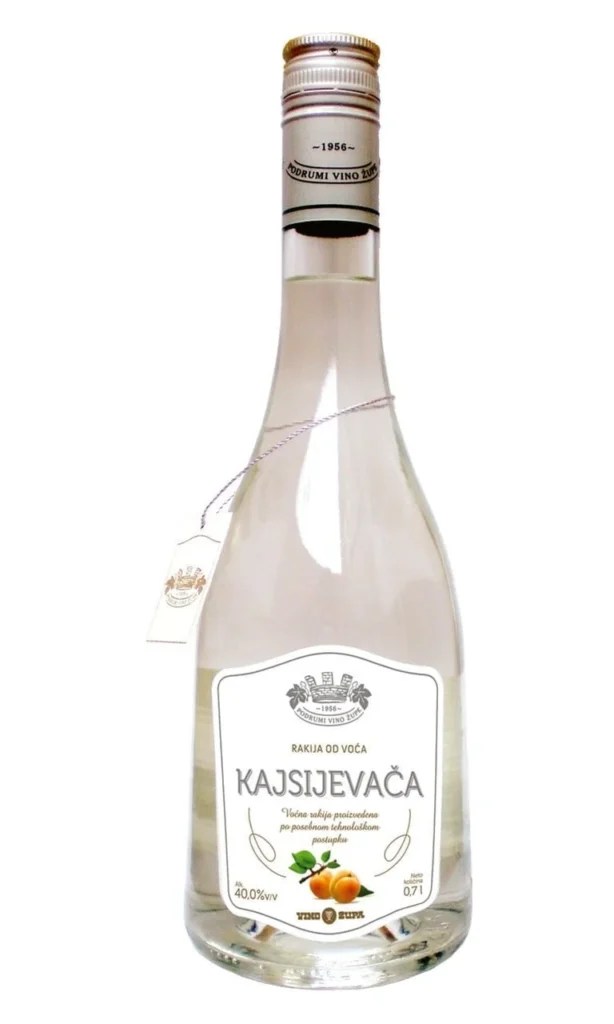
One of the most popular alternatives to šljivovica is kajsijevača, which is made from apricots. It is usually very fruity and aromatic, and is a good choice for those who don’t like plum rakija.
Dunjevača – Quince Rakija

Made from quince, dunjevača is prized for its powerful aroma. Quince is highly aromatic, and the aroma is carried over very well in the distillation process.
It is especially favored by tourists who want to bring home a bottle of Serbian rakija, and the Serbian tourism authorities have singled out the most popular varieties of rakija in Serbia, including šljivovica, kajsijevača and dunjevača.
Viljamovka – Pear Rakija
Viljamovka is a pear brandy, usually made using Williams pears. It is very aromatic and sometimes quite fragrant, compared to the more robust varieties of homemade šljivovica.
Loza – Grape Rakija

Lozovača (loza) is a national drink of Serbia, an alcoholic beverage produced from grapes. It is a bit more like the other spirits made from grapes in the Balkans.
Rakija can also be produced from apples, cherries, raspberries, and other fruits, and some regional producers make their own unique blends and varieties.
There are also some less common varieties and preparations, such as klekovača, a juniper-infused rakija, especially linked to the western part of Serbia.
The origins and history of Rakija in Serbia

It is hard to determine the exact origin of rakija, as the distillation of fruit has a long tradition in the Balkans and neighbouring countries. Much easier to determine is how much rakija became a part of Serbian rural life.
The fruit, especially plums, were plentiful in Serbia, and distillation was a practical method of preserving some of the fruit for centuries. Households might ferment and distil the surplus fruit into a spirit that would last for a long time rather than letting it go bad.
Rakija was associated with almost all the significant aspects of life over time.
It might be given as a welcome beverage, provided at weddings and family occasions, served at religious and family events, and presented at significant events and remembrances. According to the Serbian tourism authorities, it is a beverage that is served at both joyful and sad events.
In 2022, UNESCO officially recognized the importance of šljivovica by listing the traditional knowledge and practices related to its preparation and use on its intangible cultural heritage list.
That recognition is important because it’s not just about the liquid in the bottle. It includes the traditional knowledge, cultivation of fruits, distillation methods, and social practices associated with the beverage.
What is the popularity of Rakija in Serbia?

It can be served before a meal, with a plate of meze, at a celebration, or just when a guest arrives at someone’s house. According to the Serbian tourism organisation, rakija is found on almost every dining table and is an integral part of hospitality.
This tradition is especially strong in the case of homemade rakija. Families might have their own favorite fruit, recipe, and method of distillation, and bottles may be stored for special occasions or given to guests.
Rakija is also not necessarily something that is consumed only in the evening. Aperitif before lunch or dinner, more mature rakijas can be served as a digestif.
There is a Serbian winter beverage called Šumadija tea, which is a combination of rakija and water, and caramelised sugar. It is usually consumed during the cold season and is a completely different experience than drinking rakija straight.
Rakija Outside Serbia

While Serbia is still the center of the tradition of šljivovica, today rakija is no longer something you can only find inside Serbian houses and kafanas.
The drink has been introduced to restaurants, bars, and food festivals throughout Europe and beyond thanks to the efforts of Serbian communities overseas. There are various types available in many Serbian restaurants and establishments with a Balkan theme, and bottles of high-quality šljivovica are sold abroad.
The increased popularity of Balkan cuisine has also helped. The more people learn to enjoy dishes like ćevapi, pljeskavica, kajmak, and ajvar, the more they will enjoy rakija as well.
It is also a popular option for travellers to purchase a bottle of Serbian food culture to take home. The souvenirs are especially popular quince, apricot, and plum rakijas.
What Is The National Drink Of Serbia Served With?

This is where rakija is interesting, as Serbian food and rakija are made for each other.
The traditional opening is with meze, a selection of small savoury dishes served before or with the drinks. Some of the typical items that can be included in a spread are kajmak, white cheese, smoked ham, pršuta, cured sausages, bread, ajvar, roasted peppers, pickled vegetables and olives.
The Serbian Tourism Organisation particularly suggests combining šljivovica with more mature smoked meats like ham and prosciutto and with kajmak and white cheeses. It also mentions that the food that accompanies it should not be too salty.
Then, you can create a whole Serbian feast around rakija.
Use it with the small grilled minced-meat sausages called ćevapi, which are typically eaten with onions and flatbread. Another obvious match is pljeskavica, the famous spiced meat patty of Serbia, served with onions, kajmak, or ajvar.
Rakija can be served with karađorđeva šnicla, a rolled and breaded cutlet filled with kajmak, the Serbian tradition of grilled meats, or with roštilj, the Serbian tradition of grilled meats.
It can also be served with pečenje, especially slow-roasted pork or lamb, and with pljeskavica, leskovački roštilj, grilled sausages, and smoked meats.
Another natural pairing is cheese-based dishes. Enjoy rakija with gibanica, the traditional layered pastry of Serbia, filled with cheese and eggs, or proja, a traditional cornbread. The combination of fresh bread and kajmak, feta-style white cheese, and ajvar is much simpler but equally appropriate.
Vegetable dishes are surprisingly good too. Stuffed peppers (punjene paprike), sarma, baked beans (prebranac), roasted peppers, grilled vegetables, and pickled cabbage can all be a part of a rakija-friendly Serbian table.
And remember about ajvar. The smoky red pepper spread is one of the most recognisable foods in the country, and is ideal for strong spirits, particularly served with bread, cheese and cured meat.
Rakija can even be used with prunes, especially the classic baked prunes in prosciutto. The Serbian Tourism Organisation suggests pairing this with mature rakija as the sweetness of the fruit complements the savoury cured meat.
A meal may eventually be followed by desserts like vanilice, štrudla sa makom (poppy-seed strudel), orasnice (walnut cookies), palačinke, tufahije or other sweets made from fruits. Fruiter rakija, like apricot or quince, can be a good accompaniment to lighter desserts, while savoury food is more traditionally paired with rakija.
What is the best way to drink Rakija?

Even though it’s often touted as a “shot” drink, good rakija is best enjoyed slowly.
It is usually consumed in a small glass and is not just a party drink. Depending on the style, it can be served at room temperature or slightly chilled. The Serbian tourism authorities recommend about 20°C for the serving of šljivovica, and a little cooler for younger rakija, which is served as an aperitif.
When rakija comes into the picture, there is one word that will be repeated over and over:
Živeli!
It translates to “Cheers!”, and it could hardly be a better word to go with Serbia’s most popular beverage.