
The Bosnian ćevapi recipe is the heart and soul of Bosnian cuisine, one of the dishes Bosnians are most proud of and one of the tastiest things I’ve ever tried honestly. I know it sounds like normal, simple grilled minced meat but there’s just something special about it. It’s one of the most popular street food (alongside burek) snacks in Bosnia and an ultimate culinary symbol of Bosnia and Herzegovina and in this article, we’ll teach you everything there is to know about Bosnian ćevapi, including its origins, variations, serving tips, and much more.
But first things first…
What Are Bosnian Ćevapi?


Bosnian ćevapi (pronounced “chevapi”) is a dish that of grilling minced meat, similar to pljeskavica but shaped in tiny finger-size portions considered one of the most popular and iconic Bosnian snacks. The main ingredient of ćevapi is typically a mixture of ground beef and lamb, although sometimes veal or pork may be included. The meat is seasoned with salt, pepper, minced onion, and sometimes garlic before cooking it on a grill, traditionally over charcoal, which adds a smoky flavor to the meat.
Ćevapi are commonly enjoyed as a main course, served in portions of five to ten, served with somun, a type of soft and fluffy Bosnian bread similar to pita bread, as well as raw onions, and kaymak (a type of clotted cream).
Origins Of The Bosnian Ćevapi Recipe


The origins of the Bosnian ćevapi recipe is also closely associated to the entire Balkan region, but also to the Ottoman Empire for it was the Ottomans that brought this recipe to the Balkans during the Middle Ages but it was the Balkan people that mastered it to perfection over the years and the kebab became ćevap and in my opinion, dare I say it is even better than the original.
Ćevapi Variations


Every Balkan country has ćevapi and they all think their version is the best. We won’t get into that debate here but we will quickly list the few notable variations of ćevapi:
Bosnian Ćevapi is made with a mixture of ground beef and lamb, seasoned with salt, pepper, and sometimes garlic and served with somun bread, raw onions, and kaymak (clotted cream).
Serbian ćevapi, or the most popular version of, Leskovački ćevapi, often have a higher proportion of pork in the meat mixture (Bosnians usually don’t eat pork because many are Muslim). As for seasonings, in Serbia, they use salt, pepper, minced onion, and sometimes paprika. They are commonly served with lepinja bread, raw onions, kajmak, and ajvar.
Kosovo Ćevapi: In Kosovo and Albania, ćevapi (also known as qebap) are often made with a mixture of ground beef and lamb, seasoned with salt, pepper, cumin, and paprika and served with traditional bread called “pita,” and raw onions.
Macedonian Kebapi: In Macedonia, the ćevapi or kebapi as they call it are often made with a mixture of ground beef and lamb, similar to the Bosnian style with a slightly different blend of seasonings, which can include paprika, cumin, and oregano. They are typically served with lepinja bread, French fries, and sometimes with sour cream or kajmak.
Bulgarian Kebapcheta: In Bulgaria, the dish is known as “kebapcheta” and it’s made with a mixture of ground pork and beef, sometimes with added lamb and are huge, at least twice the size of the cevapi of other countries.
Preparation Tips

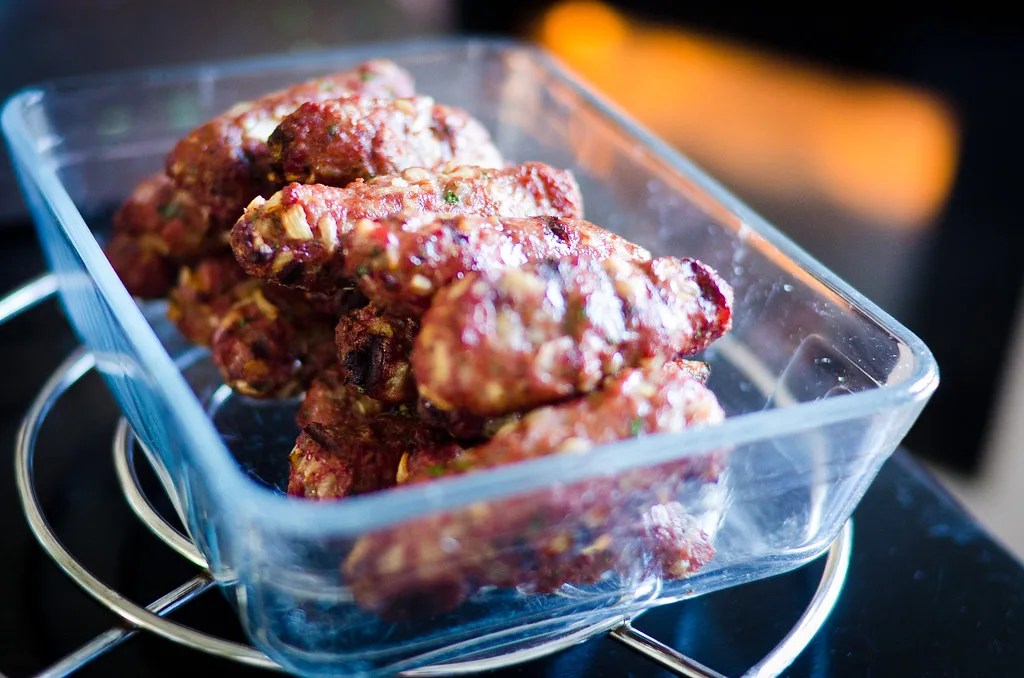
- Meat Selection is everything and choosing a meat with good quality can make or break your dish. Make sure you buy several different minced meat varieties from a known butcher and combine the beef, lamb, (and pork if you use) yourself.
- Aim for a ratio of 70% lean meat and 30% fat but you can adjust the ratio based on personal preference.
- Thoroughly mix the seasonings with the meat, if you want to do it the traditional way, you have to massage the meat with your hands and throw it around against the counter.
- Allow the meat mixture to rest in the refrigerator for at least 3-4 hours, or preferably overnight before grilling it.
- When you shape the cevapi, try to shape it against your finger as a reference point; having your hands slightly wet can help by preventing the meat from sticking on you.
- Never press down the sausages when cooking, you don’t want juices coming out.
Serving


Of course, when serving, the centerpiece is the grilled ćevapi sausages themselves, typically placed in a pile on a plate or serving platter. Alongside them, you would find somun or lepinja bread (or more rarely, pogacha), which is a round, soft, and slightly chewy bread. Kaymak, a creamy and rich dairy product similar to clotted cream, is a great accompaniment and ajar, Ajvar, a roasted red pepper and eggplant relish is another (both are usually spooned onto the bread or used as a dip).
Additional condiments can be included based on personal preferences. Some options include sour cream, pickles, or cheese. The local drinks that cevapi are usually paired up with include a cold local beer, a glass of red wine, or a soft drink of choice.
A Few Things You May Need


Grill


Skillet

Cutting Set
Bosnian ćevapi recipe


Let's go through the traditional Bosnian ćevapi recipe together and learn everything there is to know about this irresistible Balkan dish.
Ingredients
- 500 grams (1.1 pounds) ground beef
- 200 grams (7 ounces) ground lamb
- 1 teaspoon salt (adjust to taste)
- 1/2 teaspoon black pepper
- 2 cloves of garlic, minced (optional)
- 1 teaspoon paprika (optional)
- 1/2 teaspoon cumin (optional)
- 1/2 teaspoon dried oregano (optional)
Instructions
1. In a mixing bowl, combine the ground beef and lamb and add all the spices. Mix everything together thoroughly by massaging the meet with your hands.
2. When done, cover the bowl with plastic wrap and let the meat mixture rest in the refrigerator for at least 3-4 hours, or preferably overnight..
3. Once the meat mixture has rested, take it out of the refrigerator, wet your hands with water to prevent sticking, and take small portions of the mixture to shape them into finger-sized cylindrical sausages. Repeat step #3 as many times necessary.
4. Preheat your grill or grill pan to medium-high heat and brush the grates with a little oil before placing the ćevapi on the grill. Cook for about 6-8 minutes, turning occasionally, never press them when cooking, and try not to burn them- they should have light brown color.
5. Slice some raw onions in tiny cubes and heat up the somun or lepinja bread on the grill.
6. Once the ćevapi are cooked, remove them from the grill and let them rest for a few minutes.
7. Serve your ćevapi alongside your fresh, crunchy bread and sliced onion, pour a pint of beer, and enjoy!
Nutrition Information:
Serving Size:
100 gramsAmount Per Serving: Calories: 255Total Fat: 19.5gSaturated Fat: 7.5gTrans Fat: 1.12gUnsaturated Fat: 0.52gCholesterol: 71mgSodium: 195mgCarbohydrates: 1.5gNet Carbohydrates: 1.5gFiber: 0.5gSugar: 0.1gSugar Alcohols: 0gProtein: 17g
Did you like our traditional Bosnian ćevapi recipe? Did you ever try ćevapi? If you tried to make it at home, don’t forget to leave us a rating and if you have any questions about the recipe, feel free to ask us in the comments below.
Like it? Pin it.