
In a region famous for local cuisine heavily based on fish and seafood, pašticada might be an exception but many people still say that it’s the Holy Grail of Dalmatian cooking. So, if you’re a fan of Mediterranean cuisine and this sounds interesting, keep reading. In this post, we’ll share the traditional pašticada recipe and teach you everything there is to know about this delicious Croatian dish, including its origins, variation, serving, and more.
But first things first…
What Is Pašticada?

Pašticada is the Croatian version of pot roast with a Mediterranean touch. The dish consists of slowly-cooked beef prepared in a sweet and sour sauce alongside some vegetables is usually consumed alongside a plate of gnocchi or other kinds of homemade pasta. A couple of things that make pašticada special are red wine and parsley root.
Usually, locals use a dessert red wine like prošek (this is a straw wine made from dried grapes and should not be confused with Italian Prosecco) to this dish its unique flavor. The parsley root, on the other hand, gives the dish a pleasant smell and contributes to increasing the density and consistency of the sauce.
Are you a fan of Croatian cuisine? Then you should definitely check out our brudet stew recipe.
Origin & History


Unfortunately, there isn’t much information about the exact origin of pašticada except a few sources that link the creating of this dish to the city of Dubrovnik where pašticada was likely prepared for the first time somewhere around the 15th century. We also know that there are a few other similar dishes that were popular in Greece (although the Greek version is a tad spicier), Italy, and France during the Early Modern Era.
An alternative historic interpretation suggests that pašticada might originate from the passtisasda de caval, a dish that first appeared in the region of Verona during Roman times and later, became very popular in the Venetian Republic from where it spread to today’s coast of Croatia.
In the early days, this dish was made of horse meat (mostly from the dead horses after a battle) and was a lot more simple. Knowing this, it’s easy to conclude that the recipe evolved throughout the years. Another fact that confirms this theory is that pašticada today is prepared with tomatoes and eaten alongside potato gnocchi. Both of these are New World ingredients that were introduced to Europe in the last 300-400 years.
Today, the pašticada recipe is a crucial part of Croatian cuisine (even though variations are also present in some other Slavic cuisines too) and it’s also quite popular in Northern Italy and a few other Mediterranean countries. The dish is often prepared for special occasions like weddings, baptisms, birthdays, etc. (this was also the case in the past as well, possibly because of the lengthy preparation procedure).
Pašticada Variations

Firstly, even within Dalmatia, you’ll find different variations of the pašticada recipe. Every village has a slightly different way of preparing pašticada. Many people make small adjustments to the original recipe but the main battle is between people who use prošek (or other Croatian straw wines) and people who use regular red wine. Personally, I don’t think there’s a wrong and right choice. I’ve tried both and both variations were delicious.
Furthermore, as you may or may not know, Croatian cuisine has been heavily influenced by Italian and German cuisine throughout the years which is why you’ll find different variations of many local dishes in different parts of the country and the pašticada recipe is not an exception. For example, in Dalmatia and near the coast, people use sweet fruits to enhance the flavor of the pašticada which usually indicates Roman/Byzantine influence. In the central and northern parts of the country though, some people also use vinegar upon serving (even though this is a rare occurrence) which gives the dish a flavor that’s more similar to German sauerbraten (sour roast).
Moreover, there are also similar variations of the pašticada recipe in other European countries too. In Greece, they call this dish pastitsada and it’s very similar to the Croatian pašticada. We already mentioned pastissada de caval which is a delicacy in parts of Northern Italy but there are two more similar dishes that come to mind. The first one is daube provencale, a traditional beef stew from Southern France, and Hungarian goulash which even though is an entirely different dish, slightly resembles pašticada.
It can be argued that most of the variations mentioned here precede the Dalmatian pašticada but at the end of the day, the origin of the dish is not a big deal. The most important thing is that pašticada is a crucial part of Dalmatian cuisine today.
Serving & Storing

Pašticada is usually served with potato gnocchi or another kind of pasta with shredded parmesan cheese and a glass of fine red wine. Also, even though it’s not very common, some people enjoy eating pašticada with bread instead of pasta. The most common choices in these situations are olive oil bread and occasionally, kifli. Other Croatian and Balkan dishes like sarma or ajvar can also be served either on the side or as an appetizer.
As for storing, pašticada can be kept in the fridge for up to 5 days but in my opinion, the meat doesn’t taste as good when it’s not fresh which is why freezing your leftovers is probably not a good idea.
A Few Final Words
Before starting, you should know that preparing this dish can take up to three days because you need to give the meat enough time to marinate properly and then to slowly braise for at least 5-6 hours. Once that is done, you also have to blend the vegetables to make a thick sauce. So, if you need a quick surprise dinner and don’t have enough time to do all of this, it’s probably a good idea to prepare the pašticada recipe some other time.
A Few Things You May Need


Dutch Oven


Frying Pan


Set Of Kitchen Knives
Pašticada Recipe
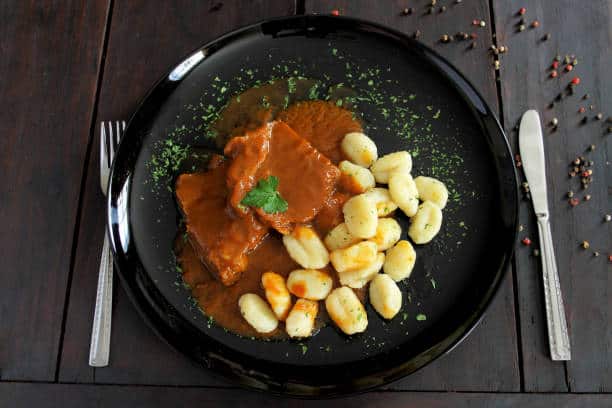

In this post, we’ll share the traditional pašticada recipe and teach you everything there is to know about this delicious Croatian dish, including its origins, variation, serving, and more.
Ingredients
- 1 kg Silverside Beef
- 100 grams Pršut (dry bacon)
- 1 and ½ cup Tomato Sauce
- 6 Garlic Cloves
- 2 Onions
- 3 Carrots
- 6 Prunes/Dry Figs
- 1 bunch fresh parsley
- 1 Celery Root
- 4 Juniper Berries
- 3 Bay Leaves
- 1 tablespoon Bread Crumbs
- 1 tablespoon Vegeta
- 1 tablespoon Ground Pepper
- 1 teaspoon Nutmeg
- 1 Bouillon cube
- ¼ cup Olive Oil
- 1 glass of straw wine (regular red wine works too)
- 2 packs Potato Gnocchi (serving on the side)
- Salt and Black Pepper (according to your preference)
- Red Wine Vinegar (for soaking the meat overnight)
Instructions
The preparation of this recipe can be divided into three separate phases. You can’t complete all of it in one day and the entire preparation will take at least 2 days (in some cases, even 3).
Phase 1
1. Take the meat and use a sharp, pointy knife to make several holes up to 3-4 cm deep.
2. Chop the garlic and pršut (or bacon) and push the pieces in the holes you made in the previous step.
3. Add the juniper berries, bay leaves, and one teaspoon of salt and black pepper to prepare the marinade.
4. Keep the meat in a large pot and soak it in red wine vinegar for at least 24 hours. Cover the pot and keep it in a cold place. In the end, you don’t reuse the vinegar you soaked the meat in.
Phase2
5. Start by preparing the bouillon necessary for the recipe.
6. Add a little bit of olive oil to a high pan and preheat it. Make sure that the pan you’re using is not much wider than the meat block- an explanation of why is in step 10.
7. Take the meat out of the vinegar, remove the garlic and bacon aside, and add the meat to the high pan, and roast it slowly from all sides.
8. During this step, if the meat starts running out of juice and starts sticking to the bottom of the pan, add a small quantity of the bouillon soup and keep roasting. Do this as many times as necessary.
9. When the meat catches a nice brown color from all sides, take it out and in the same pan, add the chopped onion, and carrots, as well as all of the bacon and garlic used for the marinade and all of the spices mentioned in the ingredients list (vegeta, bread crumbs, ground pepper, nutmeg, salt, and black pepper).
10. After 1 minute, add the wine together with 2 tablespoons of tomato sauce.
11. Put the block of meat in the mix and add enough bouillon to cover the meat. The pan shouldn’t be much wider than the meat block because you want to cover the meat in bouillon but you don’t want to overflood the stew and keep it as dense as possible.
12. Keep cooking the meat for another 3 hours until it’s completely cooked. If you want to reduce the cooking time, you can use a pressure cooker.
13. Halfway through the cooking process, add the chopped prunes, parsley, and celery to the mix.
Phase3
14. Take out the meat and put the rest of the mixture in a blender. Blend until it gets a saucy texture.
15. Cut the meat into slices no thicker than 1 cm and put the pieces back in the sauce.
16. The sauce should be dense and have a brownish color. If it’s not thick enough, roast a few more sieved bread crumbs separately until they get dark brown. After that, add another spoon (or two) of tomato sauce before you proceed with the next step.
17. Cook the mixture for another 30-45 minutes at low temperature until the meat becomes very tender.
18. While the mixture is cooking, you can start preparing the gnocchi or any other pasta you want to have with the pašticada
19. Turn off the heat and let your pašticada cool down.
20. Top your dish with some chopped parsley or celery (optional), serve it alongside the gnocchi and a glass of fine red wine, and enjoy!
Nutrition Information:
Serving Size:
1 bowlAmount Per Serving: Calories: 680Total Fat: 42gSaturated Fat: 8gTrans Fat: 1.1gUnsaturated Fat: 0gCholesterol: 140mgSodium: 352mgCarbohydrates: 41gNet Carbohydrates: 52gFiber: 22gSugar: 34gProtein: 72g
Did you ever try pašticada? How did you like our recipe? If you tried to make it at home, don’t forget to leave us a review, and if you have any questions or suggestions, feel free to share them in the comments below!
Like it? Pin it.


