
Sicily is renowned for its dramatic scenery, historic towns, seafood, citrus fruits and some of the most unique dishes in Italy, but it also boasts a very rich cheese-making tradition. Sicilian cheeses range from fresh and mild to aged and intensely flavored, depending on the length of time they have spent maturing, and they are a testament to the island’s rich agricultural heritage and cultural influences.
Sicily’s geography also plays an important role. The climate is Mediterranean, hot and dry in summer and relatively mild in winter, and the interior of the island is hilly, mountainous and open grazing land. Historically, these conditions have affected the types of livestock that have been raised and the plants that have been eaten. Animals that graze on these landscapes help to give the cheeses their character.
If you’re looking to travel through Sicily with your taste buds, then you should try out the island’s cheeses, which are often overlooked when people think of the island’s most famous dishes like cannoli, arancini, and pasta.
Traditional Cheesemaking in Sicily

The traditional method of cheesemaking in Sicily typically starts with fresh milk that is heated and then treated with rennet to promote coagulation. The curds are then cut, heated, formed, salted and consumed fresh or allowed to ripen. The exact process is quite different for each type of cheese.
Some varieties are pressed into unique molds or baskets, and others are hand-stretched and molded. The cheese may be aged for a relatively brief time, or for many months, during which the cheese becomes firmer and more concentrated.
Sicily’s cheesemaking tradition revolves around sheep’s milk. The island has long been inhabited by large sheep farming communities, especially in the interior and western parts of the island where natural pastures were available for the animals to graze.
Sheep’s milk is naturally high in fat and protein, making cheeses from it rich and unique. You may detect a milky and slightly sweet taste, or a nutty, salty, earthy, and even pleasantly sharp flavor, depending on the type of cheese and how old it is.
Protected Designation of Origin (PDO) Cheeses

There are some of the most important traditional cheeses in Sicily that are protected by the designation of origin (PDO). This European certificate is awarded to food products that are linked to a specific geographical region and are manufactured under specific standards.
PDO status contributes to the protection of the reputation of traditional Sicilian cheeses and gives consumers more confidence in the origin and production of cheeses. The PDO cheeses of the island are Pecorino Siciliano, Ragusano, Piacentinu Ennese, Vastedda della Valle del Belice and Maiorchino.
If you are visiting Sicily and shopping for cheese, it can be helpful to know what to look for to find the authentic local products. There are also some smaller local cheeses that might not be certified but are well established in the island’s culinary heritage that should be explored.
These cheeses illustrate the variety of Sicilian cheesemaking. All of this, combined with the local milk, traditional methods, the landscape and centuries of culinary history, has resulted in a distinctly Sicilian cheese culture.
The Best Sicilian Cheeses to Try
From the simple fresh cheeses that are consumed shortly after they are made to the highly distinctive cheeses that are aged and carefully made over many months, Sicily has an impressive variety of cheeses. Some are popular all over Italy, others are local specialties that you will find more easily in local markets, food shops and small producers around Sicily.
Pecorino Siciliano

Pecorino Siciliano is one of the most significant traditional cheeses of the island and is one of the best places to begin exploring Sicilian cheese. It is made from sheep’s milk and has been made on the island for centuries, in various forms according to the length of the aging.
Young Pecorino Siciliano is usually soft, and has a mild, slightly salty and milky taste. As it ages, it gets firmer and crumbly, and the taste becomes richer, nuttier, and more pronounced.
It is a great addition to bread, olives or seasonal vegetables, and is often grated over pasta and other Sicilian dishes. If you can only sample one traditional Sicilian cheese, then Pecorino Siciliano is a good option as it provides a good introduction to the sheep’s milk cheesemaking tradition of the island.
Ragusano
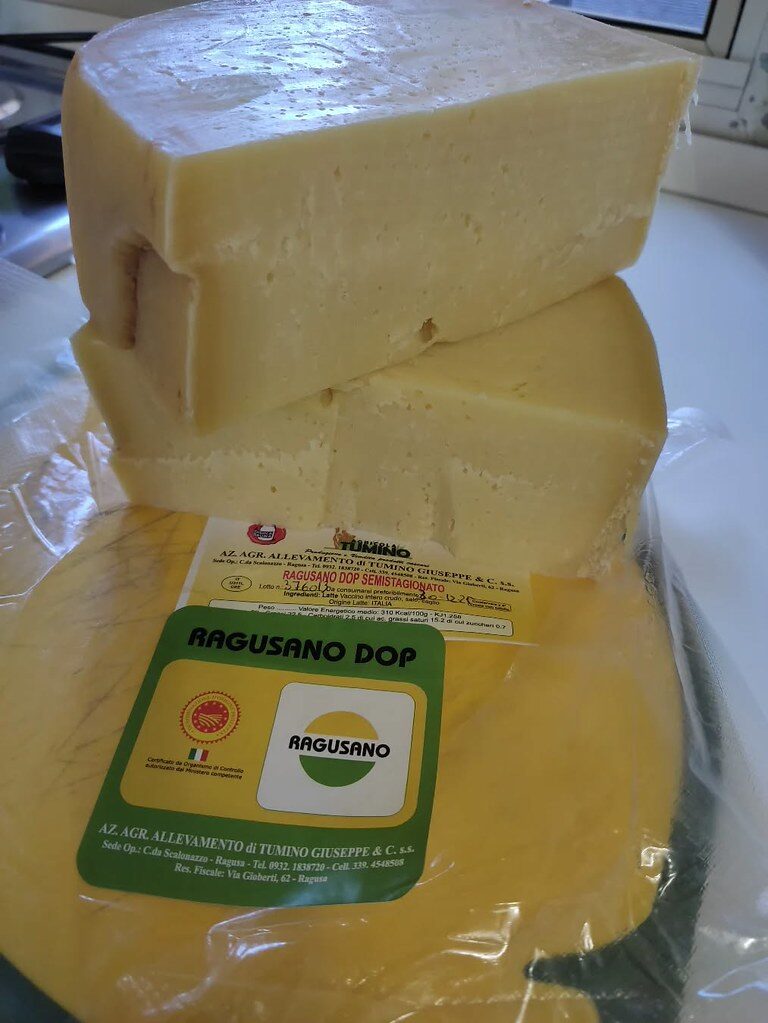
Ragusano is a unique cow’s milk cheese from the southeast of Sicily, in the region of Ragusa and the Hyblaean Mountains. It is a cow’s milk cheese, unlike many of the most popular cheeses of Sicily, and is known for its elongated form.
Ragusano is a pasta filata cheese, in which the curds are heated and stretched before shaping the cheese. The cheeses were traditionally hung in pairs from wooden beams, creating their distinctive shape.
It is very age dependent in flavor. Younger Ragusano is relatively mild and smooth, while the aged versions are firmer and more complex, with savory, buttery and slightly spicy notes. Can be served on its own, on a cheese board or in cooking.
Piacentinu Ennese

Piacentinu Ennese is one of the most peculiar cheeses in Sicily. This sheep’s milk cheese is made in the province of Enna, and is especially identifiable due to the addition of saffron and black peppercorns.
The saffron adds the yellow colour to the cheese, and the whole peppercorns add a subtle spice. The blend results in a pecorino with a very different taste.
Piacentinu Ennese is typically aged for several months, which helps to enhance its flavor profile while maintaining a fairly firm yet enjoyable texture. It tastes great when cut into thin slices with bread, olives or a glass of Sicilian wine.
Tuma

Tuma is the more recent and straightforward approach to Sicilian cheesemaking. It is traditionally produced from sheep’s milk and is eaten without the long aging process that is required for harder pecorino varieties.
Tuma is fresh and has a soft, delicate texture and mild, milky taste. It’s the type of cheese that’s best suited to a simple meal, not one that requires a lot of preparation.
Tuma may be eaten with fresh bread, tomatoes, vegetables or olive oil. It can also be used in traditional Sicilian dishes, where its delicate taste and texture blends harmoniously with the other ingredients without overpowering them.
Primo Sale

Primo Sale is a young Sicilian cheese, not a completely different cheesemaking tradition, but a cheese at its first salting. It is usually produced from sheep’s milk and lightly salted before being sold at a relatively young age.
This yields a soft to semi-firm cheese with a fresh and clean taste. Primo Sale is a mild cheese compared to aged pecorino, and is a good choice for those who like mild cheeses.
It is commonly served alone with bread, vegetables, olives or fresh herbs. There are also pepper, chilli, and herb-flavored versions, which you can find at local markets and artisanal producers.
Vastedda della Valle del Belice

Vastedda della Valle del Belice is especially interesting because it is made using a cheesemaking method more typical of cheeses with stretched curds.
Vastedda is a sheep’s milk cheese from the Belice Valley in western Sicily, with a unique flattened, rounded form. It is traditionally produced from raw sheep’s milk and is one of the few Italian cheeses produced from sheep’s milk by the pasta filata technique.
Vastedda is a relatively fresh aged Sicilian cheese, unlike many other cheeses of the island. It is soft and slightly elastic with a delicate, fresh and pleasant tangy flavor.
It pairs particularly well with crusty bread, tomatoes, olive oil and other basic Mediterranean ingredients. It is one of the cheeses to look for if you want to taste something that is truly representative of Sicily, due to its special production process and geographic origin.
Maiorchino

Maiorchino is a native of the northeast of Sicily, around the Peloritani Mountains and the town of Novara di Sicilia. It is a hard sheep’s milk cheese that is traditionally produced during the cooler months and then left to mature.
As the cheese matures, it gets firmer and more flavorful, with a distinct savory taste and a nutty, slightly spicy aroma. Mature Maiorchino can be eaten in thin slices or broken into pieces and served with other local products.
It also has a fascinating link with local traditions. In Novara di Sicilia, Maiorchino is a traditional game where large wheels of cheese are rolled down the streets during a festival.
Canestrato

Canestrato is a rustic Sicilian cheese named after the traditional baskets (canestri) used to form the cheese. The basket leaves leave a distinctive pattern on the rind.
Canestrato is typically produced from sheep’s milk and can vary significantly from one producer to another and according to the length of the aging process. The younger cheeses are mild and soft, and the older cheeses are firmer, saltier, and more aromatic.
It is rustic and makes a great addition to a traditional Sicilian cheese board. Serve with crusty bread, olives, nuts, honey or preserves for a simple pairing that enhances the cheese without overpowering it.
Fresh vs. Aged Sicilian Cheeses: What’s the Difference?

The best way to enjoy Sicilian cheese is to taste it fresh and aged. Cheese made from the same basic ingredients can be very different depending on the length of the maturing period. Fresh cheeses tend to accentuate the natural characteristics of the milk, while aged cheeses develop more intense and concentrated flavors and textures.
The Sicilian cheeses are mostly soft or semi-soft, and have a light, moist taste. They tend to be mild, milky and slightly salty. They are not aged for a long period of time and are best consumed relatively soon after production.
Older cheeses, however, slowly dry out during aging. This makes them firmer and concentrates their flavors. For instance, a mature version of Pecorino Siciliano may taste much more intense and complex than a young version of the same cheese. Nutty, earthy, spicy, buttery or salty flavors may be detected depending on the variety and aging time.
The difference is also important when deciding how to serve the cheese. Fresh varieties work best with simple ingredients like tomatoes, fresh herbs, olive oil and crusty bread. They are mild flavored so they can be added to salads, sandwiches, and light meals.
Aged cheeses are more versatile when it comes to stronger pairings. They are especially good with honey, dried fruit, nuts, olives, and preserves. Harder varieties can also be grated over pasta or used to give depth to sauces and traditional Sicilian recipes.
It is not clear which is better, fresh or aged cheese. This is very much a matter of personal preference and accompaniment. If you prefer mild and creamy flavors, start with a fresh cheese such as Tuma or Primo Sale. For those who prefer more robust, salty and aged cheeses, mature Pecorino Siciliano or Maiorchino might be more suitable.
How Sicilian Cheeses Are Traditionally Served
Sicilian cheese is seldom complex. The island’s food culture is largely about the use of a few high-quality local ingredients and the emphasis on their natural flavors.
With Sicilian Bread and Crackers

Fresh bread is the easiest way to savor Sicilian cheese. The rustic loaves are good for soft cheeses, and the firm aged loaves can be paired with slices of country-style bread.
Fresh Tuma or Primo Sale can be spread or added directly to warm bread, whereas aged Pecorino Siciliano is good when cut into small pieces. Traditional Sicilian bread is the more authentic choice, but crackers can be a good option as well, especially when paired with softer cheeses and preserves.
Pairing Cheese With Olives, Nuts, Honey, and Preserves

Many Sicilian cheeses have a salty and savory flavor, making them a great addition to sweet and savory ingredients. The sweetness of honey complements the saltiness and more intense flavors of aged sheep’s milk cheeses.
Sicilian preserves and fruit products can be used for the same purpose. Preserves of fig, orange or other fruit can be used to add sweetness and acidity to a cheese platter, or dried figs and other dried fruits can be used to add a slightly more concentrated sweetness.
Another natural pairing is nuts. Almonds and pistachios are both popular ingredients in Sicilian dishes, and they bring a nice crunch and a hint of richness. Green and black olives add another salty note that pairs beautifully with both mild and aged cheeses.
Using Cheese in Pasta and Traditional Sicilian Dishes

Sicilian cheese is also an important ingredient in everyday cooking. Harder aged cheeses can be grated over pasta in a similar way to Parmesan or other Italian cheeses are used elsewhere in Italy.
Pecorino is especially good for this purpose, as it gives a salty and flavorful taste to sauces without being overpowering. Other cheeses are also used directly in fillings, baked dishes, vegetables or savory pastries.
The role of fresh cheeses is different. They are soft and can be used in dishes where the cheese will melt or be blended with other ingredients. Fresh Sicilian cheeses can be used to add creaminess and a mild milky taste to the dish without overpowering it.
Cheese as Part of a Sicilian Antipasto Platter

One of the best ways to taste multiple cheeses is to serve them on an antipasto platter. Rather than choosing one variety, you can mix fresh and aged cheeses to taste the variations in texture and taste.
A typical combination might be a young sheep’s milk cheese with an aged Pecorino, olives, cured meats, sun-dried tomatoes, roasted vegetables, bread, nuts and preserves.
The rule of thumb for creating a cheese platter is to begin with the mildest cheese and end with the strongest. This will help your taste buds savor the more subtle flavors before you get to the more intensely aged.
What to Drink With Sicilian Cheese
There are many choices of wines to pair with local cheeses in Sicily. It depends on the age and intensity of the cheese, but the island’s diverse wine culture ensures there’s something for nearly every taste.
Sicilian Red Wines

Sicilian reds are full-bodied and can pair well with mature and hard cheeses. Grapes like Nero d’Avola can give the body and fruitiness needed to hold up to salty, aged Pecorino or Maiorchino.
If you are making a more robust cheese, try wines that have enough acidity and structure to complement the richness without overpowering the cheese.
White Wines

Fresh and mild cheeses generally work particularly well with white wines. Sicilian whites can offer acidity and freshness to pair with cheeses like Tuma and Primo Sale.
A crisp white can be a refreshing option when cheese is paired with vegetables, olives, seafood or lighter antipasti.
Marsala and Other Fortified Wines
The famous fortified wine of Sicily, Marsala, is an interesting option to pair with aged cheeses. It has a more full-bodied and sometimes slightly sweet flavor that pairs well with salty, mature varieties.
A small glass of sweet wine can be a nice balance to a sharp aged cheese, so it might be worth considering as a dessert wine.
Non-Alcoholic Pairings
Sicilian cheese is not just for the wine connoisseur. A simple option is sparkling water, as it is a breath of fresh air between bites. Depending on the cheese and other foods being served, fresh fruit juices, lightly sparkling fruit drinks, and herbal teas may also be suitable.
A lightly sparkling or acidic non-alcoholic beverage is especially refreshing for a cheese platter of honey, fruit and nuts.
The ideal combination is the one that lets the cheese and the beverage stand out. There is enough variety in Sicilian cheeses that it is fun to try different combinations.