Bulgarian desserts are an interesting bunch that combine elements from different cuisines, a little bit of Balkan, a little bit of Russian, a little bit of Turkish (showcasing showcase Bulgaria’s diverse cuisine) but it’s a lovely mix capable of satisfying any sweet tooth. In this article, we’ll cover some of the most delicious Bulgarian desserts, divided them into 5 different categories; cakes, pastries, fruit-based desserts, cookies, and “others”.
Bulgarian Cakes
We’ll start this list of Bulgarian desserts with the most popular Bulgarian cake varieties, starting with…
Garash Torta

Named after the famous Bulgarian poet Peyo Yavorov, who used the pen name Garash, this cake was I guess his favorite and I can see why, it has layers of moist chocolate sponges with velvety chocolate cream (and a touch of rum or brandy in there) in between and on top of it. It can be adorned with intricate chocolate decorations but that’s not mandatory, it’s straight up delicious as is.
Biskvitena Torta (Biscuit Cake)

Biskvitena is a simple cake that uses biscuits as a main ingredient. When soaked in milk or sweet syrup, and flavored with vanilla or rum, the biscuits go soft, moist and a bit soggy which gives them a cake-like consistency. In between the layers, a luscious cream filling is spread, which can vary from chocolate and vanilla to fruit-flavored or even caramel.
Kefir Torta (Bulgarian Yogurt Cake)

Kefir sorta is kind of like a sweet bread but Bulgarians refer to it as cake so why am I to judge. This one has a bit of a tangy flavor because it incorporates Bulgarian yogurt into the batter and is often paired with a creamy frosting or glaze and topped with adorned with fresh fruits, such as berries or sliced peaches. The yogurt adds a tangy and slightly acidic note, giving the cake a refreshing and distinct taste
Medovik Cake

Medovik cake, also known as Honey cake, is a classic Russian dessert that has gained popularity around the world, including Bulgaria. This cake has thin layers of moist honey-infused cake with creamy filling in between the layers, which consists of a combination of sweetened condensed milk and buttercream. The name “Medovik” originates from the Russian word “med,” meaning honey, highlighting the prominent use of honey in the recipe.
Bulgarian Pastries
Bulgarian pastries are very versatile and can also be eaten for breakfast but many of them are sweet and can be classified as desserts too. From flaky phyllo dough creations to deep fried sweets, here are some of the most popular sweet Bulgarian pastries.
Enjoying this post? Then you may also like our list of Croatian pastries.
Sladka Banitsa

This is an interesting twist of the traditional banitsa pastry and I suppose we can say banitsa is not only one of the most popular Bulgarian breakfast dishes but also one of the most popular Bulgarian desserts. It’s made of the same flaky phyllo dough, except instead of cheese, it uses a sweet filling, like crushed walnuts, sugar, cinnamon, and raisins (and is topped with powdered sugar).
Revane
Revane, also known as revanija is a popular Middle Eastern dessert made from a simple batter consisting of semolina flour, sugar, eggs, and yogurt. The batter is baked in fragrant syrup, made from a combination of sugar, water, lemon juice, and orange blossom water, resulting in a moist and sweet pastry with tender texture and addictive burst of flavors.
Kazanlak Donuts

Kazanlak is a town in Bulgaria known for roses and rose-related products but also one of the most popular Bulgarian desserts- the Kazanlak donuts, giant (for donut standards) deep-fried dough balls, coated in powdered sugar and drizzled with chocolate syrup. The donuts are larger and thicker than their American counterparts and not as sweet but still worth trying.
Kifla

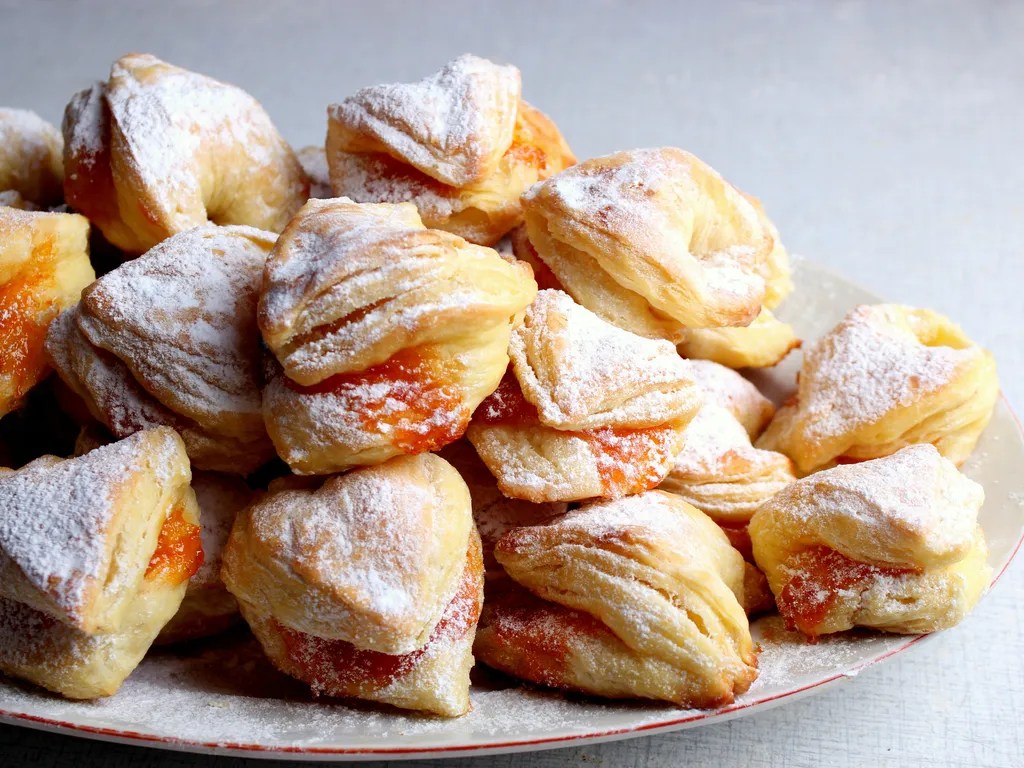
Sweet kifla is one of the most beloved Bulgarian desserts, it’s a the flaky pastry that can be salty and tangy too but when using a sweet filling, it can be turned into a dessert too. It’s basically the Balkan version of croissant (although it’s a lot more versatile than it), the most usual fillings include jam, chocolate, or ground walnuts mixed with sugar and cinnamon, and is often enjoyed with a cup of tea or coffee as a delightful treat.
Baklava

Baklava is one of the most popular Turkish desserts but through the Ottoman Empire, it became very popular in the Balkans too, including Bulgaria. It’s a made from layers of paper-thin phyllo dough, filled with a mixture of chopped nuts (walnuts, almonds, or pistachios) and basically bathed in liquid sugar, known as sherbet and has its top layers brushed with melted butter to make them crispier and flakier.
Funiiki S Krem

Originating from Poland, where it goes by the name rurki or rurki z kremem, this sweet pastry can be described as Slavic cannoli. It looks similar but it’s heavier and sweeter, some would ay even too sweet. In its essence, it’s a thin, delicate pastry, filled with a looot of whipped cream and because of its appearance is also known as “torpedo dessert,”.
Tulumba

Although essentially a Turkish sweet, tulumba is, similar to baklava, popular in many Balkan countries, including Greece, Macedonia, Serbia, Bulgaria, and others. Tulumba is in its essence, a deep-fried choux pastry with cylindrical shape, deep-fried and soaked in a sweet syrup, often flavored with lemon or rosewater.
Bulgarian Fruit-Based Desserts
When we discuss desserts, we always think of sweet cakes, pastries or Cookes but fruit based desserts should not be forgotten about. Bulgarian cuisine offers a variety of them and in this section, we cover the best of them.
Tikvenik

Tikvenik is a fruit-based dessert that uses pumpkin as the main ingredient, pumpkin; the pumpkin is combined with sugar, ground walnuts, and cinnamon and layered in thinly rolled sheets of phyllo dough before baking it until golden and crispy. It can be drizzled with syrup or topped with powdered sugar but it’s also pretty darn tasty on its own as well.
Oshav

Oshav is technically a Bulgarian beverage but being made from dried fruits and spices, it has a sweet flavor and is enjoyed as a dessert, so we included it in this list. It’s sweet and refreshing drink, somewhat similar to kompot but here the fruits are dried fruits (not preserved) and then boiled in hot water and cinnamon. You can use apples, pears, plums, apricots, or pretty much any fruit you can get your hands on.
Enjoying this post? Then you’ll probably also like our list of the best Serbian desserts.
Orehovki

Orehovki is a traditional Bulgarian cookie (which might be better suited for the next section but we decided to include it here because nuts are such a big part of it). Its name “orehovki” translates to “made with walnuts,” which is the key ingredient; the ground walnuts are combined with flour, sugar, butter, and a touch of vanilla so the dough is in its essence very nutty to begin with and after baking, it has a nice crumbly and battery texture that melts in your mouth.
Enjoying this post? Then you’ll probably like our list of Croatian desserts.
Bulgarian Cookies
Now that we covered most varieties of Bulgarian desserts, you didn’t possibly think that we won’t mention at least a few cookies, did you?
Kurabiiki

Kurabiiki, also known as Bulgarian butter cookies, are a beloved treat in Bulgarian cuisine. These delicate cookies are characterized by their rich buttery flavor and melt-in-your-mouth texture. Made with a simple combination of butter, sugar, flour, and sometimes eggs, kurabiiki dough is rolled into small balls, flattened, and often decorated with imprints or a dusting of powdered sugar.
The cookies are then baked until they turn a light golden color, resulting in a delicate and crumbly texture that practically melts in your mouth. Kurabiiki can be enjoyed year-round and are particularly popular during festive occasions such as Christmas and Easter.
Maslenki

Maslenki are Bulgaria’s version of butter cookies with buttery flavor and tender texture that melts in your mouth and even the name “maslenki” derives from the Bulgarian word for “butter,”. The dough for these cookies is made with a combination of butter, flour, sugar, and sometimes vanilla extract, then it’s shaped into various forms, such as small circles, crescents, etc. before baking.
Medenki

Medenki is another honey-based Bulgarian dessert- they’re soft and chewy cookies, with a sweet flavor dominated by honey. They’re made of a batter that combines flour, honey, sugar, and butter, is usually circular in shape but can also be rectangular and is especially popular during the holiday season, particularly during Christmas and New Year’s Eve.
Sweet Salami

Slatka Salama, which translates to “Sweet Salami,” is a dessert that sounds quirky but really isn’t The full dessert looks like a salami at a glance but that’s where the similarities end. Don’t worry, it doesn’t have meat, it’s just crushed biscuits, cocoa powder, butter, and sugar, and it’s usually served sliced so you don’t even see the salami shape.
Other Bulgarian Desserts
Lastly, we include a few Bulgarian desserts that don’t fall under any of the previously-mentioned categories but are an important part of Bulgarian cuisine…
Mljako s Oriz (Rice Pudding)

Mljako s Oriz, also known as sutliyas is the Bulgarian version of rice pudding, a universal dessert that doesn’t require a lot of introduction. It’s a comforting and creamy dessert that combines the delicate texture of rice cooked in milk, along with sugar, vanilla, and a pinch of salt. The slow simmering process results in a creamy and luscious pudding.
Kozunak

Kozunak is a traditional Bulgarian sweet bread traditionally prepared for Easter with a soft and fluffy texture, made of a sweet yeast dough enriched with eggs, butter, and sugar. Kozunak is sweet but not too sweet and buttery so it’s perfect when enjoyed with a cup of tea or coffee,.
Marudnik

Speaking of Bulgarian desserts, we just can’t forget to mention marudnik, Bulgaria’s version of palacinke. It’s like a normal crepe but a little bit thicker, it’s made by rolling out a thin dough made with flour, butter, and sugar and then spread with a sweet filling, including crushed walnuts, sugar, cinnamon, and sometimes raisins or other fruits.
Kadaif

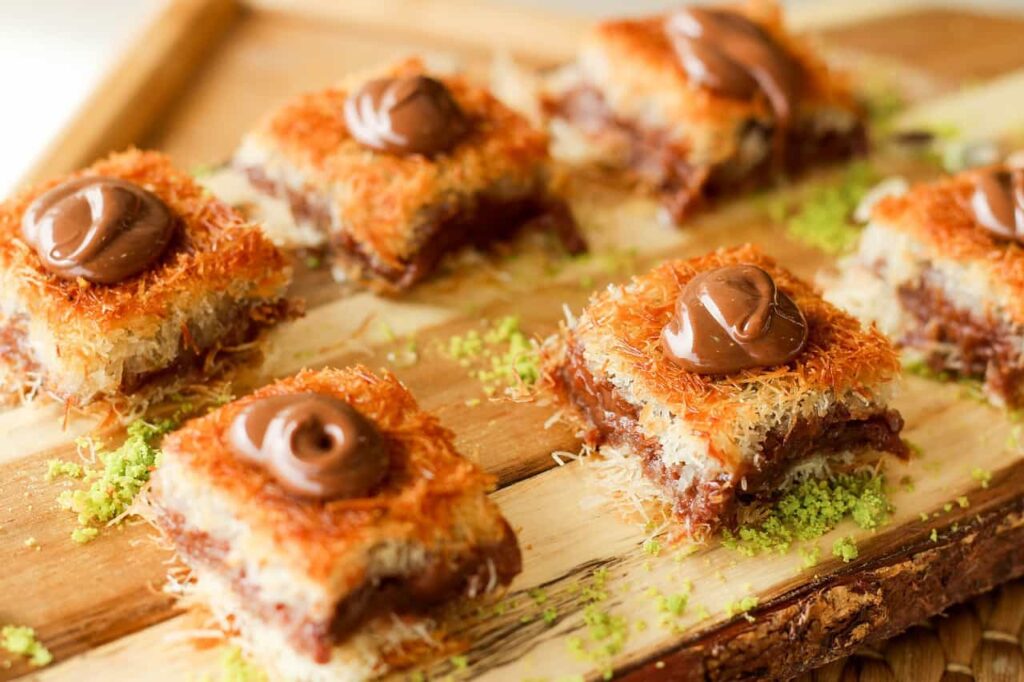
Kadaif is a traditional Turkish dessert that is enjoyed in various Middle Eastern and Balkan countries, including Bulgaria, Macedonia, and Bosnia, among others. It’s a unique sweet pastry made from phyllo dough but shredded and then piled into a nest-like shape, mixed with melted butter, and baked until brown and crispy before being topped with sweet sherbet and pieces of walnuts.
Lokum

Last but not least, we round up this list of popular Bulgarian desserts with lokum, also known as Turkish delight with is another popular Turkish confectionery that has gained popularity throughout various regions, including Bulgaria. It is a gelly-like sweet made from a mixture of starch, sugar, water, and flavorings such as rosewater and lemon cooked until it thickens. Once done with cooking, it’s then poured into a tray or mold to set, after which, it’s cut into small squares or rectangles and dusted with powdered sugar.
Did you enjoy our list of Bulgarian desserts? Which one was your favorite? Do you know some other local desserts we didn’t mention in this article? Fee flree to share your thoughts in the comments below.
Like it? Pin it.