
If you’re following our blog, you know we’re huge fans of Balkan cuisines and of course, Bulgarian cuisine; In the past, we wrote about the best Croatian pastries, Croatian desserts, Bosnian desserts, Serbian desserts, Balkan desserts, Bosnian snacks, and in this article, we’ll focus on the most popular Bulgarian snacks and teach you everything there is to know about them.
Bulgarian Pastries
From flaky, buttery layers encasing savory or sweet fillings, to delicate bites of pastry perfection, Bulgarian pastries offer a delightful array of flavors and textures. Each bite unveils a unique blend of tradition and creativity, leaving your taste buds craving for more…
Banitsa


Banitsa is a pastry that consists of layers of thin phyllo sheets filled with sirene (explanation below), eggs, and sometimes yogurt (which gives the pastry a puffy texture that resembles a soufflé). The pastry sheets can be made by filling and rolling or by scrunching up and dotting the sheets with the filling. Banitsa is an integral part of Bulgarian cuisine, and tradition, one of the most popular breakfast dishes and it’s often prepared for Christmas and New Year’s Eve but thanks to bakeries, you can enjoy Banitsa in Bulgaria every day.
Kozunak


Kozunak is a traditional Bulgarian sweet bread that is often enjoyed as a special treat during holidays and celebrations, particularly during Easter. It’s made of a simple list of ingredients- flour, butter, sugar, eggs, milk, yeast, vanilla extract, raisins, and walnuts. Kozunak has a soft and slightly sweet taste, but not too sweet making it a nice light dessert but also a good companion to a cup of coffee for breakfast.
Mekitsi


Mekitsi are deep-fried dough balls or discs made from a simple mixture of flour, yogurt, eggs, baking powder, and salt, resulting in a golden brown kind of a flatbread with a soft and fluffy texture and ultra versatille- it can be comined with savory, salty or even sweet toppings.
Kifla

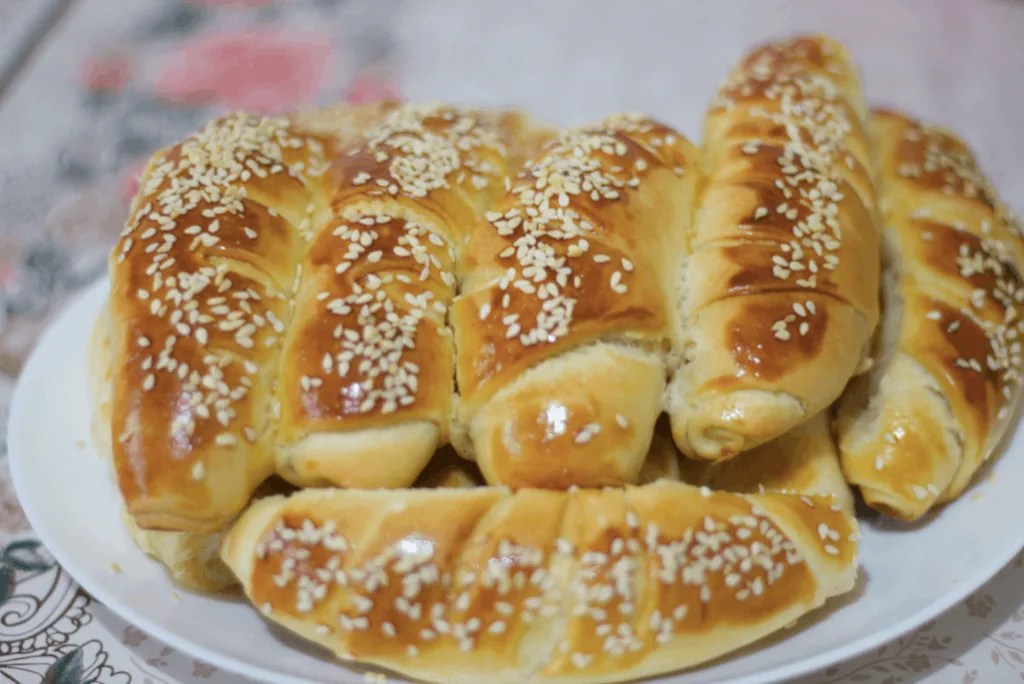
Kifla or kipfel is a traditional yeast bread roll that is rolled and formed into a crescent before baking. Kifli is a common traditional light yeast roll that is prevalent in the eastern and central parts of Europe (even though regional names might differ) that can be described as the Balkan version of croissants.
Gevrek


Gevrek is a type of bagel-shaped bread roll that is small in size and often sprinkled with sesame seeds with a dense and chewy texture and crispy crust similar to simit.Gevrek is commonly found in bakeries and is usually served on its own or with a glass of yogurt either for breakfast or as a snack.
Zelnik


Zelnik is a traditional Macedonian dish made of thin crust filled with cabbage (or sauerkraut) or spinach (that’s also popular in Bulgaria) but in recent years, you can find more different variations that include fillings with cheese, eggs, minced meat, leeks, sorrel, or even rice.
Oblatena Banitsa


“Oblatena banitsa” is a variation of the traditional Bulgarian banitsa where, instead of the usual rolled or layered preparation, the filo dough is spread out individually, one sheet at a time, and then folded or wrapped into individual portions. The fillings are more or less the same and it still tastes a lot like banitsa just with a slightly different shape.
Parlenka
Parlenka is a round, flatbread that is either grilled or baked kind of similar to Russian piroshki, but with a soft center and a lightly charred crust. It’s usually eaten plain, either for breakfast or as snack. There are also variartions where the bread is filled with yellow or white cheese, or garlic.
Meat-Based Bulgarian Snacks
Bulgarian cuisine offers a variety of meat-based snacks from dried sausages to savory meat-filled pastries.
Lukanka


Lukanka is a traditional Bulgarian cured sausage made from ground pork meat, fat, and garlic. The mixture is always stuffed into natural casings and left to dry and cure for at least several weeks (a long time, I know but trust me, it’s worth waiting for it). In the end, you get a sausage with a rich, smoky flavor with a spicy hint of garlic, perfect for sandwiches or to combine with a glass of beer.
Katino Meze


“Katino meze” is a term used in Bulgarian cuisine to refer to a platter of various appetizers served in small portions alongside alcoholic drinks like rakija or mastika. The meze usually includes cured meats (like lukanka or sujuk), cheeses (such as sirene or kashkaval), olives, pickles, marinated vegetables, spreads (like kyopolou or lyutenitsa), bread, and other bite-sized snacks.
Chushki Burek


Chushki burek is an interestnig Bulgarian version of the ultra popular burek that takes the regular burek and combines it with polneti chushki- which is another dish that consists of bell peppers stuffed with a mixture of rice and minced meat. So, instead of stuffing the burek with meat, cheese or spinach, this version takes polenti chushki (the stuffed peppers), cuts them in pieces and uses them as filling for the filo dough.
Karnache


Karnache is a traditional cured Bulgarian sausage typically made from pork meat and a bunch of spices that kind of looks like a grilled small snake on your plate. But once you recover from the initial surprise of what you see on your plate and realize that this isn’t a snake, it’s actually irresistably tasty and goes so well alongside a pint of local beer.
Sarma/Dolma


The best way to describe Sarma is as a pickled cabbage roll filled with rice, spices, and ground meat. In the Balkans, sarma is usually rolled in pickled cabbage but in some places, you mind find sarma rolled in grapevine leaves. Dolma is essentially the same thing, except is uses grapevine leaves instead of pickled cabbage leaves.
Vegetarian Bulgarian Snacks
Even though primarily a meat lover haven, Bulgarian cuisine offers a variety of delightful vegetarian snacks and here are some of the most popular ones.
Kyopolou


Kyopolou is a traditional spread or dip, also popular in Romania and Turkey, made primarily from roasted eggplants and peppers somewhat similar to ajvar and zacusca just it uses a lot more eggplant and a lot less peppers (basically the ratios are reversed). To prepare kyopolou, eggplants, and peppers are typically roasted until the skin is charred and the flesh becomes tender and this gives the dip a unique juicy but at the same time, smoky flavor that’s just simply irresistable.
Shopska Salata


Named after the region of Shopluk, which encompasses parts of Bulgaria, Macedonia, and Serbia, Shopska salad is easily the most popular salad in the region. The preparation is simple- you just take cucumbers and tomatoes and you cut them in small cubes, finely chopped onion, and you take some white cheese and you grate it all over the salad. For the finishing touches, an olive or two are added in the middle, and voila, you have the perfect salad to enjoy a glass of rakija with your friends.
Sirene Po Shopski


Sirene po shopski is a traditional Bulgarian dish that features sirene cheese as the main ingredient- it starts with a bed of sliced tomatoes, onions, and bell peppers in the baking dish and the sirene cheese, a white brined cheese similar to feta cheese, is then crumbled on top of the vegetables. Served alongside freshly baked bread, this dish makes up the perfect snack to keep you full when you get hungry in between meals.
Enjoying this post? Then you may also enjoy our guides on Serbian food, Bosnian food, and Turkish street food.
Tarator


Tarator is a traditional Bulgarian cold soup or chilled yogurt-based dip, particularly popular during the hot summer months. The main ingredients of tarator are yogurt, cucumbers, and garlic. So, in its essence, it’s a very refreshing cold salad with a hint of garlic, perfect for cominbing with a glass of mastika or rakija before your meal (it does wonders for your appetite).
Lyutenitsa

Lyutenitsa is a popular condiment/dip/spread- it’s kind of hard to classify it because it’s so versatille. But, it’s made from roasted red peppers and tomatoes, and in its essence, it’s basically the same as ajvar with one important difference- lyutenitsa uses hot peppers and the final product is spicy while ajvar usually uses sweet peppers.
Pechen Sladak Kartof (Roasted Sweet Potato)


Pechen Sladak Kartof is not a special recipe, nothing complicated, but a perfect snack you can make in a matter of minutes. It’s basically sweet potatoes, chopped into long circles, drizzled with olive oil, seasoned with salt and pepper, and then roasted in the oven until tender and caramelized.
Popara


Popara is a traditional Balkan poorman’s dish that was very popular during the socialist era of shortages. It consists of the two ingredients everyone could get their hands on- bread and milk. Basically, it’s chunks of bread dipped in milk. Not your Michelin star experience dining right there but an interesting snack to try once in a while, for sure.
Sweet Bulgarian Snacks
Bulgarian cuisine offers a delightful array of sweet snacks that cater to every sweet tooth and in this section, we’ll cover some of the most popular ones.
Tikvenik


Tikvenik is a traditional Bulgarian pastry filled with pumpkin in between thin dough layers. It’s basically more of a dessert than a snack but it’s also not super sweet so it deserves a mention on this list. Due to pumpkin’s seasonality and its association with autumn and winter, it’s especially popular during the autumn season and on special occasions.
Baklava


Baklava is hands down, the most popular Turkish dessert. From Sarajevo to Baku, everyone claims their baklava is the best one in the world but no one can make it better than the Turkish. In different parts of the world, you’ll find baklava in different shapes and sizes but in its essence, this dessert consists of chopped nuts spread inside numerous layers of phyllo dressed with batter and sherbet or honey. It might sound easy, but this recipe is actually quite hard to make and baklava-making is a real art!
Maslenki


Maslenki are Bulgarian butter cookies especially popular during the winter holidays, made from a simple mixture of butter, flour, and sugar. Maslenki can be enjoyed plain or lightly dusted with powdered sugar, are simple, easy to prepare, irresistably buttery and flaky, and perfect with tea or coffee.
Patatnik


Patatnik is a traditional Bulgarian dish from the Rhodope Mountains, consisting of potatoes, onions, garlic, and sometimes grated zucchini. The ingredients are grated and baked until a firm, cirspy, cake-like dish comes out of the oven. It’s typically served in triangular slices, accompanied by yogurt or sour cream.
Oreshki


Oreshki are Bulgarian walnut-shaped cookies but they’re not made of actual walnuts despite their name (which translates to walnuts or walnut-made). The cookies are bite-sized cookies are made using a special mold to give the cookies this unique shape and as far as texture goes, the cookie is butter, melts in your mouth and yet still a bit crunchy because of the grated nuts used in the batter.
Tahan Halva


Tahan Halva, also known as tahini halva, is a Middle Eastern sweet that is also very popular in Bulgaria. It’s dense, sweet made from tahini (sesame paste) and sugar but also uses ingredients that give it a healthy crunch like nuts, vanilla, or cocoa powder. It is often enjoyed as a dessert or snack, served in small slices.
Pechena Tikva


Pechena tikva is basically a fancy-looking roasted pumpkin that consists of finely shaped slices or chunks of pumpkin that are cooked until caramelized and then brushed with oil, sprinkled with cinnamon, nutmeg, or cloves.
Kekse


Kekse is basically a Bulgarian biscuit/cookie and it comes in many shapes, sizes, and even flavors, from simple butter cookies to creamy, chocolate, or jam-filled cookies. It’s the most popular teatime snack in Bulgaria and one of the most popular kekse variety are vanilki or vanilice, one of our favorite Balkan cookies and a recipe we covered in the past.
Oblate


Oblate are thin, crispy wafers composing a sweet sandwich filled with a filling that can vary from chocolate to nuts, to caramel, or even a combination of the three. The real charm of oblande is in its texture play, crispy wafers that contrast beautifully with the creamy, rich filling.
Drinks
Lastly, we round up this list of Bulgarian snacks with a couple of popular drinks.
Tursko Kafe (Turkish Coffee)


Tursko kafe is basically Turkish coffee, a traditional method of preparing and enjoying coffee that has its roots in Ottoman cuisine. It is a strong and aromatic coffee beverage that is popular in many countries, including Bulgaria. It’s thicker and stronger than your average cup of coffee and method brews the coffee without filter so grounds settle at the bottom of the cup (that part is not for drinking).
Ruski Chai (Russian Tea)


“Ruski chai” translates to “Russian tea” in English and it’s a term commonly used in Bulgaria to refer to a specific type of tea preparation, not the tea itself. It’s a method of preparing tea using a samovar, a traditional Russian tea brewing device that consists of a metal container for boiling water, a teapot on top, and a small faucet to dispense the brewed tea.
Did you like our list of the best Bulgarian snacks? Did you ever try any of them? Do you think there are some other Bulgarian snacks we didn’t mention in our list? Feel free to share your thoughts in the comments below.
Like it? Pin it.


Bulgarvulgar
Tuesday 24th of September 2024
70% Turkish food