
If you follow our blog, you know that we are seriously fascinated by Balkan cuisine. We have previously covered many different dishes from the different countries of the region but in this article we decided to do something different and feature some drinks that go well with all the dishes we have previously written about. And in this article ,we focus on the most popular Croatian drinks from the fiery shot of rakija to the fizzy chuckle of an Osječko Pivo shared among new friends.
Let’s start from the beginning…
Brief History Of Croatian Drinks


Long before tourists swarmed the Dalmatian coast for a sip of summer, the Illyrians were already tending their vines (yes, they have been loving alcohol in the Balkans for more than 2 millennia now). Now, fast forward through the centuries, and you’ll find Roman tipplers reciting praises for Istrian wines, andSlavic tribes who, upon their arrival, liked things so much, they decided to keep the tradition alive…
Dishes To Combine Your Croatian Drinks With


If you’re looking for some dishes to pair up with Croatian white wines, check out our list of Croatian snacks, our brudet recipe, our sataras recipe, or our helpful guide to seafood in Croatia. If you prefer red wine, check out pasticada, peka, strukli, or sarma. Pljeskavica and cevapi go very well with the local beer varieties. If you’re looking for things to pair up with non-alcoholic beverages, you’ll also like ajvar and burek, or if you have a sweet tooth, definitely check out bajadera, ustipci, fritule, or vanilice(which also goes great with tea/coffee). And if you need more suggestions, you can also check out our guide to Croatian breakfast, Croatian desserts, Croatian pastries, Croatian appetizers, and Croatian street food.
Non-Alcohilic Croatian Drinks
We’re starting off this gudie to amazing Croatian drinks and drinking in Croatia with a few non-alcoholic beverages.
Coffee


Even though it technically doesn’t grow here, coffee in Croatia is a social concept, just like in all other Balkan countries. Step into any café from Split to Dubrovnik, and you’ll find the Croatians cradling a small cup of “kava” usually discussing the latest gossips with their friends or coworkers. Some local favourites include espresso, the bijela kava or white coffee, and of course velika kava (large coffee) because you can never truly get enough, right?
Boza


Boza is a delicious fermented beverage that is popular in several countries, particularly in the Balkan region and the Middle East made from various grains, but most usually wheat, barley, corn, or millet in a process that involves fermenting the grains via a specific strain of yeast or lactic acid bacteria, a process that gives the drink a slightly fermented flavor and small percentage of alcohol with a creamy and thick texture and a sweet, tangy and slightly sour flavor.
Kompot


Kompot is a humble humble fruit-infused potion by simmering down apples, apricots, or just about any fruit that can be coaxed off a branch. Kompot is to Croatians what iced tea is to Southerners — a staple, a refreshment, a given. It’s there in the heat of summer, cool and sweet, bobbing with chunks of fruits that beg you to forget about the fork and dive in with your fingers.
Pasareta

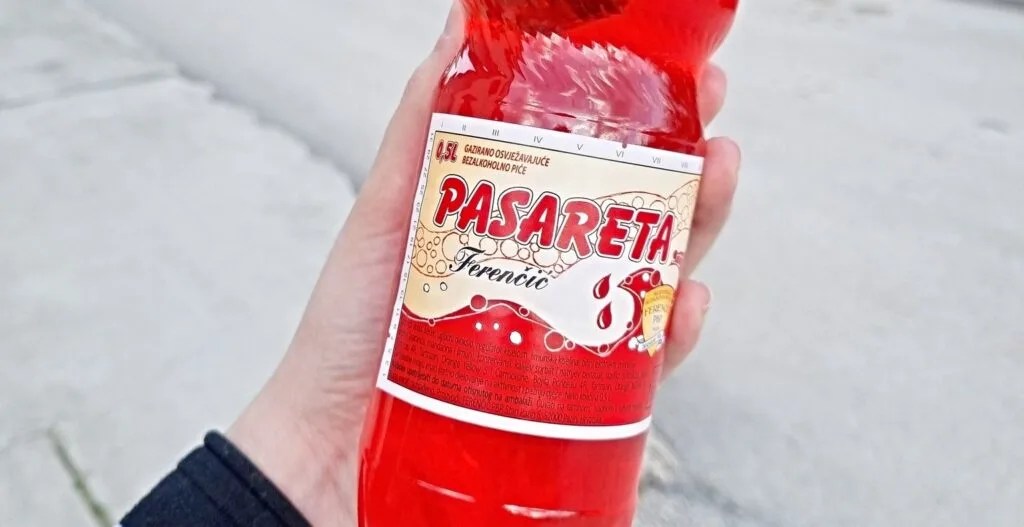
Pasareta is a cherry-red soda pop that might not be the stuff of solemn toasts or high-brow tastings, but it’s a nostalgic nod to childhood for many Croatians. In a country celebrated for its robust wines and potent spirits, Pasareta stands out with its ruby charm, like a gaudy bauble in a grandmother’s jewelry box. It’s not trying to be the next craft cocktail sensation, it’s just content with its role as the star of after-school treats and the unofficial sponsor of “it’s too hot to move” afternoons.
Rakija & Varieties


We just can’t have an article about Croatian drinks and drinking in Croatia and not mention rakija. Rakija is the Balkan’sliquid handshake — it’s how you know you’ve truly arrived. Also popular in neighboring Balkan countries like Serbia, Montenegro, Macedonia, Bosnia, Slovenia, Albania, and Bulgaria, this fiery spirit is to Croatians what espresso is to Italians; both a welcome and a parting gesture, a celebration in a shot glass. Distilled with fervor from fruits like plums, pears, or even grapes, rakija is the ultimate icebreaker. Let’s see which are some of the most popular rakija varieties in Croatia.
Loza


This list of the most popular Croatian drinks couldn’t be complete without Lozovača, a rakija variety made from grapes and yellow in color. This rakija variety can be found in Serbia, Bosnia, Macedonia, and Montenegro but it’s most popular in Macedonia and Croatia, especially in the southern parts that have a climate ideal for grape growing.
Enjoying this post? Then you may also like our guide to Serbian drinks.
Travarica


Travarica is another rakija variety that’s more popular in Croatia than in other Balkan countries. It basically takes lozovaca rakija and infuses it with a lot of fresh herbs that are just left inside the bottle. After it ages for a while, this herb-infused rakija is supposedly great for digestion and it even has some medicinal properties according to most Croatians.
Slavonska šljivovica


Slavonska šljivovica, is a drink that has a name that rolls most foreign tongue exactly how this smooth brandy flows in your mouth. Yes, it’s another rakija variety, this one made from fermented plums and hailing from the storied orchards of Slavonia. It’s the kind of drink that murmurs of long Slavonian winters and the kind of warmth that can only be found in close-knit community gatherings.
Komovica


Komovica is an often underrated rakija variety, kind of like the bass player of a rock band- not always in the spotlight, but oh, how you’d miss it if it wasn’t there. This rakija is made from what’s left after winemaking: the pomace, which includes the grape skins, seeds, and stems. Now, you might ask how does Komovica differ from Lozovača? And the parallel I’d tell you is that Lozovača is the smooth-talking diplomat in a silk suit, while Komovica is the rugged outdoorsman in a leather jacket. It’s harder, has a more robust, slightly smoky flavor and a stronger smell.
Biska

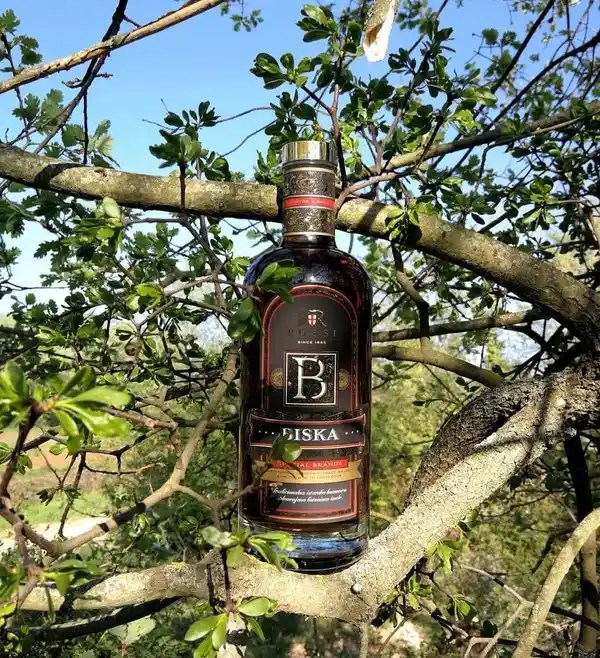
Biska might just be the Croatian countryside in a bottle. It’s yet another quirky brandy that warm the chest; it practically gives you a bear hug. Distilled from white mistletoe and often homebrewed in the backyards of Istria, this rakija brings a different, herbal and somewhat earthy flavor but it smells a little bit like freshly cut wood. It’s part of Istrian tradition and pride of the region.
Wines
This list of the most popular Croatian drinks and drinking in Croatia just can’t be complete without sharing some basic information about some of the country’s most popular and delicious wine varieties.
Pošip


Pošip is a white wine variety originating from the Dalmatia coast that could make even red wine enthusiasts raise an eyebrow with intrigue. Its full body throws down its bags and decides to stay awhile, telling tales of the stone-laden fields and salt-laced breezes of Korčula, where it’s lovingly cultivated. It’s a wine that fully encompasses Mediterranean sophistication while still keeping a dash of an islander’s swagger.
Prošek


Prošek is one of Croatia’s finest dessert wine varieties. it’s made from dried native white grapes like Bogdanuša, Maraština, or Vugava, it comes with a sweet and rich flavor, with a fruity touch with subtle notes of dried herbs, perfect to combine with most Croatian desserts.
Dingač

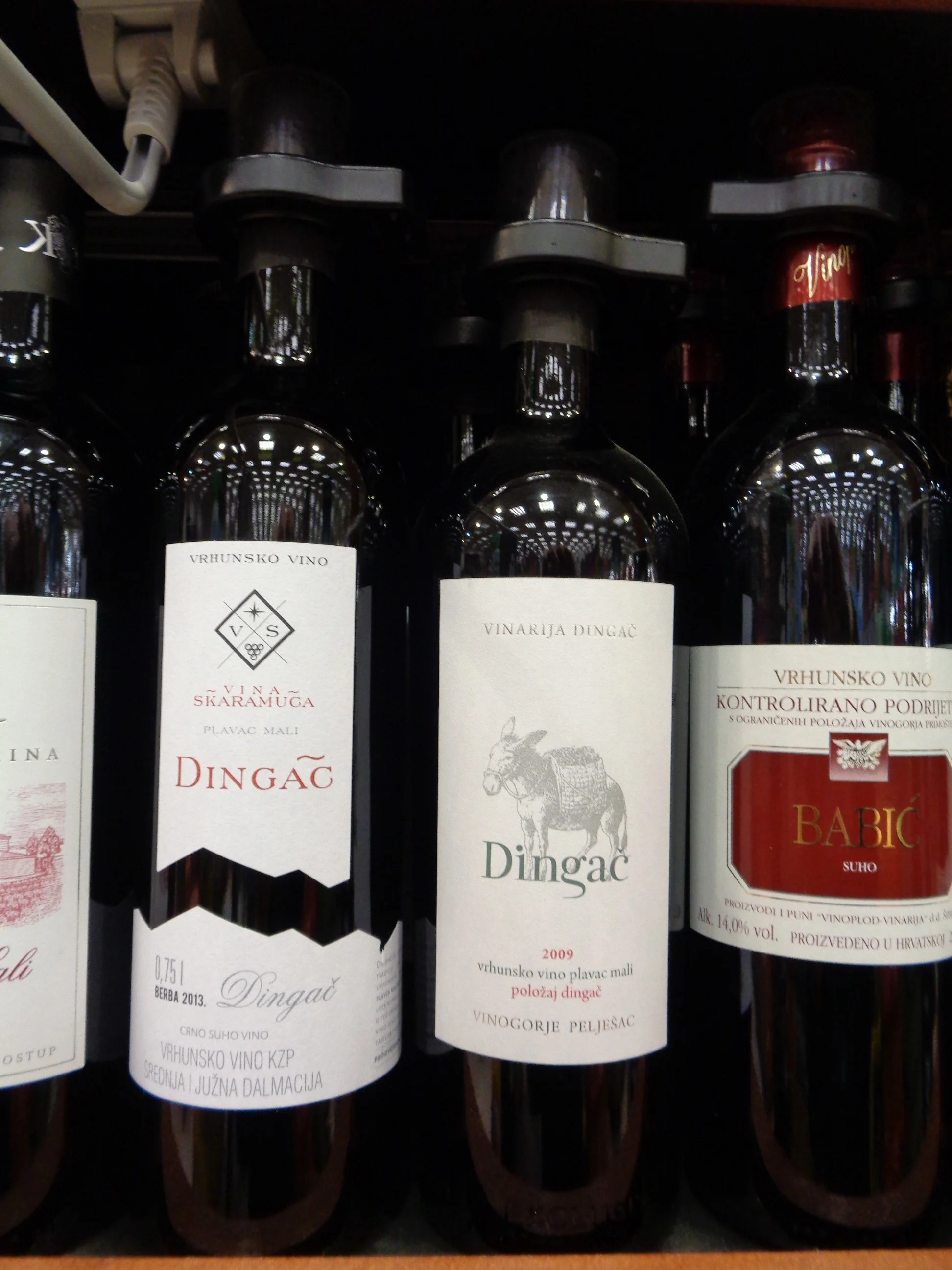
Dingač: the heavyweight champion in the arena of Croatian drinks, a red so potent it’s practically the lifeblood of the Pelješac Peninsula. It’s made from the Plavac Mali grape, considered to be a premium red wine, it’s full-bodied, robust and racks up to 16% of alcohol. It’s dry but still with a touch of dark fruit flavors. When you’re drinking in Croatia, skipping Dingač would be like visiting Dubrovnik and not walking the walls — a near heretical oversight.
Istarska Malvazija


Istarska Malvazija, or Malvasia Istriana if we’re being proper, is the laid-back, sea-breezed cousin in the family of Croatian drinks. It’s a white wine from the Istrian Peninsula, and one of the country’s signature whites. It’s dry and fresh with crispy citrus notes and a slightly mineral finish that leaves you craving for more.
Bermet
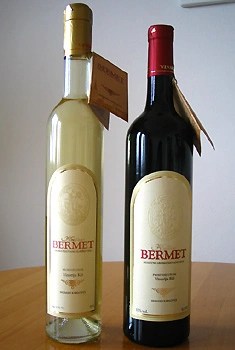
Bermet is another aromatic, slightly spicy dessert wine coming from the town of Sremski Karlovci, so technically Serbian but equally beloved in Croatia too. It’s infused with a bunch of medicinal herbs that give it a bittersweet and aromatic palette. What sets Bermet apart in the diverse crowd of Croatian drinks is not just its aromatic profile but its rumored cameo on the Titanic’s wine list.
Bambus


Bambus may sound exotic, but it really isn’t- it’s just a quirky mixture of red wine (usually a cheap one) with Coca Cola in a 60-40 ratio. It’s a doorman’s drink, a beverage that scoffs at snobbery and raises a toast to the simple pleasures, but also one that can hit quite hard if you’re not careful enough.
Liquors
Now we did mention some rakija drinks previously but liquors are something a little bit different and this list of Croatian drinks wouldn’t be complete without at least a few representatives, starting with…
Maraschino


Hailing from the picturesque city of Zadar, this clear, somewhat sweet concoction has been getting Croatians drunk since the 18th century. It’s made from Marasca cherry that grows along the Dalmatian coast. It’s sweet but not surupy sweet with a dry herbal complex and with touches of rose petals and vanilla, making its flavor profile perfect for combining with most Croatian desserts.
Teranino


sweet, spiced liqueur made from Teran red wine mixed with a base of rakija and aromatic spices. Or in other words, it’s like Istria’s version of mulled wine but more elegant and with a richer flavor that touches notes of cherry blum, and vanilla, combining the fruitness of dessert wine with the kick of rakija- what’s not to love?
Pelinkovac


Pelinkovac is a bittersweet made from wormwood — yes, the same plant that once gave absinthe its risqué allure. Its flavor very closely resembles that of jaggermeister- it’s sweet, slightly bitter, you can feel the many herbs used in its preparation, and it comes with a mighty alcoholic punch.
Kruškovac


Kruškovača is another liquor variety that’s made of pear extract or pear flavouring. Technically, this one is a liquor and not a brandy. As the photo suggests, its alcohol volume is lower, it’s much sweeter in flavor, a more sophisticated rakija variety if you will.
Orahovac


Orahovaca or orahovac is a drink that perfectly captures the spirit of Croatian conviviality. It’s a liquor made from walnuts that are crushed and steeped in a base spirit, often grape or plum rakija, along with a blend of flavor enhances that can include anything from vanilla to cloves.
Beer Drinking In Croatia
Lastly, we just can’t conclude this list of the best Croatian drinks and drinking in Croatia with a few tasty local beer varieties.
Ožujsko


Ožujsko Pivo is is one of Croatia’s most popular lagers, in its essence, a pale lager with golden color, 5% alcohol, mild bitterness and light malty sweetness with hints of grains. The beer is also one of Croatia’s oldest; it’s been manufactured since 1892 brewed by Zagrebačka Pivovara.
Karlovačko


When you mention Karlovačko Pivo in Croatia, you’ll see eyes light up and smiles spread—it’s one of the country’s most popular and oldest beers, with its creation dating back to 1854, making drinking this beer like sipping history with a refreshing, bubbly twist. It’s also a pale lager with similar color and alcohol percentage as the previous one but more bitter, crisper, and with a slightly drier finish.
Osječko

Last but not least, we wrap up this list of Croatian drinks with Osječko, Croatia’s oldest continuously produced beverage. It’s been around since 1697, so it’s the kind of drink that’s been around the block, seen a few things, and isn’t afraid to tell its story. It has a malty and grain forward flavor with slight bitterness and earthy hops, and a bit richer and breadier than the other two…
How did you like this list of the best Croatian drinks and drinking in Croatia? Did you ever try any of them? Feel free to share your experiences in the comments below.
Like it? Pin it.
