
Forget your quaint European notions of flaky croissants and small, demure cups of weak coffee. The Bosnian breakfast is not just a meal but an act of aggressive preparation for a long day of not moving or a brutal survival test against the elements. If you can handle this list, you are ready for anything…
1. Cicvara: The Mountain Heart Attack


Cicvara is a shockingly heavy dish hailing from the mountain regions made from cornmeal (kukuruzno brašno), cooked slowly and laboriously, then finished with absurd, generous amounts of kajmak (that dense, glorious clotted cream that is 80% butter and 20% attitude) and sometimes fresh cheese.
The mixture must be so thick that a spoon stands upright, defying gravity and common sense. Its cultural significance lies solely in its ability to deliver an unprecedented caloric density—it’s how the ancestors proved they could survive a six-month winter.
2. Burek: The Sacred Circle of Meat


Let’s establish this immediately: Burek is the one and only in Bosnian cuisine. Anyone who calls any of the other pies Burek is wrong and deserves to be corrected by a highly offended local. Real Burek is a masterpiece—a spiral of gossamer-thin, paper-delicate phyllo dough (jufka) wrapped around a filling of minced beef (or occasionally lamb) baked in a round metal tray (tepsija), greasy enough to shine, and crispy enough to crunch when you cut it.
You eat it with plain yogurt, usually standing up, and frequently as a hangover cure—the sacred, greasy circle restores order to your soul.
3. Sirnica, Zeljanica, Krompiruša


These are the other pies, using the same hand-stretched, delicate jufka like Burek, but with less exciting fillings. They are the supporting cast, usually chosen only when the Burek is sold out. Sirnica (cheese pie) is filled with a mixture of salty, fresh cow’s cheese and often a dollop of kajmak—the socially acceptable vegetarian choice.
Zeljanica (spinach pie) is spinach and cheese, often marketed as the “healthy” option, a claim that is instantly invalidated by the generous amounts of oil it’s cooked in. Krompiruša (potato pie) is the most humble, stuffed with finely diced potatoes, onions, and pepper. The significance? They allow you to consume an astounding volume of saturated fat under the guise of eating “pie.” Just remember the rule: never, under any circumstance, call any of these three Burek. The lecture is not worth the risk.
4. Pura s Lučinicom


Here we have another example of taking a perfectly mild, inoffensive starch and brutally drowning it in fat and aggression. Pura is a local, slightly thinner version of cornmeal porridge or polenta, often soft and bland, with its main purpose usually being to serve it as a vehicle for the lučinica.
This is a sauce created by heating a generous ladle of kajmak or pure butter until it is sizzling, then pouring it over a significant mound of crushed fresh garlic. The hot fat instantly cooks the garlic, creating a highly fragrant, intensely flavored, and deeply satisfying sauce that is then poured over the bland pura. It’s a peasant’s dish, designed to use simple ingredients to deliver maximum flavor and caloric impact.
5. Popara


Popara is the ultimate testament to the Bosnian philosophy of zero waste. It’s basically stale chunks of bread that are submerged in hot water or milk, resulting in the bread turning into a soggy mess. It can be served with generous quantities of kajmak, sirevi (cheese), or other dairy fats. The dish has the ability to turn a day-old somun (flatbread) into a dense, warming breakfast that sticks to your ribs until lunch—or until you decide you need a nap.
6. Bread and Spreads
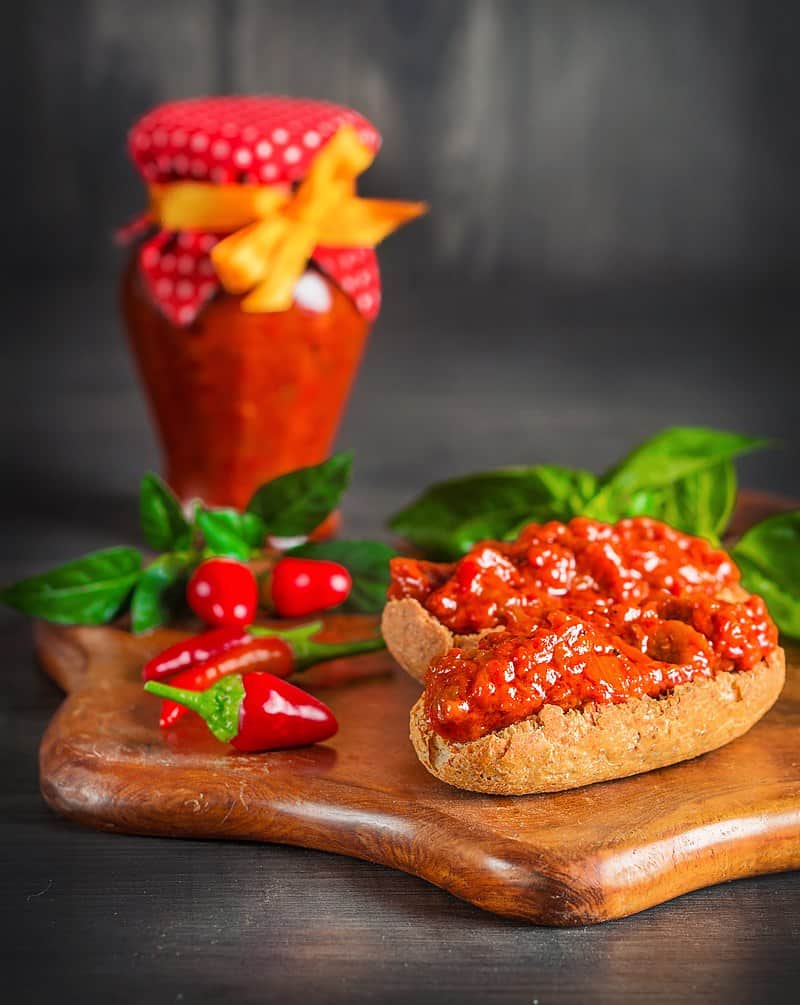
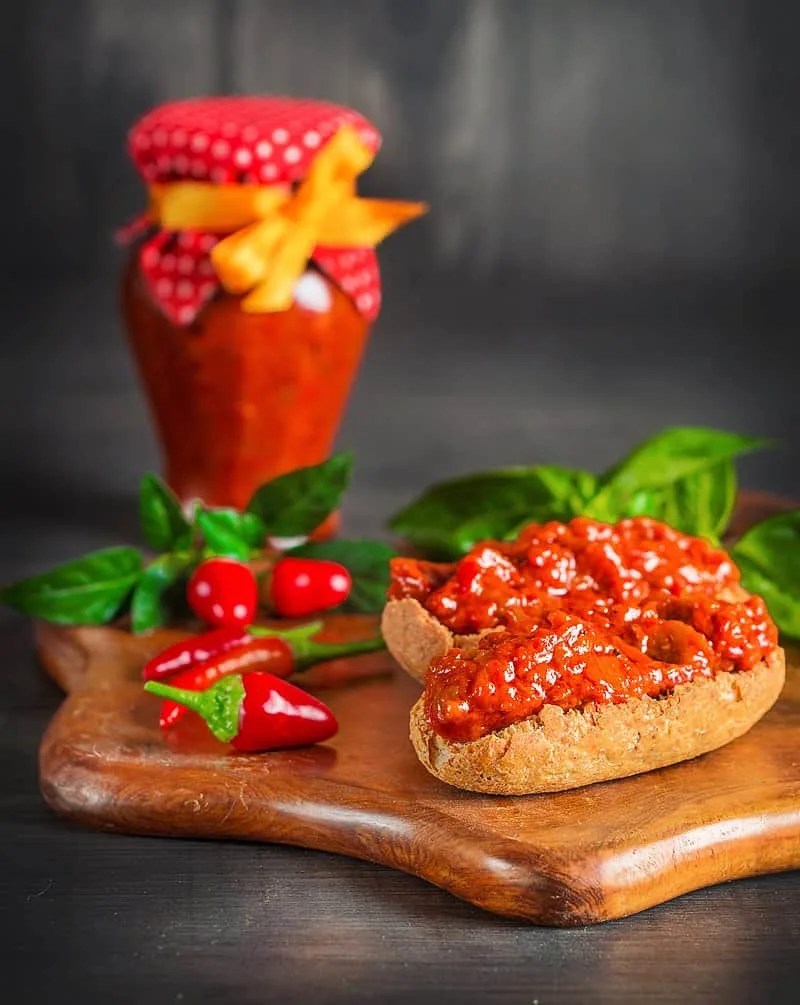
In the Bosnian breakfast, bread is either lepinja or somun—soft, slightly chewy, and often warm, and used to soak sauces or be topped with spreads. The popular spreads feature Kajmak, a pale yellow, impossibly rich, clotted dairy dream, ajvar, slow-cooked, roasted red pepper, and eggplant relish or thick jam, reserved for those who need to offset the kajmak with a token sweetness.
7. Čimbur s Mesom


This is the ultimate unapologetic, no-nonsense protein bomb, in its essence, a thick, rustic scramble of eggs, usually cooked in a deep metal pan, or sač with meat usually dried, smoked, cured meat—known as suho meso (a smoked beef or lamb that is basically Bosnian bacon). The meat must be rendered until the fat is sizzling and infusing every millimeter of the egg, and is often topped with cheese and finished with a dusting of paprika for color, because why not add more sensory overload?
8. Tikvenjak
Tikvenjak is a phyllo pastry pie (pita) filled not with savory things, but with a grated, mixed filling of sweet pumpkin (tikva), sugar, and often a generous hit of cinnamon; basically, the sweet version of the previously mentioned pies but different enough to be mentioned separately. It’s the ultimate act of culinary deception—the same flaky, oil-laden jufka that delivered the Burek, now delivering dessert for breakfast. It’s soft, syrupy, and served warm, often as the final palate cleanser before the coffee.
9. Tarhana


Tarhana is not a dish for pleasure; it is a dish for prevention, a soup whose base is made from small, dried, pebble-like pieces of fermented flour and yogurt paste, dehydrated and stored, to be prepared later.
When prepared, they are reconstituted in hot water or broth, sometimes with a little paprika or mint, which gives them an inherently sour, slightly tangy, and medicinal flavor, perfect for when you have a cold or your stomach is complaining about the previous night’s rakija intake. It is the humble, tangy, and frankly often strange appetizer that is meant to settle your stomach, allowing you to proceed with the far more aggressive cheese and meat dishes that follow.
10. Klepe: The Balkan Dim Sum


Klepe are the Balkan answer to ravioli—small, delicate dumplings made of simple pasta dough, usually filled with seasoned minced beef or lamb, boiled until tender, then typically served with a generous dollop of sour cream or yogurt and drenched in hot, melted butter infused with smoked paprika. It’s a slow, methodical way to ingest all the foundational flavors—meat, dough, butter, and spice—in one glorious mouthful that makes for the perfect start of the day.
11. Manti Burek


No, this is not the standard Burek but a mini version that takes the concept of the meat pie and doubles down on complexity and labor. Manti are tiny parcels of jufka dough filled with ground beef baked in the same tepsija (round tray) until golden, then drenched in a hot garlic-yogurt sauce before serving. It’s a dish designed to prove the cook has endless patience, and that the eater has zero concern for their waistline.
12. Palacinke


Palacinke are the most universal of Balkan desserts, and a frequent addition to the breakfast lineup. These are thin pancakes or crêpes, a bit thicker than the French variety and usually rolled and filled with Nutella, jam, Eurocrem (a two-toned chocolate hazelnut spread), cheese, or even ham. It is a sweet, recognizable comfort that contrasts starkly with the rustic savagery of the pura.
13. Gibanica


Gibanica is a Serbian pastry that can be described as a filo dough pie, most commonly filled with white cheese (sirene), but there are also some sweet variations of the gibanica recipe. Today, this pastry is popular all over the Balkans, and similar variations can be found in some other Slavic countries too. Throughout history, Serbia was under Ottoman and Habsburg rule, and many food connoisseurs refer to gibanica as a mix of Turkish and Austrian influences. At a glance, the pastry looks like a mix of strudel and burek/byrek. And since we started speaking of gibanica’s origins…
14. Kljukuša


This dish is the definition of “aggressively simple”—it’s made by taking raw potatoes, grating them, mixing them aggressively with flour, eggs, and salt, and then spreading the resulting batter thinly and baking it until the edges are beautifully crisp and the center is soft.
Once it’s baked, it’s cut and drenched in warm milk, sour cream, or melted butter, ensuring that the thin, crispy potato base becomes a heavy, soggy, and utterly satisfying sponge for dairy fat. It hails from the western regions and represents the height of using the cheapest available ingredients to manufacture a guaranteed food coma before you even have had your second cup of coffee.
15. Kačamak


Kačamak is a traditional Balkan dish, particularly popular in rural areas. It’s a type of maize porridge, often combined with potatoes and served with a variety of toppings like cheese, sour cream, or even rendered pork fat. Hearty and satisfying, Kačamak is often likened to polenta.
16. Proja


Proja is the Balkan version of cornbread, and a dish that can best be described as a type of cornbread made from corn flour and usually filled with white cheese. Often enjoyed as a breakfast or a side dish, proja is particularly popular in rural areas and can be made with additional ingredients like yogurt or spinach.
17. Ustipci and Peksimeti: The True Fried Bread Kings


This guide to Bosnian breakfast can’t be complete without the two crucial fried components- ustipci and peksimeti. Ustipci are small, irregularly shaped savory doughnuts—little balls of yeast dough plunged into hot oil with a rustic charm and a beautiful, golden crust.
They are perfect for dipping, usually in kajmak, ajvar, or jam. Peksimeti are their slightly flatter, often triangular cousins, offering a bit more consistency for the user who prefers less unpredictable sponginess. Both prove that the breakfast goal is not merely to consume fat, but to drench the other ingredients in it, and no breakfast is complete without a piece of fresh, hot, and slightly greasy fried dough.
Enjoying this post? Then you may also like our guide to Serbian breakfast and Croatian breakfast.
18. Kifle

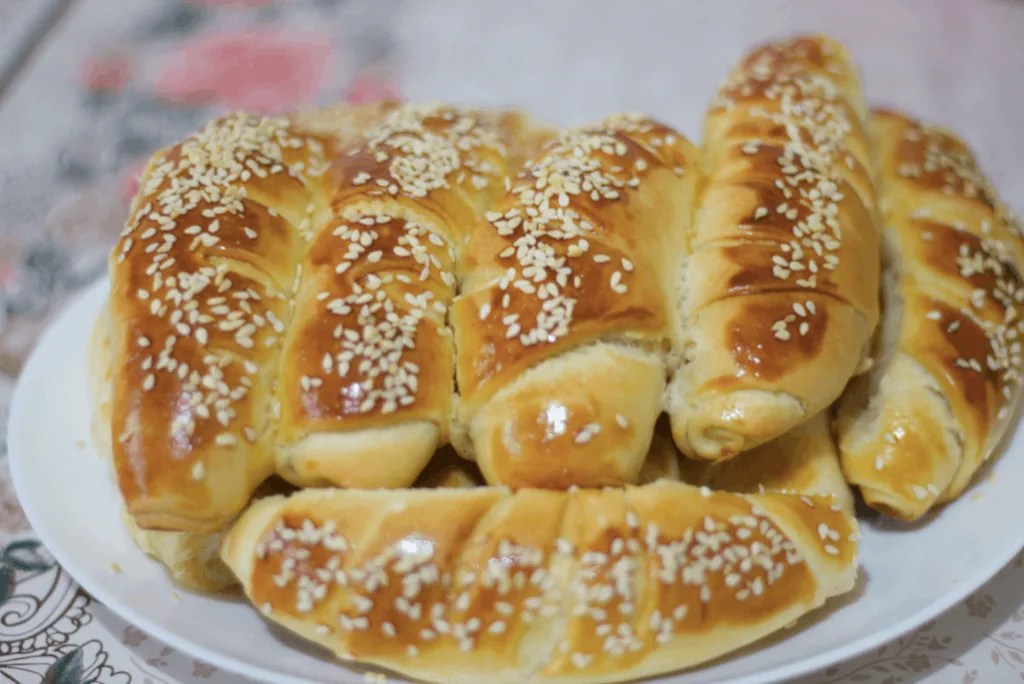
Finally, we address Kifle, these small, crescent-shaped rolls that can be called the Balkan version of the croissant. They are soft and buttery, and usually filled with a simple layer of cheese or jam. They are the safe option, the one you reach for when you are intimidated by the sheer density of the rest of the table. Their true significance lies in their ability to be slightly less caloric than the Peksimeti.
19. Coffee, Tea, and Salep: The Elixirs of Existence


Bosnian Coffee (Bosanska kafa) is basically a Turkish coffee, but an important sacred ritual in Bosnia. You don’t ask for a refill; you accept the amount poured from the džezva (copper pot) into a fildžan (small ceramic cup). It’s thick, potent sludge of unfiltered caffeine, not some watered-down espresso. Tea is generally herbal, usually a calming mint or a medicinal mountain blend, and the real gem is Salep, a thick, sweet, warming powder made from the ground tubers of the orchid flower, mixed with hot milk and sprinkled with cinnamon, making it the ultimate winter drink.
20. Rakija: The Morning Rocket Fuel


Last but not least, we conclude this guide to Bosnian food with rakija. You think you can digest all of that—the cicvara, the burek, the kajmak—with weak herbal tea? You are delusional. Rakija is the necessary corrective. It is the generic term for potent fruit brandy (typically plum, grape, or quince) that clocks in at an assertive 40-50% ABV (80-100 proof).
While technically an aperitif or digestif, culturally, it is often served with breakfast, especially on special occasions or if the morning requires serious psychological fortitude. The local varieties are vast, but the plum (šljivovica) is the classic.
How did you like this guide to Bosnian breakfast? Do you know of any other dishes that can be included to this list? Share your experiences in the comments below.
Like it? PIn it.

