
The Balkans represent a gastronomic hybrid of East and West, and the street food culture of the region is a place where this is best traced. On sizzling grills and deep-frying comfort food, Balkan street food is rich, tasty and full of traditions. Each nation is putting their own spin on it, but in this article, we’ll focus on Romanian street food and its rolls of cabbage, skewered meats, and delicious pastries, starting with…
Mici or Mititei (Grilled Sausages)


Mici or mititei (the little ones) are skinless sausages that are an irreplaceable part of Romanian street food culture. They are prepared using a combination of beef, lamb and pork combined with spices and garlic then grilled to juicyness with a touch of char. What is unique about them is their simplicity and taste- they are country, smoky, and fulfilling, and usually accompanied by mustard and French fries.
You can get mici at local grills, markets, and festivals; usually you’ll be able to feel their delicious aroma from a mile away. Although they are consumed throughout the year, they shine most during the outdoor events as well as during the celebrations of the people of the land where people grill.
Salata de Icre (Fish Roe Dip)


Salat de icre is a creamy fish roe dip, and is prepared with oil, lemon juice, and occasionally onions, as a hint of taste. It is creamy, salty, and extremely savory, as though Mediterranean taramasalata and sushi had a baby. It is served cold, so it is usually spread on slices of fresh bread, or it is accompanied by raw onion to add the crunch. It’s extremely popular in Romania’s coastal areas. It is a popular snack on the market, in taverns, and in street food fairs, and it goes well with a cold beer or a refreshing white wine.
Bulz (Polenta Balls with Cheese, Egg and Sour Cream)


Bulz is a comfort meal of the best kind: polenta balls filled with cheese, and usually topped with sour cream, crispy bacon, and a fried egg. Sellers in the streets and in cheap food joints have their own versions, occasionally in bowls, with smoky sausages and melted cheese. Both versions are wholesome, milky, and substantial, a peasant food to which a nation has become addicted. Polenta as a dish is a core part of Romanian cuisine and bulz is one of the most indulgent versions of polenta.
The difference between it and typical street food is that it is versatile, as it can be handed over when prepared as stuffed balls or eaten in a bowl when it is supplemented with toppings. One way or another, it is a hearty, warming dish, which reflects the traditions of the Romanian mountains.
Local Cheeses & Cured Meats


Romania is famous for its delicious cheeses and cured meats that are usually served together on charcuterie-style boards. These menus are a celebration of local flavour, whether it is tangy sheep’s cheese (brânză de burduf) or creamy cow cheese, served with spicy sausages, smoked ham and at times spreads such as zacuscă. In street food, they are commonly found in the markets, where vendors sell home prepared food, or other tavern-type dining establishments with tasting boards.
They are normally accompanied with fresh bread and pickles, which mixes the rich with the acidic. This is not a snack, it is rather a social food, which is usually consumed together with friends and a glass of local wine or țuică (plum brandy).
Papanași (Doughnuts)


The Romanian version doughnuts is called papanași. They are round pieces of dough that are fried or boiled, stacked up with sour cream and topped with fruit jam- usually cherry or blueberry. Their distinguishing factor is that there is a small doughnut hole on the top, which makes every serving look like a fun tower of decadence.
Full of sugar, fat, and warm, papanași can be sold in traditional restaurants, and they can be offered at street festivals and fairs, where they are sold hot and fresh. Papanași are a Romanian street food that you can never afford to pass by because it is affordable, easy to see, and absolutely delicious.
Ficăței la Tigaie (Fried Liver)


A popular and very divisive Romanian dish is ficăței la tigaie or fried liver. It is prepared by frying small chicken or pork liver bits, it is commonly accompanied by onions sautéed, garlic, and even a sprinkle of white wine to enhance the taste. It is served hot by street vendors and casual eateries with bread, polenta or pickles.
It’s very sturdy and daring in flavor–suitable to anyone who likes liver pate but needs more of it. It’s cheap, filling and full of protein in the Romanian street food scene, and so is a favorite snack in the local tavern and the traditional food stalls.
Clătite (Pancakes or Crepes)


Clatite is Romania’s response to crepes. Clatites are thin, versatile pancakes, stuffed with sweet or savory products. They are filled with jam or chocolate or sweet cheese on the sweeter side, and ham, cheese, spinach or mushrooms on the savory side. They are sold by the street vendors who make them freshly and rolled up in small packages to have a quick bite.
Clatuite is a unique specialty as it is cheap and available in many varieties, as it is sold everywhere, in market stalls, bakeries, and even as a snack late at night. They are a crowd pleaser, appropriate both at breakfast and dessert and they present a fast satisfying snack to tourists visiting Romanian towns and cities.
Covrigi (Pretzels)


The Romanian pretzel is called covrigi: soft and warm and topped with poppy, sesame or coarse salt. One of the more typical grab-and-go snacks in Romania is covrigi, which is sold at hundreds of street stalls and bakeries. They are particularly common in Sibiu or Brașov, where you will find people selling them fresh all day long.
Their simplicity and accessibility is what makes them unique as you can find people eating them on their way to work or during a tour of the city. Covrigi are cheap, very filling and warm, so they are a staple of Romanian culture and Romanian street food scene.
Kürtőskalács (Chimney Cake)


The chimney cake or kürtőskalacsa (also known as trdelnik) is a dessert pastry that’s extremely popular in Transylvania but can also be found across central and Eastern Europe. Strips of dough are wound round a wooden cylinder and baked over an open fire or in special ovens and then rolled in sugar, which caramelises to create a crisp shell.
The pastry can be found soft on the inside and crunchy on the outside and topped with a variety of sweet toppings, like cinnamon, walnuts or coconut. The kurtoszkalacs is especially popular at Romanian Christmas markets and in the town squares of Romanian streets.
Merdenea cu Brânză (Cheese Pastry)


Merdenea cu branz resembles a pastry, stuffed with salty cheese; it is commonly consumed as a quick breakfast or as a snack in the middle of the day. Like burek in the rest of the Balkans, this Romanian variant has layers of pastry that are made of butter and baked to golden perfection.
It’s the most typical morning snack among locals who are in a hurry to get to work and sold at bakeries and street food stands. It is savory, warm and filling and it is best served with a cup of yogurt or tea. It is the beauty of its balance, the pastry is light and crisp, and the richness is introduced by the cheese of a salty nature.
Plăcintă


The Romanian pastry known as placinta is one of the most popular baked goods in the country. It comes in either sweet or savoury version and unlike the traditional pie, placinta consists of layers of thin dough that are stuffed with numerous different things. Sweet variations contain raisins, apples, cherries or pumpkin, whereas savory ones contain salty cheese or cabbage.
It is a snack that can be purchased by any means of budget because it is sold in a piece or by weight by street vendors and bakeries. Warm or cold, placinta is comfort food at its best, a meal that can be carried anywhere, a meal that fills the stomach and is closely associated with the Romanian cuisine.
Gogoși


Gogosi are another version of Romanian donuts; they’re very simple, rustic, and are usually not overloaded with fancy toppings or fillings, like their American counterparts. However, it is their simplicity that makes them so good. They may be filled with powdered sugar and are hollow or filled with fruit jams or chocolate. Gogoosi are sold at fairs, bakeries and on the streets, and are a favorite among children and adults. They are soft, light, and to be consumed fresh and warm. They are a cheap, sweet treat, which goes well with a cup of tea or coffee.
Must


Must is not to eat, but to drink- a winter thing you can get only in Romania in the fall. The must is the initial step in the wine production process which is basically fresh grape juice that has just started fermentation. It is sweet, bubbly, and refreshing as it contains very low amounts of alcohol. Must is sold by the street vendors and local market, particularly at the fall fairs, in plastic cups or bottles, and it is a favorite refreshment to go with the seasonal foods.
The contribution to this is its special status; must will only be able to last a few minutes in all of the year, so it is almost like a festivities signifying the time of harvest. It is one of those pure Romanian street experiences that one can not duplicate out of the country.
Hamsie

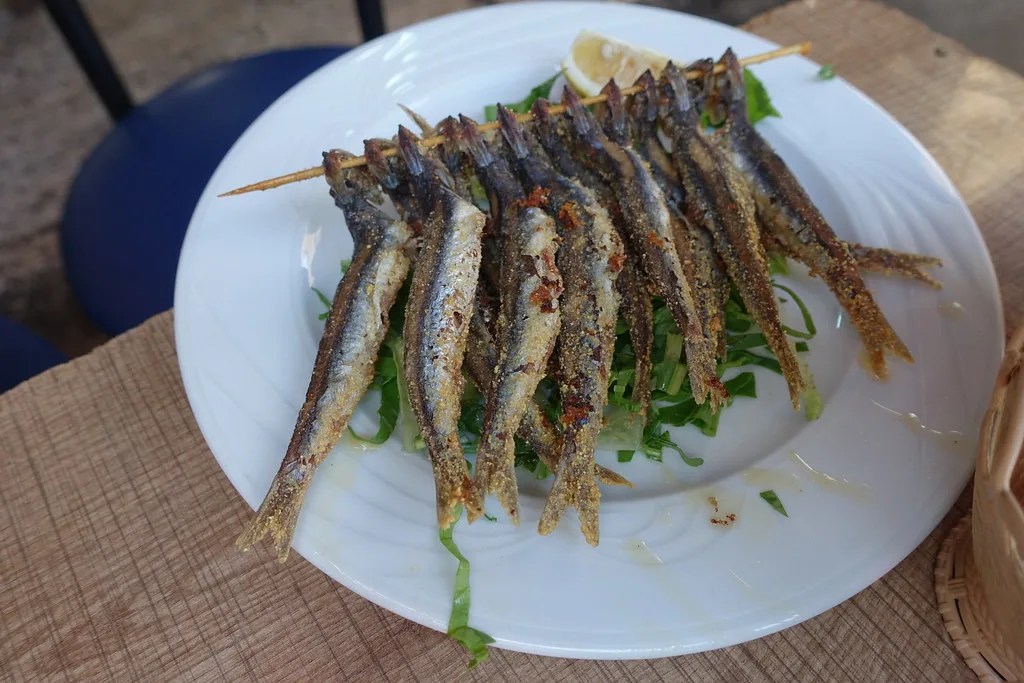
Hamsie are anchovies that are fried in small portions, a street food in the coasts, particularly the resorts along the Black Sea. They are usually coated using flour and fried to a golden brown and crispy and are served in paper cones or plates but are usually accompanied with a slice of lemon to add additional zest. They are cheap, easy to consume and ideal with a cold beer. During summer, hamsie booths are everywhere on the Romanian beaches and queues of families and friends are arranged to consume this salty and crunchy treat. Their beauty lies in their simplicity: fresh fish and crisp batter and an experience of the sea in one bite.
Covridog

Covridog is a traditional variant of a hot dog with a modern touch. The sausage was encased in fluffy pretzels, baked till golden and occasionally sprinkled with the seeds such as sesame or poppy. Covridogs may be found in bakeries and street vendors: sold on the go, very filling, and incredibly popular among students and commuters.
Their unique quality is that they combine both the chewiness of the pretzel crust and the savory taste of sausage; their combination creates a complete handheld meal to people on the move. Although it draws inspiration to the American hotdog, the Romanian one seems very local due to the pretzel-like dough.
Dobrogeana


Dobrogeana is a pastry, which is made of a layer cake and originates from the Dobrogea region between Danube and the Black Sea (therefore, the name). It’s like placinta except it’s prepared with a lot of salty sheep cheese and eggs and baked till golden. The outcome is a hearty savory pastry that has a flaky crust and a tender with a cheesey interior. Dobrogeana is traditionally served in squares, which are easily picked and consumed on the spot in the street stalls and bakeries. It is a popular snack either in the morning or at lunch or even on a late-night craving.
Brânzoaice


Branzoi are pastries made of fatty cheese, which are popular in the whole of Romania due to their warm and home-made flavor. They are prepared using a soft dough and a mixture of cottage cheese, sugar, eggs, and sometimes raisins, and then folded into small balls and baked. When they are ready, they are crisp a bit on the outside, and fluffy on the inside, with a sweet creamy stuffing.
They are also served fresh out of the oven by street vendors and bakeries and their smell is enough to attract clients. Brânzoaice are cheap and hearty, as such that they are one of the popular snacks among schoolchildren, office workers and travelers.
Plăcintă cu Varză


Placinta cu varză (cabbage pie) is a classic savory street food dish, and it consists of dough filled with sauteed cabbage. Cabbage may be flavored with black pepper, dill or even a touch of vinegar depending upon the area. In contrast to the sweet versions of placinta, it is a hearty meal that is filling and affordable. Placinta cu varzina is sold in squares or wedges, and it is a good option for vegetarians. It’s especially popular in Transylvania, where the dishes made of cabbage have always been part of the local cuisine.
Hribi cu Mămăligă


Hribi cu mămăligă is a traditional dish that is composed of porcini mushrooms (hribi) and creamy polenta (mămăligă). It is commonly consumed at home, but has been introduced to food festivals and street vendors, particularly in mountainous areas where mushrooms common to the wildland are well available. The porcini is matched with the meaty taste of the earthly porcini, and the buttery smoothness of polenta. Sour cream or Garlic sauce is sometimes added to add additional richness.
However, as a street food dish, it is generally eaten in bowls and therefore is more of a sit-down meal than a snack. Nevertheless, it is one of the best examples of Romanian comfort food and the demonstration of the strong bond between the local cuisine and the natural environment.
Langoș


Langoș is a popular Hungarian delicacy but it’s also popular in Romania, especially in Transylvania (ar egion that is home to many Hungarians). It is basically a deep-fried flat bread of a yeast pastry, which is light and airy on the inside, and crispy on the outside. Conventionally, it is consumed without adding anything or drizzled with garlic, although it can be eaten with sour cream, cheese, or even sweet toppings (jam, Nutella), depending on the street vendor.
Langoș is beautiful in its versatility as it can be savory or sweet, snack or dinner. Hot and fresh out of fryer, it is impossible to resist and it’s also one of the most affordable, filling and comforting street food snacks.
Cașcaval Pane


Cașcaval pane is a variant of fried cheese originated in Romania, by rolling slices of cașcaval (a yellow, semi-hard sheep-milk cheese) in breadcrumbs, then frying till gilt and crispy. The crunch on the outside is especially good as it is opposed by the melting, gooey cheese on the inside.
Cașcaval pane is often sold in the street food stalls or bars and is usually accompanied by French fries, mashed potatoes, or mamaliga. It originates from Bulgaria but over the years, it has become popular in Romania as well. Portable and easy to share, it makes a great alternative among the students and festival-goers who want something fast, decadent and incredibly satisfying.
Frigărui


The Romanian counterpart to kebabs are called frigărui, and consist of cubes of marinated meat skewed and roasted to smoky perfection. The most widespread one is chicken; however, pork, beef, ham, or even bacon can be used, which is usually mixed with vegetables such as peppers, mushrooms, or tomatoes. Frigărui are a real street food delicacy, particularly at fairs, in the market, or on the outdoor events, served alongside mujdei (a garlicky dipping sauce).
They are a match with a cold beer, so they would be a popular choice among the locals during warm summer evenings. Frigărui are also one of the most accessible versions of Romanian grilling culture: portable, affordable, and delicious.
Sarmale
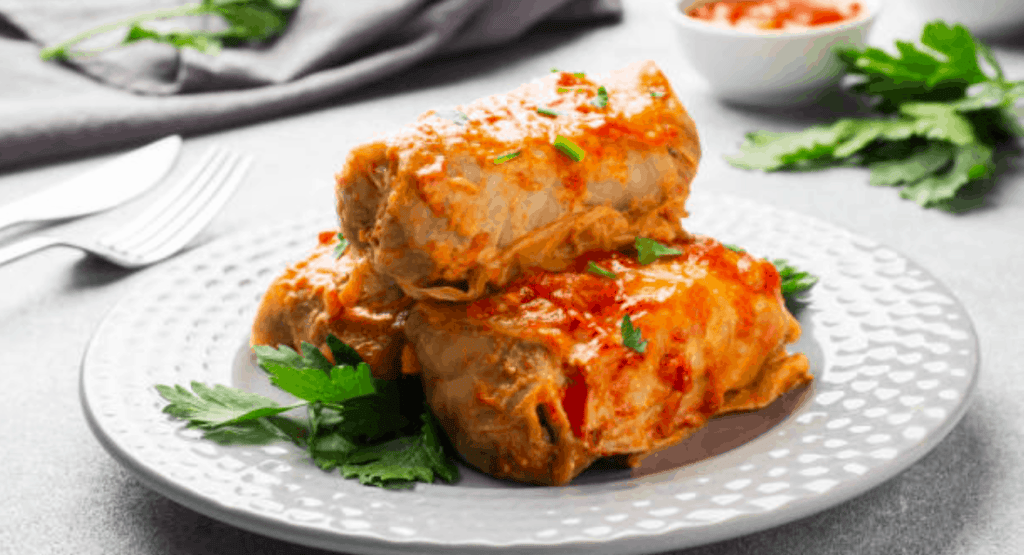

Last but not least, we conclude this list of the best Romanian street food with sarmale, cabbage rolls filled with rice, meat and spices. Sarmale is typically a holiday or restaurant dish, but in certain areas, they have been turned into a street dish. The smaller rolls are sold by vendors in small portions that can be eaten easily on the spot and are usually topped with sour cream or a slice of mamaliga. Sarmale is linked to Ottoman cuisine, but have become a culinary classic of Romanian cuisine. Sarmale are eaten on a paper plate at a party, or are consumed as a snack on a chilly day.
How did you like this guide to Romanian street food? Did you ever try any of these snacks? Feel free to share your thoughts and experiences below.
Like it? Pin it.


