
Romanian Easter food is not merely a meal but a whole ritual constructed on the basis of symbolism, seasonality, and family. The table is rich, filled with all kinds of delicious goodies, most of which are deeply rooted in both Orthodox Christian traditions. Each dish has its purpose (i.e., eggs as a symbol of rebirth and lamb as a symbol of sacrifice). In this article, we’ll show you the most popular Romanian Easter food and teach you a few things about Romanian Easter along the way.
Let’s start with the basics…
Romanian Easter Traditions
Romanian Easter is influenced by a combination of religion and tradition before the food even starts. Families go to the midnight church service, where they take candles home as a symbol of light and renewal. Food is also pre-cooked and is occasionally blessed in church. The food is leisurely and communal, beginning with lighter meals and moving on to heavier ones. It also has a powerful waste-nothing ethos – particularly of lamb – both as a sign of respect to tradition and as a sign of survival in older rural ways. And this leads us to the most important part of Romanian, Moldovan (and all other Eastern Orthodox Countries’) Easter…
Eggs & Egg-Based Traditions
In Romania, Easter eggs (ouă roșii or painted eggs) form a beloved tradition. Women dye hard-boiled eggs — traditionally red using onion skins or natural dyes — and often decorate them with intricate geometric, floral, or symbolic patterns using beeswax, needles, or beads (especially in regions like Bucovina). Families exchange and tap eggs on Easter Sunday while saying “Hristos a înviat!” (“Christ is risen!”) and “Adevărat a înviat!” (“Truly He is risen!”); the unbroken egg symbolizes the resurrection and brings good luck or the promise of reunion in the afterlife.
Red Eggs (Ouă roșii)

The main dish in the Romanian Easter food table is red eggs, which represent the blood of Christ and the concept of rebirth. They are ornamental and symbolic, traditionally stained with onion peels and leaves to create natural designs. Store-bought dyes are used by many today, but rural techniques are still used. They are served first, and they set the mood of the whole meal and make the celebration tradition-based.
Ciocnit de ouă (Egg Cracking Tradition)

Ciocnit de ouă is not just a game; it is a ritual. Two individuals strike their eggs together, and the one whose egg is not broken is considered to be lucky and long-lived. The defeated eats his broken egg and finds another victim. It goes round the table, forming a symbolic and playful beginning of the meal. It adds vitality, communication, and a competitive element to an otherwise formal tradition.
Deviled Eggs (Ouă umplute)


Deviled eggs are a creamy and tasty variation of the large number of boiled eggs at Easter. The yolks are combined with mayonnaise, mustard, or occasionally pate and piped back into the whites and sprinkled with paprika. Although not necessarily eaten on the actual Easter day, they are frequently eaten soon after, with the help of leftover eggs. They are simple but rich and contrast with the more traditional dishes, and are particularly popular among younger generations.
Traditional Easter Appetizers
This guide to Romanian Easter food wouldn’t be complete without mentioning at least a few popular local appetizers.
Drob de miel

Drob is a traditional Romanian Easter food prepared with lamb organs (liver, lungs, heart) and mixed with herbs and spring greens. It is cooked in the manner of a meatloaf, and whole boiled eggs are commonly put in the middle to create a visual and symbolic effect. The dish represents the tradition of consuming the whole lamb, a tribute to the sacrifice. It is very earthy and well-balanced with fresh herbs and usually served cold as a starter.
Bœuf Salad (Salade de bœuf)


Although it is called boeuf salad in French, it is also a popular dish in Romania and is served at any party table. It is made of boiled potato, carrots, pickles, and meat (usually chicken or beef) mixed with mayonnaise. The pickles make the texture creamy but a little crunchy. It is typically topped with olives, peppers, or pickles, which makes it a visual focal point as well as a comforting, familiar meal.
Salat de vinete (Eggplant Salad)

This is a traditional Romanian dish prepared by roasting eggplants, chopping them finely, and adding oil or mayonnaise, and in some cases, onion to add sharpness. It is smoky and somewhat creamy in flavor and is typically eaten on fresh bread. Compared to other Romanian Easter dishes, light offers balance to the heavier meats. It is particularly common in spring and summer, and its simplicity makes it an omnipresent dish on Romanian tables.
Chiftele (Romanian Meatballs)

Chiftele are small pan-fried Romanian meatballs prepared using a mixture of pork, beef, or both mixed with garlic, herbs, and, in some cases, bread moistened in water or milk. They are crunchy outside and tender inside, and full of flavor. They are served cold or warm, are extremely versatile, and are popular with all. They serve as a light snack on the Easter table, which goes well with mustard or pickles.
Homemade Mushroom Paté (Pastă de ciuperci)

Mushroom pate is a less heavy, vegetarian-friendly version of the meat-heavy Easter dishes. It is prepared with sauteed mushrooms mixed with onions, garlic, and occasionally walnuts, and is spreadable. It is usually eaten on bread or crackers and has a very hearty, earthy taste without being too dense. This meal is particularly enjoyed by people who desire diversity on the table or those who prefer something not so conventional.
Grilled Eggplant and Bell Pepper Salad (Salată de vinete și ardei copți)

This salad is a mixture of roasted eggplants and bell peppers, which are typically peeled, cut, and mixed with oil, vinegar, and garlic. It has a deep, smoky taste due to the roasting process and a slight sweetness due to the peppers. It is light and refreshing, unlike heavier dishes, and can be served as a side or spread. It is usually accompanied by bread and adds a Mediterranean touch to the Romanian Easter table.
Green Beans Salad with Garlic

Garlic green beans salad is a simple but tasty meal prepared using blanched or sautéed green beans mixed with garlic and oil. A splash of vinegar or lemon juice is sometimes added to brighten it. It is light, fresh, and a little crunchy, and thus a perfect match to the richer appetizers. The meal emphasizes the seasonality of Easter, when fresh vegetables begin to be more plentiful.
Pastries & Savory Bites
Now that we covered some appetizers, let’s go through a few popular Romanian Easter food classics when it comes to pastries…
Meat, Potatoes & Feta Cheese Pie (Phyllo)

This savoury pie is a mixture of minced meat, potatoes, and feta cheese in phyllo dough layers. The outcome is a crunchy and soft dish, rich but at the same time balanced by the saltiness of the cheese. It is prepared in squares and is taken as an appetizer, which is easy to share. This kind of pie has Balkan influences, and it is ideal in the festive, rich character of Easter meals.
Romanian Puff Pastry Minced Meat Pie (Plăcintă cu carne în foietaj)

This placinta variety is a simpler version of savory pies, but it is made with puff pastry and seasoned minced meat. It is crispy, oily, and highly gratifying, having a golden crust and a juicy center. It is simple to make and serve, and is a common addition to the Easter table, particularly when it comes to larger groups. It offers a common, comforting taste that goes along with both traditional and contemporary food.
Sărățele (Cheesy Breadsticks)

Sărățele are hard, salty breadsticks prepared with cheese and usually sprinkled with sesame or cumin seeds. They are easy, addictive, and ideal to snack between meals before the main meal starts. Their crunchy texture is in contrast to creamy and meat-based appetizers. They are simple to prepare in large quantities, hence are a regular feature at parties and are usually consumed very fast at the table.
Poale în brâu (Brânzoaice)

These are traditional pastries prepared using soft dough and stuffed with sweet cheese, which is usually combined with eggs, sugar, and vanilla. The pastry is folded into a unique shape that gives it its name. They are a little sweet, fluffy, and aromatic, and are between dessert and snack. Although they are not strictly savory, they are usually served with other Romanian Easter dishes, which provides variety to the table.
Soups (Ciorbe & Borșuri)
Next in this guide to Romanian Easter food, we cover a few celebratory Romanian soups, starting with…
Borș de miel


Borș de miel is a traditional sour lamb soup that is a major feature of Romanian Easter meals. It is prepared with lamb bones and meat, which is slowly boiled to give it a rich flavor, and then it is soured with borsz, fermented wheat bran liquid. This provides the soup with its characteristic tang. It is usually served with lovage, sour cream, and egg yolk, which makes it a very rich but refreshing combination. It is served hot, and it cleanses the palate before the more substantial meals.
Lamb Soup (Stufat de miel)

This is a slightly different version of lamb soup, which is often soured with fresh sorrel rather than borsz, and is therefore more herbal and natural in its acidity. Sour cream and egg yolks are added to the broth, which makes it creamy and soothing. It is traditionally prepared once a year, during Easter, and it has a very strong nostalgic touch. The fresh spring ingredients like sorrel make it very much tied to the season and strengthen the freshness of the celebration.
Ciorbă de perișoare (Meatball Soup)


Ciorbă de perișoare is a Romanian favorite soup prepared using small, tender meatballs cooked in a slightly sour vegetable broth. Depending on taste, the sourness may be of borsz or lemon. It is also lighter than the soups made of lamb, but it is equally tasty. It is often used as a substitute for lamb, which is not popular among all people, and it is still a regular dish at celebratory dinners. It is comforting and easy to eat because of its balance of acidity and richness.
Main Dishes (Mostly Lamb-Based)
Now we have finally gotten to the meat and potatoes of this article, both literally and figuratively. The main dishes for Romanian Easter usually feature lamb-based dishes, but there are a few other delicious Romanian classics decorating the Easter table.
Friptură de miel (Roast Lamb)

The main dish of the Easter table is friptură de miel, which is typically prepared from a whole leg of lamb cooked slowly with garlic, rosemary, and even wine. The meat is made so tender, and it has a rich, slightly sweet taste. It is usually roasted on a layer of potatoes that absorb the juices. This dish is the epitome of tradition: it uses simple ingredients, it takes time to cook, and it is as full of flavor as possible, which is why it is the best part of the whole meal.
Oven-Baked Lamb Steak

The dish is centered on the thick pieces of lamb baked in the oven, with herbs, garlic, and white wine. The outcome is a juicy, tender meat with a richly aromatic sauce. It is usually accompanied by mashed potatoes or roasted vegetables, which makes it a little more sophisticated than the traditional roast. Although it is similar to friptură, this one focuses more on individual portions and presentation, and is more likely to be found in more modern or urban Easter contexts.
Roast Lamb Stuffed with Rosemary and Garlic

This is a variation of roast lamb, which is stuffed with garlic cloves and fresh herbs such as rosemary, and the flavors are absorbed into the meat as it cooks. The outcome is a highly aromatic and tasting meat and a crisp outer layer. It is usually made as a main course during bigger parties. This technique adds flavor to the lamb and provides it with a layer of complexity, which is why it is popular among people who enjoy bold and herb-driven flavors.
Sarmale (Cabbage Rolls)
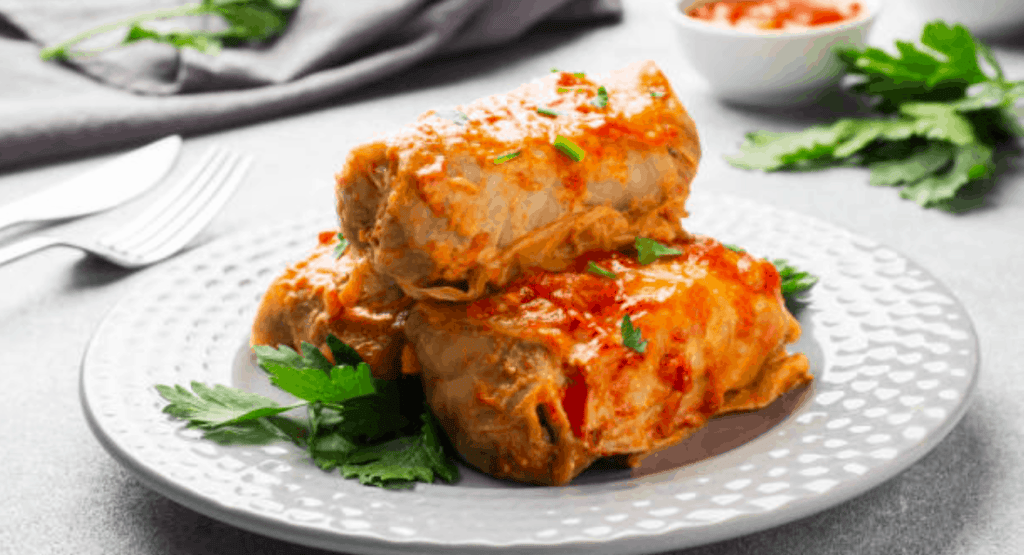

Sarmale are considered to be one of the most traditional dishes in Romania, prepared from sour cabbage leaves filled with a blend of minced pork, veal, rice, and spices. They are cooked over a long period of time, and this makes them tender and flavorful rolls. They are usually accompanied by sour cream and mămăligă and are found at nearly all large parties. Their warm, nutritious flavor and cultural importance make them an uncompromising element of the Easter table, even among dishes of lamb.
Stuffed Grape Leaves (Dolmades -Romanian Style)


Dolmas are similar to sarmale, but they are covered with grape leaves and have a lighter and more tangy taste. The stuffing is typically a combination of minced meat, rice, and herbs. The grape leaves provide a slight acidity to counterbalance the richness of the meat. They are usually eaten with a range of different dishes on the table, which gives them contrast, texture, and taste variety.
Stuffed Bell Peppers (Ardei umpluți)


Stuffed bell peppers are stuffed with a combination of minced meat, rice, and spices and cooked in a tomato-based sauce. The peppers are softened and a bit sweet, which goes well with the savory stuffing. It is a warm and nutritious dish, and it is usually topped with sour cream. Although it is not specific to Easter, it is a natural part of the feast because it is rich and has a familiar flavor profile.
Pui la cuptor (Roast Chicken)

Roast chicken is also a common addition for those who want a lighter version of lamb. It is typically roasted without any complications, just salt, pepper, garlic, and herbs, and roasted to a golden and juicy state. Although it is not that traditional, it makes sure that every guest has something they like. It also balances the table by providing a less intense flavor than the lamb dishes.
Chicken Schnitzel

Chicken schnitzel is an easy but popular meal, particularly with younger guests. Chicken breast is sliced thinly, breaded, and fried until crispy and golden. It is simple to consume, common, and universally popular. It is not a traditional one, but it is frequently served on Easter tables to offer variety and make sure that everyone will find something to enjoy, even those who are more inclined to simpler tastes.
Side Dishes
Now that we have covered the main dishes, let’s quickly go through some of the most popular accompanying dishes for Romanian Easter.
Mămăligă (Polenta)


Mămăligă is a Romanian staple dish composed of cornmeal, like polenta but with a firmer texture. It is commonly cut instead of being spooned and served with such dishes as sarmale or lamb stew. It has a light taste, so it is the ideal foundation to soak up sauces and complement fatty meat. Mămăligă is deeply rooted in the rural cuisine, and it is the symbol of simplicity and tradition, and it is an obligatory element of any festive Romanian meal.
Dill and Butter New Potatoes (Cartofi noi cu unt și mărar)

This is a spring dish that emphasizes the freshness of spring, with small, tender new potatoes, tossed with butter and fresh dill. Their natural flavors are brought out by the simplicity of the ingredients. These potatoes are light and aromatic and are usually served with lamb dishes, which are rich but not overwhelmed by them. It is a springtime treat that brings a fresh and bright touch to the Easter table.
Parsley Buttered Potatoes (Cartofi cu unt și pătrunjel)

Like the dill version, these potatoes are butter-and-fresh parsley-coated, which provides a slightly different herbal profile. They are tender, tasty, and soothing, and can be used as a side with many main meals. Their simplicity is their main advantage as they do not fight with the main courses but complement them, making each bite more balanced and fulfilling.
Spring Roasted Vegetables

A combination of carrots, green beans, peas, and potatoes that have been roasted to tenderness and a little caramelized. These vegetables add color, texture, and a sweet touch to the plate. They are often cooked together with meat or individually, which is a reflection of the Easter season. Their lightness is needed to contrast with heavier dishes, which makes the meal complete.
Desserts
Last but not least, this guide to Romanian Easter food wouldn’t be complete without a few popular Easter desserts…
Pasca

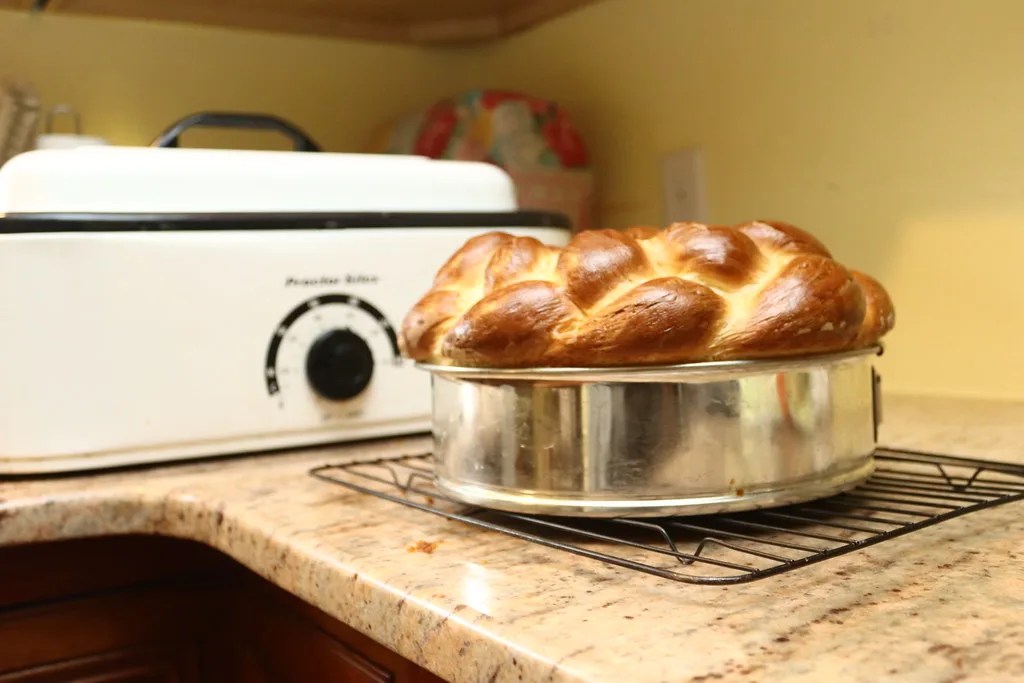
The most symbolic Romanian Easter dessert is pasca, which is commonly referred to as a cheesecake baked in a crust of sweet dough. It is filled with fresh cheese, eggs, sugar, and occasionally raisins. It is traditionally painted with a cross on top and has a heavy religious connotation, being blessed in church. The soft, creamy texture and its light sweetness make it a star of the Easter table and a dessert that people anticipate every year.
Cozonac


Cozonac is a sweet, dense bread made of cocoa, walnuts, raisins, and even Turkish delight. It is soft and fluffy with a beautiful swirl pattern inside. It is time-consuming to prepare, but it is closely linked to festivities and family reunions. Its smell alone is an indication of a special occasion. It is served in slices and is best accompanied with coffee or tea, and can be consumed over a few days.
Charlotte Russe Cake

Charlotte Russe is a fancy, stratified dessert prepared using ladyfingers and a creamy filling, commonly on the foundation of whipped cream or custard. It is light and airy in texture and has a sophisticated look, which suits the festive events. It is not Romanian, but it has been adopted as a part of the celebratory tables and brings a sense of sophistication to the dessert menu.
Cream Cheese Lemon Coconut Cake

This cake is a mixture of cream cheese, the freshness of lemon, and the light sweetness of coconut. The outcome is a juicy, sweet, and well-balanced dessert. It is not as heavy as the traditional heavy cakes, and hence it is a favorite after a heavy meal. Its contemporary taste mix demonstrates the way Romanian Easter tables are still developing.
Meringue Farmer Cheese Cake (Prăjitură cu brânză și bezea)

This dessert is of Transylvanian origin and is made of a creamy farmer cheese base and a light, airy meringue. The thick filling and the light topping contrast to form a special texture. It is influenced by the Austro-Hungarian cuisine in Romanian cuisine and is frequently served during festive events, providing variety to the dessert table.
Layered Lemon Cake

This is a cake with several thin layers of a tangy lemon cream. It is cool and a bit sweet, and it is ideal to refresh the palate after heavier meals. Its citrus taste is particularly appropriate in spring holidays such as Easter because of its brightness. It is light and elegant and therefore is popular with people who do not like rich desserts.
Poppyseed & Vanilla Slice (Prăjitură cu mac și vanilie)

A light dessert with layers of poppyseed filling and smooth vanilla cream. Poppy seeds have a nutty taste that is well matched with the sweetness of vanilla and makes it a balanced and somewhat nostalgic flavor. This cake is typical of Eastern European cuisine and provides visual and flavor diversity to the Easter table.
Walnut & Vanilla Cake

This cake is a combination of the richness of ground walnuts and a creamy filling of vanilla cream. It is a little heavier than other cakes and has a rich and nutty taste that goes well with its creamy layers. It is a typical celebratory dish and is representative of old-fashioned baking techniques, and is usually presented in small portions with other desserts.
How did you like this guide to Romanian Easter food? Did you ever try any of these dishes? Feel free to share your thoughts and experiences in the comments below.
Like it? Pin it.
