
If you’re into pastries, you surely heard about simit, also known as a Turkish Bagel or Sesame Kebab. It’s one of the most popular Turkish street food snacks (alongside burek, doner, manti, and lahmacun) but in recent years, it has become more famous globally and finally gained the recognition it deserves. In this post, we’ll share the traditional Turkish simit recipe and teach you everything there is to know about this tasty Turkish pastry, including its origin, history, variations, how to prepare and serve it, and much more.
But first things first…
What Is Simit?


Also known as a Turkish bagel in the United States, simit is a popular Turkish pastry that looks a lot like a bagel but has a slightly different texture and is covered in sesame seeds. It’s one of the most popular street food snacks in Istanbul sold by street vendors in what they call simit trolleys or on trays that street vendors place on their heads. In addition to sesame seeds, the baked circular pastry is often garnished with sunflower seeds, fax, or poppy seeds. Simit is very popular all across Turkey, the Middle Eastern, the Balkan countries, and parts of North Africa (in other words, the countries where the former Ottoman empire ruled in the past).
In addition to becoming one of the most popular local snacks in these countries, the simit recipe also keeps gaining popularity in countries in Western Europe with a large Turkish minority (i.e. Germany) and even in the United States.
Origin


The word simit derives from the Arabic word samid (سميد) which translates to ‘white bread’ or ‘fine flour’. The pastry is also known under the name gevrek in most Balkan countries (i.e. Macedonia, Serbia, Bulgaria, Bosnia and Herzegovina, etc.) or Koulouri (in Greece).
In Turkey, a simit is a symbol of the lower and middle-class people. You can buy a simit from street vendors for 75 kurus (0.75 lire) which is less than 50 cents.
The simit recipe and its variations became very popular during the rule of the Ottoman empire and they managed to remain popular in other countries even after the fall of the empire. Historical sources suggest that the first simit was made in Istanbul around 1500 AD by a local baker. Mind you, this is more than 100 years before the first bagel was made in Western Europe.
According to Uskudar court records, 1593 was the first year when the price and weight of the simit recipe were standardized. During the 17th century, a traveler known as Evliya Celebi wrote that during 1630 there were about 70 bakeries that would sell Simit in the town square. This presents the theory that contrary to popular opinion, simit served as inspiration for the creation of the famous bagel, not the other way around. This brings us to our next point…
Is Simit Just Another Version Of Bagel?


Many people who are from the United States can’t distinguish simit and bagel as two different pastries because they both look quite similar. However, simit is probably the oldest form of bagel in the world, dating back to the late 14th and early 15th centuries. But just like its cousin, the bagel, many people grab Simit during rush hour, and just like the bagel, simit is also very affordable, nutritious, and keeps your belly full longer than most other pastries.
One of the main differences between a bagel and a simit is their taste and texture. Unlike bagel, simit is slightly less salty (it can even be sweet if Molasses syrup is used like some bakeries do), and has a softer texture inside.
Variations


As mentioned before, the simit recipe has been around since the 1500s and it became quite popular during the Ottoman Empire. However, after the empire fell apart, many of the countries still kept simit as a part of their cuisine and diets. Hence, it should come as no surprise that today, you can find a lot of different variations of this delicious pastry.
The most popular version of the simit recipe is probably Kandil simidi; it’s slightly salty in flavor, similar to the bagel and this is the simit that most street vendors in Turkey sell on the street. It’s also usually eaten during the Kandil, a Muslim religious holiday that celebrates the five holy nights of Islam and is mostly celebrated among Turks and Balkan Muslims. Kandil simidi has a very standard shape and is topped with similar ingredients.


The second most popular variation of simit is probably the one you get in the Balkan countries. The Balkan simit, also known as gevrek is basically the same, it uses the same ingredients and the same toppings and it even has the same shape but it’s slightly longer and thinner than the regular simit. It’s the same in Greece, but they just have a different name for it- koulouri. Some Balkan countries like Macedonia also have this unique variation called simit pogacha that’s basically a mix of simit and the sunflower bread known as pogacha- it’s basically a crunchy bread rolled into another greasier bread. It sounds very unhealthy and it probably is but, my god, it’s delicious.
In Eastern European countries, you can find a variation of the simit recipe known as bublik. The term bublik has derived from Old East Slavic ‘bubl’ which means bubble. It is a round-shaped roll that is very popular in Russia (Dagestan), Ukraine, and Belarus. Bublik is quite similar to a New York bagel but unlike the bagel, bublik has a more dense and chewy texture, similar to the simit.
Poland also has a similar version named obwarzanek krakowski. It’s a round-shaped bread/pastry somewhat similar to simit but with a sweet flavor. The main difference between these pastries is the baking process; unlike simit, obwarzanek krakowski’s dough is first pre-boiled and then baked. Obwarzanek krakowski is generally topped with poppy/sesame/ flax seeds, mixed herbs and spices (pepper and caraway), onion flakes, big grain of salt, etc.
Last but not least, Romania also has a local variation of simit called covrigi. It is a pastry that, similar to simit, is topped with poppy/sesame seeds and large salt grains and has a salty flavor. The city of Bazua is famous across the country for its deliciously famous coverigi.
Enjoying this post? Then you may also like our list of the best Turkish vegetarian food.
Serving & Storing
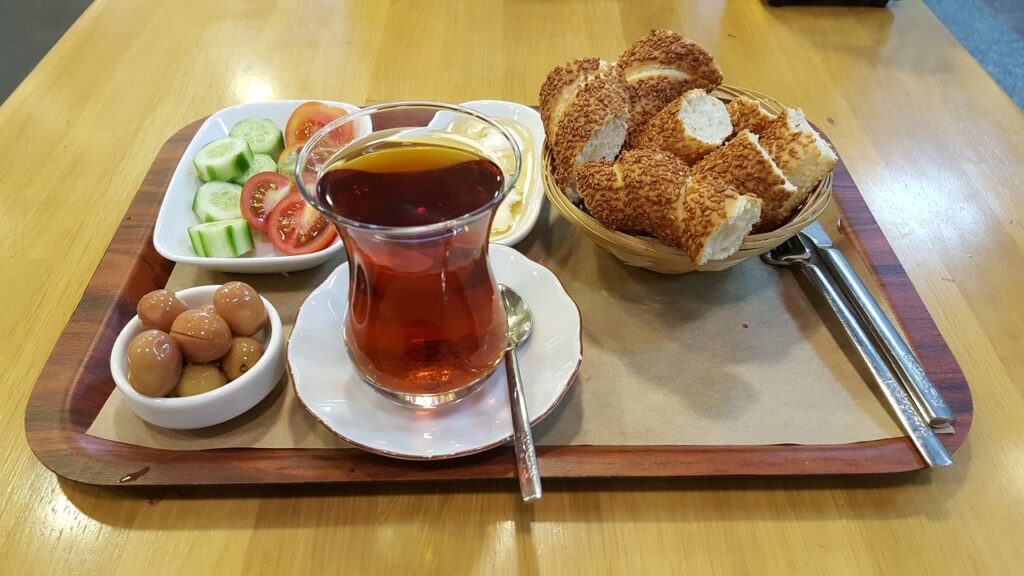
Simit is a very popular pastry in Turkey. Most people usually treat it as a breakfast staple but it can also be eaten as a snack and sometimes, although rarely, as a side dish alongside other dishes like sarma, dolma, or different Turkish soups. Simit is usually served alongside a cup of Turkish tea/coffee, a slice of cheese, and sometimes fruits on a platter, but many people also eat it straight up.
In the Middle East, simit is sometimes consumed inside mosques to break a fast alongside a glass of yogurt/ayran or buttermilk and some boiled eggs or duqqa.
A freshly baked simit can be stored inside a sealed container for 3-4 days at room temperature but not longer than that. Whenever you would like to eat it, just warm the bread in a microwave or use a pan and a stove to get the crunchy texture.
Are you a fan of Mediterranean pastries? Then you may want to check out some of our other recipes below.
A Few Things You May need


Mixing Bowls


Baking Tray


Rolling Pin
Simit Recipe


In this post, we’ll share the traditional Turkish simit recipe and teach you everything there is to know about this delicious Turkish pastry, including its origin, history, variations, serving & preparation tips, and much more.
Ingredients
- 2 cups All-purpose Flour,
- ½ cup lukewarm Water
- 1 Egg (optional)
- 1 tbsp Salt
- 1 tsp Sugar
- 1 tbsp Oil
- 1 tbsp Yeast Powder
- 2 tbsp Sesame Seeds
Instructions
1. Mix the yeast powder with water into a bowl, stir and let it sit for a few mins.
2. Add the all-purpose flour, lukewarm water, salt, sugar, and oil into a bowl and mix everything.
3. Pour the yeast mix into the flour, add the egg, mix everything and start kneading.
4. After you’re done kneading the dough, cover it with a kitchen towel and let it rise for 10 minutes.
4a. (optional- do this step only if you want to make your simit sweet) While you let your dough rise, pour 1 ½ tbsp of Molasses into a bowl and add 2 tbsp of water. Mix the molasses and pour 2 tbsp of sesame seeds on a plate for later use.
6. Cut the dough into equal pieces, roll them with your hand into long strips, stretch them until they are 6 cm long, and cut the dough strips into proportionately long strips.
7. Take two strips and intertwine them then join the dough by looping it into a ring.
8. Sprinkle sesame seeds on all individual pieces of dough.
9. Place the pastries into an oven plate and bake it for 35 mins at 180℃ until it's golden brown.
Nutrition Information:
Serving Size:
1 simitAmount Per Serving: Calories: 460Total Fat: 23gSaturated Fat: 4gTrans Fat: 0gUnsaturated Fat: 1gCholesterol: 55mgSodium: 300mgCarbohydrates: 58gNet Carbohydrates: 58gFiber: 6gSugar: 2.5gProtein: 14g
Did you ever try simit? Did you like our simit recipe? If you tried to make it at home, don’t forget to leave us a rating and if you have any questions, feel free to ask in the questions below.
Like it? Pin it.


