
Moroccan cuisine is renowned for its colorful tastes, aromatic spices, and rich culinary traditions, and the sweets are not an exception. Moroccan desserts are a culinary masterpiece as well as a very important part of local culture. Festivals like Ramadan, Eid, weddings, or family gatherings always feature a lot of sweets, which highlights the role of sweets in local hospitality and celebration in Moroccan life. The most commonly used ingredients include almonds, dates, semolina, orange blossom water, and honey, providing a nice balance of sweetness, smell, and texture. In this article, we’ll show you which are some of the most popular Moroccan sweets and teach you some basic things you should know about them.
Feqqas


Feqqas are crunchy biscuits of Moroccan origin, which are commonly flavoured with almonds and anise seeds. They are similar to the Italian biscotti in their texture and are eaten with tea, especially at social events or special occasions, like for Ramadan. Prepared using flour, sugar, butter or oil, eggs, and occasionally yeast, feeqqas are rolled and baked in forms of logs, cut and rerubbed to provide the biscuit with its distinctive crunch. The biscuit is aromatic with almonds or any other kind of nuts inside it, providing it with a chewy texture. Their shelf life is long, and thus they present an easy but celebratory snack.
Chebakya


Chebakya is a Moroccan pastry that is deep-fried and closely linked with Ramadan. Formed in the shape of a flower, it’s fried in honey and sprinkled with sesame seeds, creating a sweet, sticky, and aromatic treat. It’s made of flour, ground almonds, anise seeds, cinnamon, and orange blossom water with or without a touch of sesame oil. It’s fried and then dipped in warm honey, which makes it sweet and preserves the pastry. Chebakya would represent the richness and generosity of Ramadan, and it’s usually consumed together with mint tea or as a dessert platter at family get-togethers.
Sellou (Sfouf)


Sellou is a Moroccan dessert, usually made at Ramadan, Eid, and parties such as weddings. It is denser, more energy-dense, and consists of roasted flour, almonds, sesame seeds, anise seeds, butter, and honey, and, in some cases, spices such as cinnamon, unlike pastries. These ingredients are then finely crushed and combined into a fine, crumbly, and nutty powder, which can be moulded into small piles or be served in bowls. Sellou has the advantage of having a long shelf life and is very nutritious, and gives one quick energy during fasting time. It has cultural value since it is used as a sign of generosity and is usually made in large amounts and served to the neighbors and guests.
Qrichlate


Qrichlate is another Moroccan dessert that is made with nuts and dates. The dates are sliced or smashed fine and combined with toasted almonds, sesame seeds, and occasionally with orange blossom water. The mixture is rolled into small balls or logs and is dusted lightly with powdered sugar or additional sesame seeds. Qrichlate is especially popular with tea, and it’s healthier than most other Moroccan sweets that are usually heavily fried. It’s also a favorite pastry during Ramadan and family gatherings, because it’s nutritious and easy to prepare.
Sfenj


The spfenj are the Moroccan version of doughnuts; they can be eaten as a dessert, a street food snack, or even breakfast. They are deep-fried irregularly shaped and in the form of rings until golden and crispy on the surface and soft and airy on the inside. Sfenj are prepared with just a basic dough of flour, yeast, water, and a pinch of salt and are commonly served hot, sprinkled with sugar or in honey. It’s a typical morning snack or treat, sold in the markets and by the street vendors across Morocco, but also often prepared by families at home, either as a breakfast or during special occasions.
Seffa


Seffa is a sweet Moroccan dish that is a mixture of couscous or vermicelli and a light mixture of powdered sugar, cinnamon, and toasted almonds, filled with butter and flavored with orange blossom water. Seffa is commonly consumed in family events or religious holidays, as it is a sign of hospitality and culinary excellence. Although it is not a dessert in the most literal sense of the word, its sweetness and the way it’s served make it a great choice for a celebratory treat.
Meskouta


Meskouta is a Moroccan sponge cake, which is commonly zested with oranges or lemons. It’s a plain and yet popular snack, which is usually offered in the afternoon with tea. The cake is prepared using flour, sugar, oil or butter, and a leavening agent, which gives it a light and moist texture. Orange blossom water is occasionally added to add aroma. Meskouta is a dish that carries cultural importance since it is a comfort food and a staple food in the Moroccan home, particularly in family meetings. Its simplicity in preparation and diversity are due to its popularity in consuming both on a daily basis and during celebrations.
Briouate


Briouate is a triangular or cylindrical pastry popular in North Africa, which is filled with almonds, chicken, or seafood, and then fried or baked. It’s prepared by frying, but it’s not necessarily a dessert- it also comes in a savory variety. Sweet briouates are usually covered with almond paste, cinnamon, and sugar, then dipped in honey. It’s a thin phyllo-type of dough that forms a crisp exterior in contrast to the dense, sweet filling. Briouates are a manifestation of Moroccan cuisine in pastry folding and filling harmony. They are a combination of crispiness, aromatic nuts, and honey, which makes them one of the most sought-after Moroccan desserts on the occasion of festivities.
Baklava


Baklava, though of Ottoman origin, has also come to be part of Moroccan cuisine, particularly during festivities. It’s made of a combination of chopped nuts (almonds or walnuts) with sugar and cinnamon in pastry layers (phyllo). The pastry is then assembled and baked until it turns golden, and then immersed in honey or sugar syrup. Moroccan Baklava is usually served during festivals such as Eid or a wedding.
Ghriba


Ghriba are Moroccan cookies that are usually prepared using almonds, sesame seeds, or coconut. They are characterized by the softness of the texture, a slightly cracked surface, and the ability to melt in the mouth. The batter is usually made of flour, sugar, eggs, butter, ground nuts, and occasionally mixed with orange blossom water. Ghriba are essentially special in religious festivals such as Eid and weddings, which are normally accompanied by tea. They are simple to prepare in bulk, a demonstration of generosity and hospitality.
Halwa

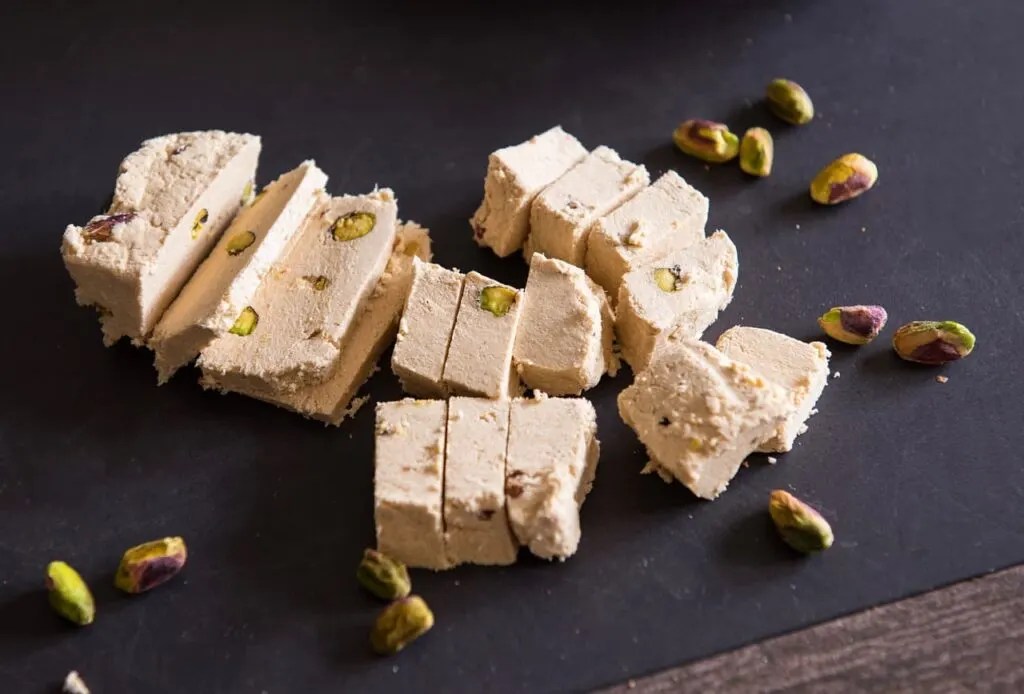
In Morocco, Halwa is a thick and sweet pastry that is prepared using sesame seeds, almonds, honey, and, in some cases, butter. In comparison with the Indian or Middle Eastern halwa, Moroccan halwa is softer and more nut-centred. Its cultural significance is in the fact that it is a representation of sharing and hospitality, often given to the guest in the form of small and decorative pieces. Moroccan halwa attests to the regional focus on nut-filled, spicy desserts with a sweet/crunchy or sweet/sweet ratio.
Mhencha

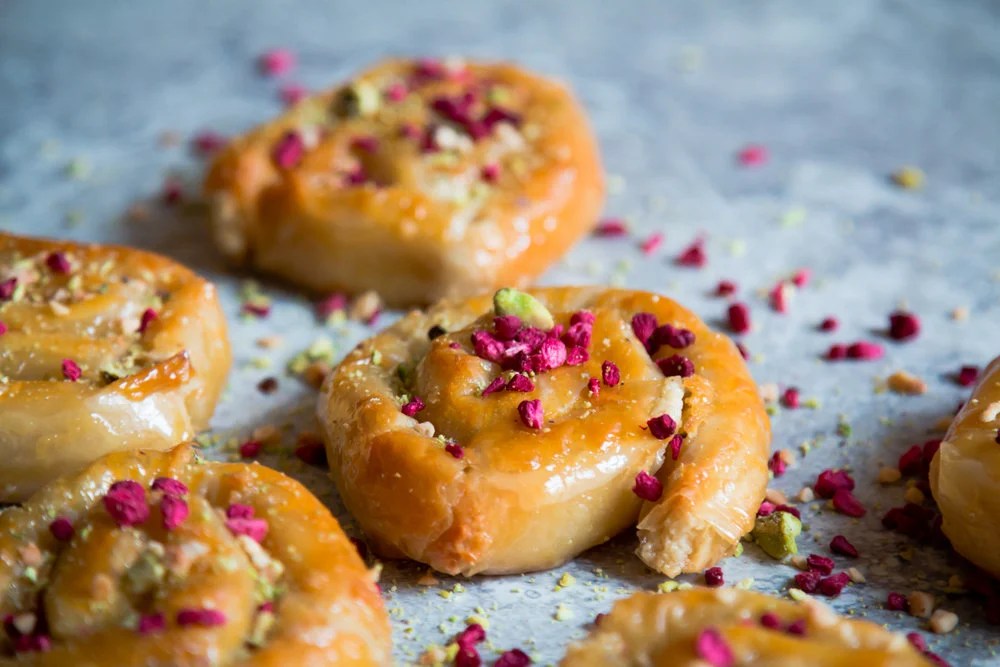
Mhencha, which translates to snake in Arabic, is a coiled pastry made in Morocco. Most commonly, it is stuffed with almond paste, sugar, cinnamon, and, in some cases, orange blossom water. Its shape is spiral, which is not only aesthetically impressive but also symbolic, as it may make reference to continuity and abundance. It has a thin, phyllo-like dough, which forms a crisp outer layer in contrast with the sweet, soft stuff in the middle. Mhencha is an additional dish used in weddings, Eid, and other festivals, accompanied by mint tea.
The laborious production of the pastry is indicative of the Arabic culture of elaborate and crafty desserts. It is a culinary staple of fruit-themed dessert dishes, with its aroma, texture, and visual presentation being key features of it.
Kaab el Ghazal


Kaab el Ghazal- which translates to English means gazelle horns- these are crescent-shaped pastry stuffed with almond paste and served with orange blossom water. The dough is prepared using flour, butter, sugar, and occasionally ground almonds, rolled thin, and then encasing the filling before baking. The pastries are lightly sprinkled with powdered sugar after baking, and this renders them a lightness of sweetness.
Macroute

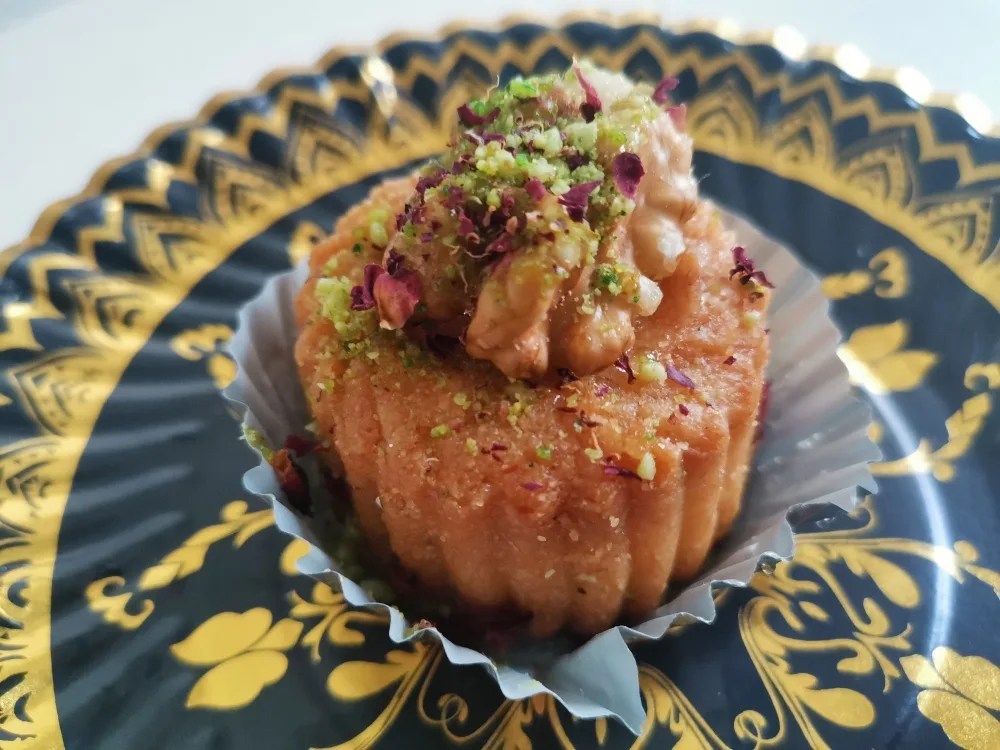
Macroute are popular Moroccan sweets made of semolina and stuffed with dates, almonds, or figs. A fine semolina, butter, and, in some cases, a little orange blossom water are used to prepare the dough. These are rolled into little balls or crescents and baked to goldenness, and sometimes sprinkled in powdered sugar. Macroute are eaten during Ramadan and Eid because their heavy texture and nut-sweet stuffing is an energy shot, perfect for after fasting.
Bastilla (B’stilla)


Bastilla is a Moroccan savory-sweet pie, which is usually filled with pigeon or chicken, but there are also sweet versions, with almonds, cinnamon, and sugar can be found. This is a pate enveloped in sweet pastry in thin layers overtopped with a nut filling, then baked to crispness. Powdered sugar and cinnamon are used as toppings, and you’ll find this Moroccan dessert usually served during weddings and other special occasions. The combination of crisp pastry, spiced filling, and sweet topping is an example of the Moroccan skill in contrasts of flavor.
Merendina


Merendina is a more recent development in Moroccan-themed sweets, which is basically a sponge or butter cake and usually stuffed with jam or chocolate and topped with sugar or glaze. The cake is very soft, moist, and easily divided, thus popular among children and informal parties. Although it lacks a strong cultural touch, Merendina shows how pastries of European style have entered Morocco and how local bakeries have adapted the snacks to the tastes of Morocco, even incorporating some local flavor into the pastry.
Msemmen


A classic Moroccan flat bread, msemmen is layered and pan-fried and somewhat flaky, and commonly served with either honey, butter, or jam. It’s prepared using dough made of flour, semolina, water, and salt, and then folded and layered, and then cooked to give it its typical texture. Although one can have it as a breakfast meal or snack, due to its versatility, it can also be eaten as a dessert.
Meqrout


Meqrout is a Moroccan pastry made of semolina and usually shaped into a rectangle or diamond and stuffed with dates or almond paste. The semolina, butter, and occasionally a sprinkle of orange blossom water are used to make the dough. The pastries are then fried or baked, filled, and dipped in honey, giving them that sticky-sweet taste. Mequrout is a nutty, sweet, and thick treat that satisfies both guests and family members.
Jawhara


Jawhara is one of the most popular Moroccan desserts made of almonds shaped in small balls with a jewel-like appearance, which is where the dessert’s name comes from (as in Arabic, jawhara is a jewel). The final mixture consists of ground almonds, sugar, orange blossom water, and egg whites. The sweets are then shaped and lightly baked or unbaked and sprinkled with powdered sugar. Jawhara tastes like a delicate almond and looks like a fancy dessert plate, and it is a popular element on the festival dessert plate.
Baghrir


Baghrir is a Moroccan spongy pancake (not to be confused with harcha, which is also a type of Moroccan pancake but slightly different) riddled with tiny holes made of semolina flour and usually topped with sweet syrup, honey, or jam. Because baghrir is spongier than the average pancake, it’s lighter, and you can easily eat much more of it. Usually, baghrir is served for breakfast, as a Moroccan snack, in-between meals, or for Iftar during Ramadan.
Rhubarb


Last but not least, we conclude this list of the best Moroccan desserts with Rhubarb. Even though this one is not originally a Moroccan pastry, it is sometimes employed in contemporary Moroccan-style desserts, usually baked into tarts, cakes, or compotes. It’s usually mixed with sugar, almonds, and orange blossom water so as to have a well-balanced tart-sweet taste. These adaptations demonstrate the way Moroccan pastry styles, such as coating and almond paste, and aromatic flavoring, are used on non-native products. The rhubarb desserts usually can be found in most modern Moroccan bakeries, without breaking the conventional taste of aromatic, nutty, and slightly sweet desserts.
How did you like this list of the best Moroccan desserts? Do you know of any other Moroccan sweets to add to this list? Feel free to share your thoughts in the comments below.
Like it? Pin it.
