
Did you ever hear about Kosovo food? The newest Balkan country is home to a majority Albanian population so basically their food consists of Albanian dishes with slight Yugoslavian influences. From pastries that would make a croissant jealous to stews that are just perfect on a cold day, in this article, we’ll introduce you to the best food you can fin in Kosovo.
Let’s start from the beginning…
Brief History Of Kosovo’s Culinary Influences


Some of the dishes belonging to Albanian cuisine today trace their roots back to the ancient Illyrians, ancient peeps living in the Western Balkans. The cuisine of the local people living here was also influenced by the Romans, Greeks, and Ottomans (especially with their yummy stuffed pastries) over the years.
Being in the Balkans means borrowing a a bit of this and that from your neighbors and this isn’t just about life- it’s about culinary traditions too. So, you’ve got hints of Albanian, Serbian, Bosnian, Montenegrin, and Macedonian influences added to the melting pot that is Kosovo…
Breakfast Delights
Just like most of the rest of the world, Kosovars consider breakfast to be the most important meal of the day and we’re starting this list of the best Kosovo food with a few popular breakfast delights.
Flija


Flija is the Kosovar version of pancakes getting an upgrade; it consists of many different thin layers of crepe-like dough, stacked up, and cooked outdoors under open fire using a special metal lid called a ‘sač’ (but seriously, it looks like a UFO). It’s one of the most time-intensive dishes of Albanian cuisine, kind of like pastry barbecue, but if you do end up doing right, all the time spent on it is absolutely worth it.
Petulla


Petulla is essentially deep-fried dough balls, kind of like donuts’ cousin from the Balkans. It’s puffy, golden in color, crispy in texture and it’s one of the most common breakfasts in Kosovo. Its flavor is neutral, at least the traditional version, so the end user can decide how to eat it. You can have it alongside a slice of tangy Albanian cheese or topped with sweet jam or chocolate cream.
Gözleme


Gözleme is essentially dough that’s rolled out super-thin, stuffed with either minced beef, lamb, sujuk, pastirma, mushrooms, potatoes, or cheese, then folded, and pan-fried until golden and crispy. Think of it as the Turkish answer to quesadillas. They brought it to the Balkans in the 15th century and from some parts like Kosovo, it never left.
Simit


Ever heard of simit? If not, imagine if a bagel and a pretzel had a love child while vacationing in Turkey. Yes, it’s another Turkish dish that’s ultra popular in Kosovo, especially for breakfast. Basically, this pastry is a sesame-topped ring of dough with chewy, crusty texture, usually consumed alongside a bit of cheese and a glass of yogurt or black Turkish tea.
Proja


At its core, proja is a savory cake made primarily from cornmeal with a rustic, hearty feel. This cornbread was historically a doorman’s dish, so don’t expect it to be sweet like its American counterpart. I mean you can still drizzle it with honey if you want to, but that’s highly unusual here. It’s usually plain but you can stuff it with some cheese or spinach and serve it alongside some yogurt or sour cream.
Appetizers & Snacks
This Kosovo food guide couldn’t be complete without sharing a few popular local appetizers and snacks.
Byrek


Byrek is a unique Balkan pastry that consists of layers upon layers of super thin phyllo, and inside those layers, you can find fillings ranging from spicy meat to melty cheese, spinach, or even pumpkin. It’s like a choose-your-own-adventure story but with your taste buds. It’s most common for breakfasts, but you can see it as a part of a meze platter, a side dish, or even for dinner. Versatility is its middle name.
Suxhuk


Suxhuk is basically ground meat, often beef (sometimes with a mix of lamb), and in its mixture you’ll findgarlic, salt, red pepper, cumin, and a bunch of other spices. It’s left to dry and cure, and what you get is a dense, flavorful sausage that’s hearty, delicious, and slightly spicy. When I think of it, it kind of looks and tastes like the lovechild of pepperoni and chorizo.
Kifle
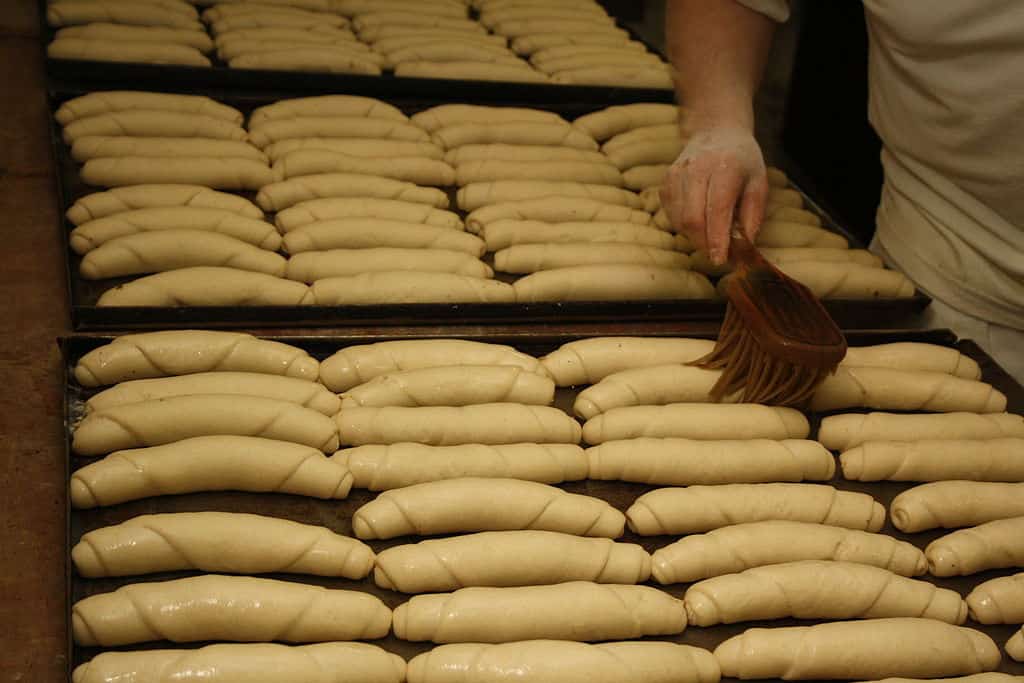

Kifla is a flaky, croissant-shaped pastry sprinkled with sesame sweets. Kifli comes in three varieties- plain, stuffed with sirene, or with sweet jam or chocolate. The first one is usually served as a side dish with most Macedonian main course dishes, the second one is typically eaten for breakfast, while the sweet version is eaten as a dessert or a snack.
Pite


Think of Pite as the Balkan good ol’ apple pie, except it’s not just apple, it can be filled with many different kinds of fruits, nuts, cheese varieties, spinach, sauerkraut, or even meat. Pete basically consist of layers and layers of ultra-thin dough, stuffed with all sorts of deliciousness. And yes, it’s as buttery and delicious as it sounds. It requires a lot of rolling but it’s worth it.
Kajmak


Kajmak is this creamy, dreamy dairy spread with salty and tangy flavor made by simmering milk and skimming off the thick top layer and letting it chill (literally) for several days- it’s a handful and it requires a lot of patience with the final result landing somewhere between clotted cream and butter. You can spread it on warm bread or use it as topping for your grilled meat. It’s like a secret ingredient that can make all dishes better.
Main Courses
Now, we’ve finally reached the “meat and potatoes” of this guide to Kosovo food- some of the most popular main course dishes.
Tavë Prizreni


Tavë Prizreni is a tasty casserole with a spicy attitude originating from the city of Prizren. It’s a hearty meat and veggie dish consisting of tender chunks of meat (usually lamb or beef) slow-cooked with onions, peppers, and tomatoes and seasoned with a blend of spices and topped with something creamy, like yogurt or kajmak, because why not? It’s served with some freshly baked local bread that can be used as a utensil replacement (for dipping).
Tave Kosi


Tava e Kosit is a classic Albanian meat-based dish made with lamb or goat meat, marinated and slow-cooked with a bunch of different vegetables and aromatic herbs until completely tender and melting in your mouth. The dish is traditionally prepared in a large baking dish called tava.
Qebaptore


In the Kosovo food scene, Qebaptore is the MVP. Qebaptore, also known as qebap or cevapi is a juicy, grilled minced meat goodness popular in Turkey and across the Balkans with Kosovo, obviously not being an exception. The minced meat is shaped into finger-like shape and barbequed into a soft, chewy, slightly spicy sausage-like dish that’s typically served with somun (a type of pita bread), onions, and a dollop of kayak.
Jani Me Fasule


Jani me fasule is Albania/Kosovo’s take on the white beans, slow-cooked stew popular across the Balkans. The final result is a stew of beans (and a bunch of other veggies) so tender they practically melt in your mouth. The other ingredients feature onions, red peppers, and a splash of local herbs and spices, resulting in a hearty stew that’s usually combined with a piece of meat and fresh bread but it can also be a standalone dish. If you’re a fan of bean dishes, you’ll also like our tavce gravce recipe or our prebranac recipe.
Mantia


Mantia is the closest thing to dumplings you can find in this part of the world. Introduced to the region by the Turks, these tiny parcels of doughy delight are stuffed with a mix of minced meat or cheese, kind of like the Turkic/Balkan version of momos. The final result are bite-sized dumplings with a Balkan twist that can be steamed or baked.
Sogan-Dolma


Sogan dolma basically means “stuffed onions” in Turkish (with “sogan” meaning onion and “dolma” meaning filled or stuffed). Originating from the broader Ottoman region, it has found its way into many Balkan kitchens and it’s basically exactly what its name suggests- you take layers of onions and you stuff them with a mixture of cooked rice and minced meat, a mixture that’s both tender and bursting with flavors.
Vegetarian Options
If you’re a vegetarian and not finding too many things you can eat during your upcoming Kosovo food trip, don’t worry; our list of the best Kosovo food wouldn’t be complete without a section devoted to a few popular vegetarian options.
Fasulë


Now, fasule is basically a bean stew or soup that’s popular in the Balkans, including Kosovo. It’s made from white beans simmered in a rich, savory broth with some onions, paprika, and maybe a bit of smoked meat, served with slices of bread used for dunking in the delicious stew.
Turli Perimesh


Turli Perimesh is the ultimate Kosovar vegetarian dish- it consists of peppers, eggplants, zucchini, tomatoes, slow-cooked in a stew, absorbing each other’s flavors, and resulting in a hearty dish, half-stew, half-casserole. It can be combined with some meat and bread or eaten on its own.
Speca Te Mbushur


Speca Te Mbushur is a dish where bell peppers are generously stuffed with a tasty mix of minced meat, rice, onions, and seasonings. It’s another type of stuffed vegetable dish that is very popular in the Balkans. Once these peppers have their fill (pun intended), they’re simmered in a tomato-based sauce until they’re tender and the filling is completely cooked.
Gjellë Me Qiqra


Gjellë Me Qiqra actually translates to a dish with chickpeas and offal and it’s exactly that. It’s a hearty, rustic stew made primarily from chickpeas or sometimes, kidney beans and lamb or calf offal (think liver, lungs, and such). The offal is diced up, combined with the trusty chickpeas, seasoned, and simmered, resulting in a rich, flavorful stew that’s been warming up Kosovo dinner tables for generations.
Beverages
Now that we covered some of the tastiest dishes in Kosovo, it’s about time to cover some of the most popular beverages (this Kosovo food guide wouldn’t be complete without them).
Turkish Coffee


This is like the espresso’s medieval granddaddy. It’s ground, with strong flavor, and it leaves a bit of leftovers on the bottom but it can wake you up like nothing else. It’s boiled up in a little pot called a ‘cezve’, and served in tiny cups, but still enough to give you a powerful wake up punch.
Salep

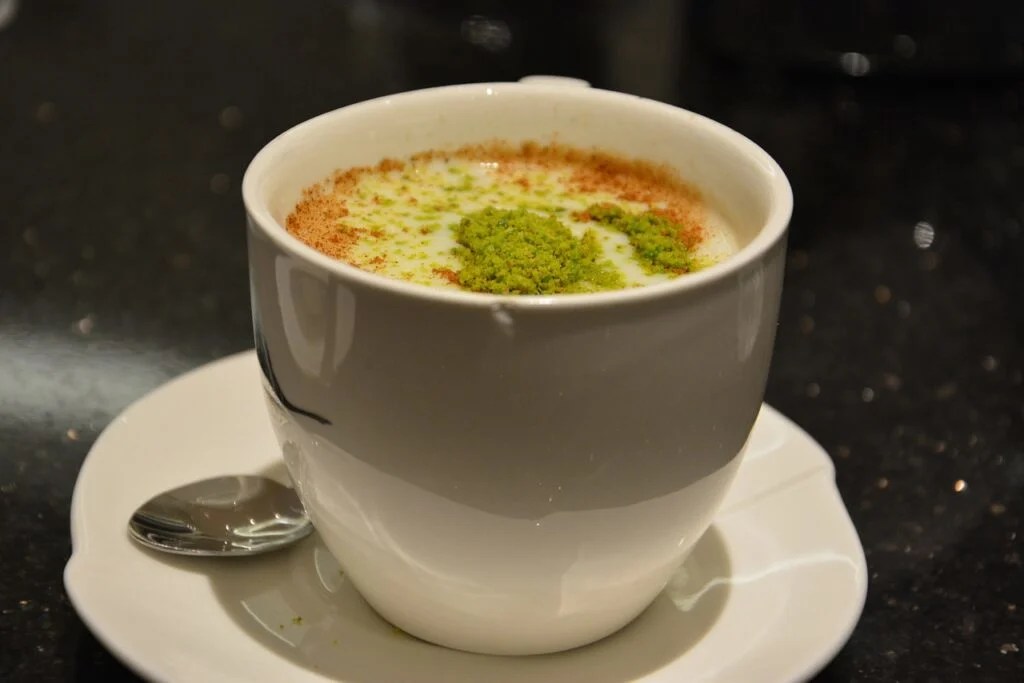
Feeling cold? Grab Salep, a warm, slightly thick drink made from orchid tubers mixed with milk and a sprinkle of cinnamon on top, it’s like a combination of chai and hot chocolate, perfect for the frosty winter mornings.
Mountain Tea


So, you’ve got these wild herbs growing up in Kosovo’s mountains, right? Pluck ’em, dry ’em, steep ’em, and you get the traditional Kosovar herbal tea with powerful aroma, and perfect for when you’re pretending to detox.
Boza


Think of boza as a slightly tangy, thickish, fermented drink with a flavor palette that lies somewhere between a smoothie and beer but yeah, it’s completely normal to have it with a breakfast or dessert. Plus, rumor has it, that it’s good for the gut.
Raki


Kosovo raki is a potent fruit brandy, often distilled from grapes, but sometimes from plums or other fruits. This ain’t your average drink, it has a super strong kick and clear appearance, so it’s traditionally enjoyed in small sips, often as an accompaniment to meals or as a ‘cheers’ among friends.
Dhallë


Dhallë is Kosovo’s popular fermented milk drink, kind of like yogurt’s more liquidy cousin. Think of it as a smoothie, but instead of fruits and fancy add-ins, it’s just milk, bacteria, and a bit of salt. On a hot day, or after a hearty meal, a cold glass of Dhallë does wonders for your stomach.
Desserts
Last but not least, we round up this Kosovo food guide with a few of the country’s most popular desserts.
Trilece


Trilece is a soft cake made from three different types of milk- cream milk, condensed milk, and regular milk (therefore the name tres leches) but the Kosovo version is also soaked in liquid sugar syrup making it even sweeter than the original. In Kosovo, it’s a popular street food snack and you can find it in many bakeries and patisseries and it goes perfectly alongside a cup of tea or coffee.
Tullumbë
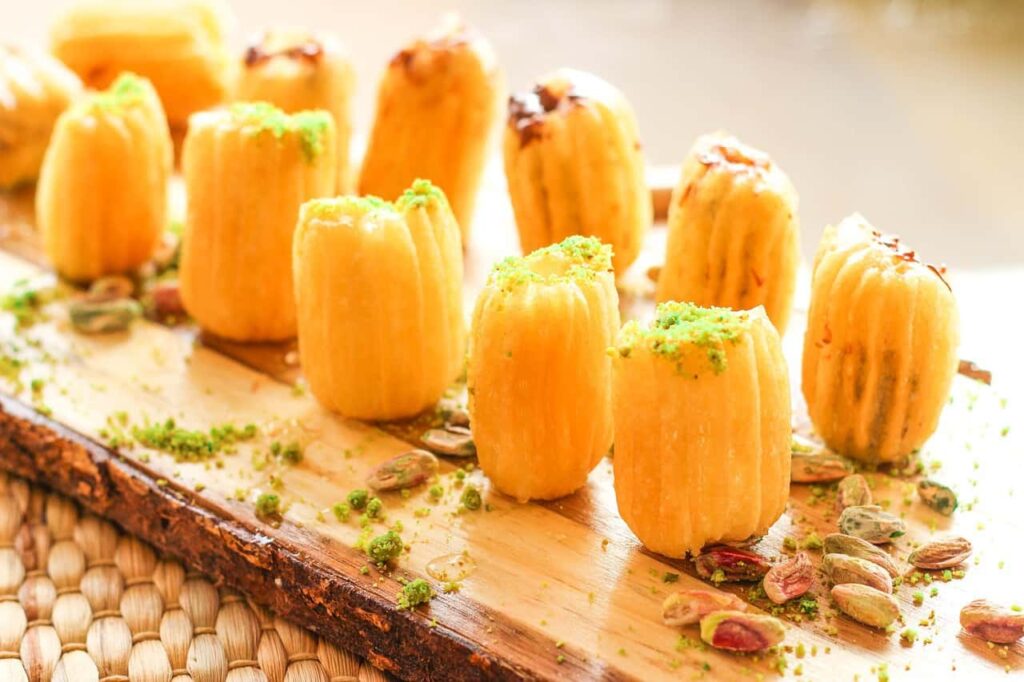
Tulumba is a golden, crispy dough fingers deep-fried and topped with sherbet (liquid sugar). It’s server anywhere from street food stalls to fancy restaurants and it’s one of the most popular desserts in Kosovo but it was actually introduced to the region by the ottomans. It’s crunchy on the outside and liquid (from the sherbet) on the inside.
Baklava


Baklava is the most popular dessert of the Muslim world and Kosovo is no exception. It’s made of super thin pastry layers, stacked on top of each other with walnuts or pistachios in between every layer and not topped but bathed in sherbet sugar and honey. It’s crispy, sticky, nutty- everything you can ask for from an awesome dessert.
Halva

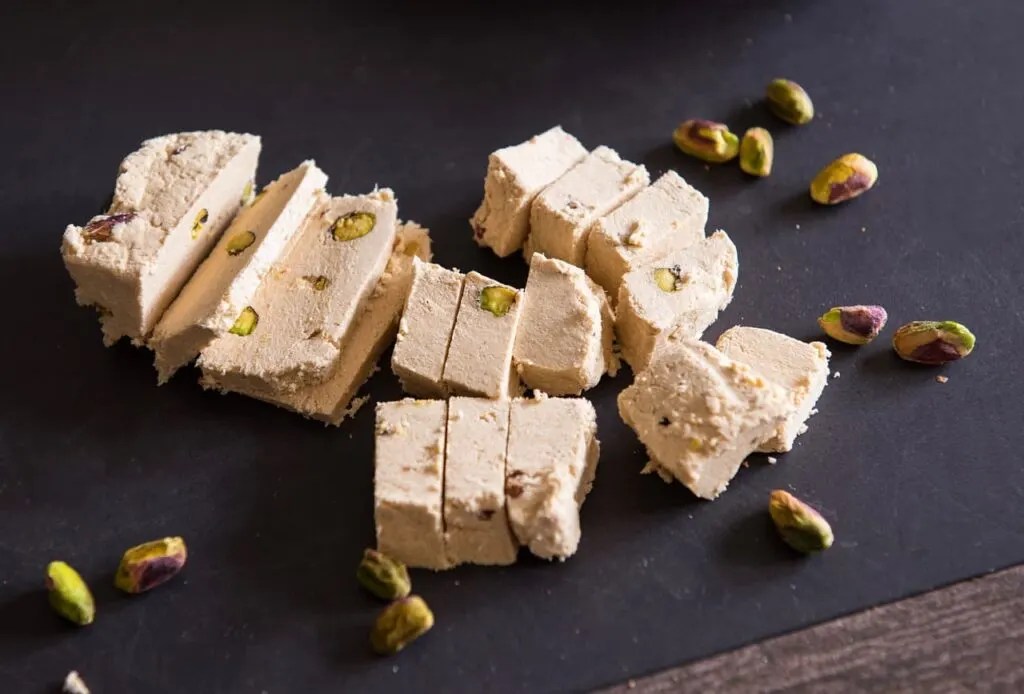
Unlike most other regional desserts, this iisn’t some fluffy cake, a sugary pastry or gooey pie. Halva is a dense, sweet confection made from either sesame seeds or sunflower seeds. The process includes grinding those seeds into a paste, sweetening the paste and letting it set overnight but ideally for a few days. The final result is crumbly, melt-in-your-mouth block of goodness.
Kadaif


Kadaif consists of super-thin, angel hair-like pastry strands jumbled together, mixed with a layer of chopped nuts, sugar, and soaked in sweet sherbet, making every bite sticky, nutty, and completely delicious.
Lokum (Turkish Delight)


Ever heard of Turkish Delight? Yep, in the Balkans they call it lokum, a gel-like treat that’s softer than a marshmallow but firmer than Jell-O. It’s made from sugar, starch, rosewater, lemon, or sometimes mint, and of course, pieces of nuts inside that give the dessert an interesting contrast of sticky and nutty.
How did you like this Kosovo food guide? Did you try any of these dishes? Do you have a favorite one? Feel free to share your thoughts in the comments below.
Like it? Pin it.


