
There aren’t many countries in the world where the bread-eating culture is as strong and important as it is in Russia. Russians love bread; they have many different varieties of it reserved for special occasions, from wheat and rye breads to regional varieties that melt in your mouth. Besides the ordinary loaves, Russian baking includes flatbreads, tea breads, dry rings, seasonal breads, and filled, pie-like pastries. Certain breads have intense ceremonial or religious meaning, while others are popular because of their simplicity, nourishing, and impeccable flavor. In this article, we’ll show you the most popular Russian breads and teach you everything there is to know about each one of them.
Core Rye Breads (Foundational Russian Breads)
We start this guide to Russian breads with a couple of popular rye breads, which are an important part of Russian cuisine.
Borodinsky Bread (Бородинский хлеб)


Borodinsky bread is one of the most popular Russian rye breads. It’s made of rye, with part wheat, and a sourdough starter, instead of commercial yeast. The difference is the coriander seeds, which are either added to the dough or sprinkled on top. This gives the bread its unique smell and slightly sweet-spicy taste. Molasses or malt syrup is normally added, which gives it a dark color and a light sweetness.
Borodinsky is considered to be closely connected with the traditional baking of the Soviet era, and it remains to be regarded as the standard of baking rye bread. The texture is thick and wet, and it is supposed to last several days. It’s usually eaten with butter, cured fish, or Russian soups.
Darnitskiy Bread / Bukhanka (Дарницкий хлеб / Буханка)


Darnitskiy bread is a common-day bread that became a prevalent bread throughout the Soviet era when ingredients were severely limited at times due to shortages. It is prepared using a combination of rye and wheat flour and has been fermented using sourdough or yeast. It does not have any spices or sweeteners like Borodinsky, and this makes it have a clean, slightly sour taste.
Bukhanka is a term applied rather to the form than to the recipe, namely, a loaf. This bread was meant to be utilitarian, cheap, and satiating. It has small crumbs, and it’s softer than the pure rye breads, which makes it a perfect choice for making sandwiches.
Zavarnoy Bread (Заварной хлеб)


Zavarnoy bread is a rye bread variety prepared using the scalding method. Some of the rye flour is blended with boiled water and then fermented. It gelatinizes the starches, producing a plumper, sweeter crumb and the natural sweetness without the need to add sugar. Bread is usually prepared using rye flour, malt, water, salt, and sourdough.
Zavarnoy bread does not play any ceremonial part; however, it is significant on a technical level in Russian baking. Shelf life and texture are also enhanced by the scalding technique, so this makes it particularly popular in cooler regions. The resulting loaf is dark and, to some extent, sweet and heavy bread with a smooth and heavy crumb. Most people consume it as a side with butter, vegetable soups, or even cured foods as opposed to a sandwich bread.
Stolichniy Rye Bread (Столичный хлеб)

The Stolichniy rye bread is an urbanized, refined rye loaf that is available in most large-scale bakeries. It is prepared by using rye flour with a lesser content of wheat flour, sourdough or yeast, water, salt, and malt. Stolichniy is also more homogenous in texture and flavor and has a slightly lighter crumb than rustic rye breads.
No ritual or customary value is given to this bread. This is indicated in its name, which implies that it was associated with city bakeries and not with rural baking. It has a gentle malt sweetness taste that is a bit sour and is meant to be palatable to a large group of people.
Rizhsky Bread (Рижский хлеб)

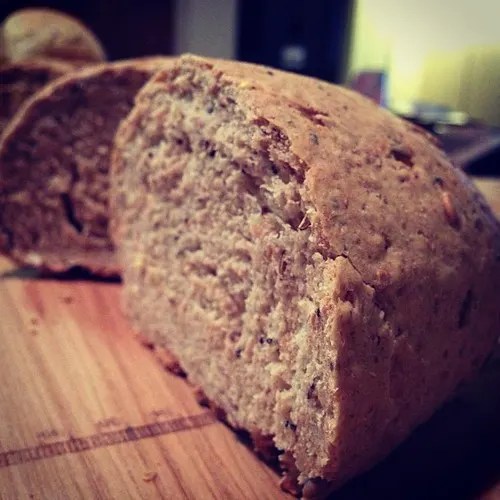
Rizhsky bread is a rye bread traditionally associated with Baltic-style baking influences. It is made from rye flour, malt, water, and sourdough, resulting in a dark, aromatic loaf with a slightly sweet profile. Compared to Borodinsky, it is less spiced and relies more on malt for flavor.
This bread does not carry strong cultural symbolism in Russia itself, but it reflects cross-regional baking traditions. The crumb is dense and moist, and the crust is typically firm. Rizhsky bread pairs well with fish, hearty soups, and dairy-based spreads. It is valued for balance rather than boldness. The sweetness is subtle, and the acidity is controlled, making it versatile for both savory and mildly sweet toppings.
Karelsky Bread (Карельский хлеб)


Karelsky bread is a product of the north, normally made of rye flour mixed with barley or oats. The bread is thick and dark, and it is meant to be extended. It is also commonly baked in a tight loaf that has a hard crust and has little rise.
Karelsky bread is generally consumed in thinly sliced bread with butter or fish. Its nutritional value and longevity were more significant in the past than tenderness or appearance.
Podovy Bread (Подовый хлеб)

Podovy is rather a method of baking than a recipe. Instead of being baked in pans, it is baked on the floor of the oven. This yields a layer of crust that is thicker and more irregularly shaped. Rye, wheat, or mixed flour dough can be used to make podovy bread.
This bread is enjoyed in terms of texture and not ingredients. Simple dishes such as butter or soup are usually served with it, and it is appreciated due to its earthy nature.
Wheat & Mixed-Grain Breads
Next, we’ll cover a couple of common Russian breads made of wheat and/or mixed grains, starting with…
Bely Khleb / Pshenichny Bread (Белый хлеб / Пшеничный)


Bely khleb is basically a common white wheat bread, made with refined wheat flour, yeast, water, salt, and a little sugar or oil. It contains soft crumb and is light-colored and mild in taste to be used on a wide daily basis. Unlike rye breads, it stales quicker and is simpler to cut and gnash.
It’s the most popular sandwich bread in Russia, and it’s more of a foundation of toppings than a flavor driver.
Zernovoy Bread (Зерновой хлеб)


Zernovoy bread is a grain-heavy bread variety prepared with either a mixture of wheat or rye flour or with whole or cracked grains (wheat berries, barley, oats, or sunflower seeds). It has a fine, luxurious texture, it’s slightly harder than most other breads, and very nutritious.
This bread is a relatively modern addition to the Russian bread scene. The crumb is firm, thick, and damp, and the crust is thick and nutty. The Zernovoy bread is usually consumed for breakfast or with dairy products, cheeses, or cured meats.
Sayka (Сайка)


Sayka is a small roll of baked wheat bread that is composed of refined wheat flour, yeast, milk or water, sugar, salt, and sometimes butter. It has a light crumb and fine crust and is normally baked in a joined portion,s which is torn into parts as opposed to being sliced.
Its popularity was due to the fact that it’s soft and versatile. It’s usually consumed with butter, jam, or honey alone or sometimes combined with tea. It is also a good base when preparing simple sandwiches due to its bland taste.
The bread is meant to be consumed on the spot; it becomes stale within a short period. Sayka is the highlight of urban baking as opposed to ancient rural bread culture.
Nareznoy Baton (Нарезной батон)


Nareznoy baton is a white loaf of wheat that is very soft and easy to cut. It consists of wheat flour, yeast, water, salt, sugar, and vegetable oil. There are deep cuts with the diagonal lines cut across the top of the loaf, which makes it easier to cut after baking. It was popularized during the Soviet times as a household loaf of bread.
The crust is thin and pale, and the crumb is soft and airy. It is used widely with sandwiches, toast, and breadcrumbs, but doesn’t have a strong flavor of its own and is meant to be a complement.
Kalach Bread (Калач)


Kalach is a traditional ring-shaped bread made of wheat and has a thicker base and a thinner handle-like piece. It is prepared using enriched wheat dough that contains milk, eggs, and butter.
The customary method of eating it was to hold it by the handle and leave the rest of the bread clean, disregarding the handle, or giving it to the poor.
The food is smooth and mildly chewable, moderately sweet. Although kalach is still used as a symbolic bread, nowadays it is more likely to be found as a bakery dish.
Festive & Ceremonial Breads
Next, we’ll cover a few popular ceremonial Russian breads that are usually reserved for special occasions…
Kulich (Кулич)


Kulich is a tall, cylindrical sweet bread that is baked during Orthodox Easter. Eggs, butter, milk, sugar, and yeast are added to it, and it is usually filled with raisins or fruit candy. It is commonly topped with a sugar glaze and sprinkles.
This bread is a specialty product, and it is closely linked to Easter festivities. Kulich is also frequently taken to church to get blessed before serving it on the dinner table. Its texture is soft and cake-like and is more of a brioche than regular bread.
Yeast Karavai (Каравай)


Karavai is a round, decorative, and large bread prepared using wheat flour, yeast, eggs, and milk. It is frequently willfully embroidered with the curls of dough, wheat, and symbolical figures.
This bread is very ceremonial. It’s conventionally linked to marriages, celebrations, and special protocols. Karavai is not a daily dish, but it’s served to welcome guests when they enter one’s home. It’s slightly sweet and meant to symbolize wealth, friendliness, and togetherness.
Tea Breads
Next, we’ll cover a few popular Russian breads that are usually eaten alongside a cup of tea…
Bublik (Бублик)


Bublik is a massive, ring-shaped bread prepared using yeast dough and is boiled briefly before baking. It closely resembles a bagel, but it’s a lot softer and a little sweeter. It is made out of wheat flour, yeast, sugar, salt, and occasionally milk.
Bublik is culturally appropriate because it goes hand in hand with tea and is mostly linked to street sellers and markets. Poppy seeds or sesame seeds are often used as toppings to make the bread richer, while the outer is shiny, smooth, and slightly gummy, and the inside is tender.
Baranka (Баранка)


Baranka is a drier and harder version of Bublik. It is prepared with light wheat dough, boiled and baked till thick and chewable. Baranki is a traditional tea-table bread with cultural contents. They are usually strung and suspended in kitchens.
They are neither to be cut nor stuffed. They are instead consumed gradually, sometimes soaked in tea in order to make them softer, and are convenient to store because of their long shelf life.
Sushki (Сушки)


Sushki are little, completely dry rings of bread prepared from wheat flour, water, sugar, and yeast. They are roasted till they become fully dry and crispy. Their hardness makes them great for dipping in tea or milk, and they are appreciated due to their longer shelf life, crunchy texture, and complex flavor.
Flatbreads
This guide to Russian breads wouldn’t be complete without covering a few popular local flatbreads.
Khychin (Хычин)


Khychin is a flat bread that is pan-cooked, originating from the North Caucasus region, notably among Karachay-Balkars. It is prepared using the dough of wheat flour stuffed with either cheese, potatoes, or meat. It’s rolled thin, stuffed, and closed and flattened again and cooked in a dry pan or griddle, with no oil used. The bread is usually brushed with butter before serving.
Its existence in Russian cuisine is rather a result of regionalized culture as opposed to national culture. The bread is spongy, pliant, and hearty, and was designed to serve as a meal and not a side dish. It is consumed when hot, and it is normally sliced into wedges; it is not a ceremonial food outside of its area of origin.
Tabani (Табани)


Tabani are pancake-like breads made of yeast in Udmurt cuisine. They are prepared using fermented wheat or rye batter, using flour, yeast, water, or milk, and salt. Tabani are inflated and bread-like in nature, unlike the thin crepes.
Tabani are culturally important in the region and are customarily linked with rural families. They are commonly accompanied by butter, sour cream, or honey. They are fried in a griddle and served hot. Tabani is not a substitute for bread, but a special dish that is consumed fresh.
Lapyoshka (Лепёшка)


Lepyoshka is actually the Russian name of a Central Asian naan that originates from the cuisine of Uzbekistan. There are many types of Uzbek bread, but the tandyr nan recipe (also known as Lepyoshka) is probably the most common one. You can find tandyr nan pretty much anywhere in Uzbekistan, and every small town in the country has its own unique way of making it. The bread is most often made plain (made with just flour, yeast, and salt), but it can also incorporate butter, sesame seeds, lamb fat, different kinds of meats and nuts, or even raisins.
Filled & Enriched Baked Goods
Next, we’ll cover a few popular stuffed breads that are an irreplaceable part of Russian cuisine…
Vatrushka (Ватрушка)


Vatrushka is a pastry made of yeast in an open form with an inside that’s usually filled with tvorog (curd cheese). Butter, sugar, eggs, and milk are added to the dough.
Vatrushka is a cultural pastry relevant in terms of culture as a traditional tea pastry and acts as a ceremonial pastry reserved for special occasions. It’s characterized by the contrast between soft dough and creamy filling.
Kurnik (Курник)


Kurnik is a layered, enclosed pie, which is normally stuffed with chicken, rice, mushrooms, and onions. The dough may be shortcrust or yeast-based. Kurnik is a true historical value and used to be served during weddings and great celebrations, but nowadays it’s primarily served as a delicacy.
Pirog (Пирог)


Pirogi (not to be confused with the Polish pierogi) are substantial baked or fried pastries that have a special place in Siberian kitchens. These are pies that fit in your hand, and they have a wide range of fillings; they can be savoury or sweet, a main or a snack, a comfort food or a festive treat.
Special Breads
Last but not least, we conclude this guide to Russian breads with a few special breads that don’t fall in any other category and are usually reserved for special occasions…
Rose Bread (Розовый хлеб)
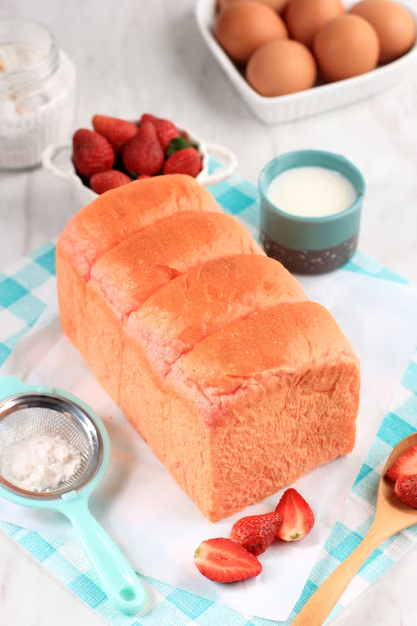
In Russian, rose bread can be a reference to a bread made in the shape of a flower out of enriched yeast dough or a modern addition to Russian baking that uses beets to give the bread a slightly pinkish color. The first one has a neutral taste and is reserved for special occasions, while the second has a slightly sour flavor and brings some color to the dinner table.
Gorchichny Bread (Горчичный хлеб)


Gorchichny is a bread made of wheat that is packed with mustard or mustard oil. It is yellowish crumbed and has a slightly spicy smell. It’s a Soviet classic that was one of the most popular choices in Soviet bakeries. It goes very well with savory products and cold cuts.
Sverdlovskaya Sloyka (Свердловская слойка)


Sverdlovskaya sloyka is a pastry made of laminated yeast, not bread. It is prepared using layered butter-laden dough, which makes it flaky. It is consumed as a pastry and not a replacement for bread, but it deserves a mention on this list.
How did you like this guide to Russian breads? Did you ever try any of them? Feel free to share your thoughts and experiences in the comments below.
Like it? Pin it.

