
Soup has always held a special place in Russian cuisine, from early history through the Empire days, all the way until today. Russian soups are delicious and utterly versatile; you can have them as appetizers, side dishes, main course meals, and in some instances, even for breakfast (or hangover remedy). Some soups are light and refreshing, others are rich and hearty, and in this article, we’ll show you some of the best of them, starting with…
1. Shchi


We start this list of the best Russian soups with Shchi. Finding its origins in the 9th century Kievan Rus, shchi is certainly one of the oldest and most famous Russian soups. Cabbage (either fresh or sauerkraut) is the main ingredient of this soup and some of the other ingredients feature onions, carrots, potatoes, and occasionally mushrooms. This light broth is often enriched with meat or fish, and herbs like bay leaf, garlic, and dill.
The soup is usually topped with sour cream (smetana) before serving to give it a thicker and more hearty texture. The thicker variant called sour shchi utilizes fermented cabbage which gives the soup a sour flavor. This soup has historically been the main food of peasants across the country as well as the people living in the city. Nutritious yet flexible, shchi can be light or rich, meat or vegetarian, eaten in both summer and winter, and served on its own or accompanied by rye bread.
2. Borscht


Borscht is easilly one of the most popular dishes of Russian and Eastern European cuisines and true, it’s traditionally a meat-based soup/stew, but you can easily whip up a vegetarian version by skipping the meat, although you might make some Russians angry along the way. At the core of borscht are the vibrant beetroots that lend their striking red hue to the dish. The other ingredients include carrots, potatoes, onions, cabbage, and herbs, and spices.
Enjoying this post? Then you may also like our guide to Siberian food.
3. Rassolnik


Rassolnik is a savory, sour soup that gets its broth from the brine of pickled cucumbers—known as “rassol”. This is mixed with pearl barley and pork or beef kidneys and often seen as a cure for the hangover; the origins of rassolnik are traced to the peasant tradition and it was the main dish of the Soviets because they used only preserved ingredients due to the fact that they had limited access to these ingredients in the winter.
The soup can also be enriched with potatoes, carrots, onions, and dill in a meat broth. It’s earthy, sour, and filling—hot with some sour cream on top. Rassolnik is still abundantly available on Russian tables and menus, providing a very peculiar taste that comes from the mixture of the preserved vegetables and the grains.
4. Solyanka


Solyanka is a soup that is rich, spicy and a little bit sour. The soup is made with meat, fish, or mushrooms as a main ingredient while some of the side ingredients feature pickled cucumbers, olives, capers, tomato paste, lemon slices and herbs. For the meat solyanka, the ingredients can be sausage, ham, beef, or poultry. Before serving, a scoop of traditional garnish of smetana and fresh parsley or dill is the dish’s completing touch. This bowl of soup was traditionally consumed after weddings—or after drinking too much.
5. Okroshka


Okroshka (окро́шка) is a cold summer soup which consists of raw veggies like cucumbers, radishes, and spring onions, cut into small pieces, and optionally boiled potatoes, eggs and other vegetables, and sometimes even meat, if you want to enrich the soup. The mixture of ingredients is cold, and thus it becomes perfectly refreshing for the hot weather. To enrich the flavor, you can also add sugar, salt, and lemon juice.. Okroshka first came into being in the Volga region of Russia and still remains the top pick, light and easy alternative to heavier winter soups.
6. Ukha


Ukha is a transparent fish stew, traditionally prepared with freshwater fish, like pike, perch, or carp. Ukha starts with a simmering up of fish heads, trimmings, and bones, to make a clear, rich broth, usually flavored with bay leaves, black peppercorns, and onions. After straining, fillet of fish, potatoes, carrots, and in some cases tomatoes are added and simmered until tender without clarifying the broth.
Just before serving, fresh herbs such as dill and parsley are scattered over, and a wedge of lemon may be included to brighten the dish. Ukha is served hot with black bread, and it is warm and soothing and yet light and refreshing, particularly during the low temperatures.
7. Sorrel Soup


is a soup that uses fresh sorrel leaves—sometimes substituted with spinach or nettles and delivers a gentle sour brightness. Other ingredients include potatoes, spring onions, eggs, dill, and occasionally carrots which just like okroshka is usually reserved for spring and summer. Green shchi’s origins lie in regional, farm‑to‑table cooking because many Russian dachas cultivate sorrel and wild greens and this retains the soup’s rustic charm but it’s also not uncommon to find it served in most modern restaurants and bistros.
8. Pokhlyobka (Barley & Mushroom Soup)


Pokhlyobka is best known as Russian barley and mushroom soup. It is a warm, hearty and rustic Peasant dish, and anautumn and winter time favorite. The basic ingredient of the soup is a mixture of pearl barley or buckwheat with sautéed vegetables (usually onion and carrots) and plenty of wild mushrooms (either fresh or dried). Some varieties even add in potatoes or bits of smoked meat, but meatless versions are also popular. The soup is slow-cooked for at least a few hours and at the end, a bunch of dill and cream are added to enrich the consistency of the soup.
Pokhlyobka is deeply rooted in rural food, but despite its unpretentious origin, it’s also popular in city households and restaurants, and many Russians say it even tastes better the next day.
9. Supa s frikadelkami


Meatball soup or supa s frikadelkami is a typical and traditional Russian homestyle dish. Tiny meat balls – which are usually a mixture of ground beef or pork, onion and breadcrumbs – go into a clear broth that contains chopped vegetables: potatoes, carrots, and celery. Also, rice or noodles can be used up if more substance is desired.
The soup is boiled until the meatballs are very soft and the broth is spicy mildly. Soviet-era cookbooks even include variations that use ingredients that are simple and inexpensive—suitable for daily eating. While not as well-known abroad as borscht or solyanka, meatball soup remains a warm and crowd-pleasing dish deeply rooted in local home cooking tradition.
Enjoying this post? Then you may also like our guide to Uzbek food.
10. Molochny Sup


Milk soup, sometimes referred to molochny sup or molokhka, is a sweet and simple dish that is made by boiling milk (which is sometimes diluted) with small noodles, rice, semolina, or barley. This dessert soup is lightly seasoned with sugar, vanilla, or a little salt, and optionally -raisins or butter. This creamy, warming dish was a kindergarten breakfast staple during Soviet times and was known as one of Lenin’s favorite dishes. It can be eaten either hot or cold; it doesn’t have the savory flavor that normal Russian soups have—making it interesting as a runny, lightly sweet broth instead of a heavy main dish.
11. Tyurya

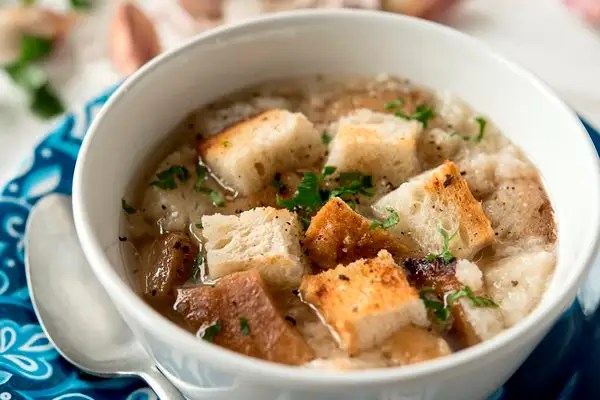
Tyurya is a very simple and rustic cold soup, whose main ingredients are stale rye bread or sukhari (hard biscuits), which are softened in kvass or whey and then chopped onion, garlic, sauerkraut or pickled vegetables, and a drizzle of oil are added. Generally, it is consumed cold and has historically been a very important part of Lenten meals and during the frequent times of shortages and starvation during the both wars.
Tyurya is the ultimate frugal dish—no cooking required, just assembly. Although simple, the taste of it is the main thing here coming from the sourness of the kvass or fermented dairy, the crunchiness of the bread, and the sharpness of the vegetables. Nowadays, it is hardly found on the menus of the restaurants, but one can meet it in Russian novels and old newspapers and magazines.
12. Kharcho


Though originally Georgian, kharcho has been embraced as a comfort soup within Russian cuisine, especially in regionsinfluenced by Caucasian cooking, like Dagestan and Chechnya. Rich, slightly spicy, and deeply savory, kharcho typically combines chunks of lamb or beef with rice, chopped tomatoes, garlic, and herbs like cilantro or parsley—with a touch of grated walnuts or walnut paste in some provincial renditions.
Slight heat comes from dried red pepper or khmeli-suneli spice blend. The broth is thick and tomato-forward and the soup is often served in autumn and winter—in small bowls alongside a shot of vodka, as a nourishing appetizer before meat-centric meals.
13. Gribnoy Sup


Gribnoy sup, also known as Russian mushroom soup, is a humble, forest-smelling soup with strong historical roots. The soup is traditionally prepared using foraged mushrooms, especially chanterelles, porcini or honey agarics, which are in season in late summer and early fall. The recipe is completed with potatoes, onions, carrots, and barley or pasta to make a simple, but richly flavored broth.
The mushrooms are normally sauteed to enhance their flavor before they are added to the pot. Versions with sour cream, dill or garlic may be encountered depending on the region. This soup is frequently meatless and is eaten during the fasting days in Orthodox Christian families. Gribnoy sup is the opposite of creamy mushroom soups in the Western cuisine it is all about clarity and freshness. It is robust, earthy and closely connected with the Russian nature adoration.
14. Gorokhovy Sup


Gorokhovy sup, or pea soup, is a Soviet classic prepared mostly as a dried yellow split pea soup, typically prepared with smoked pork ribs or sausages to add a smoky flavor to counter the sweet earthiness of the legumes. Carrots, onions, potatoes and bay leaf are typical additions, simmered until the peas are almost dissolved, producing a thick, stew-like consistency. This soup is not only cheap but also filling, which is perfect during the cold winter and stressful days at work and is still a comfort food that many Russians resort to even today.
15. Botvinya

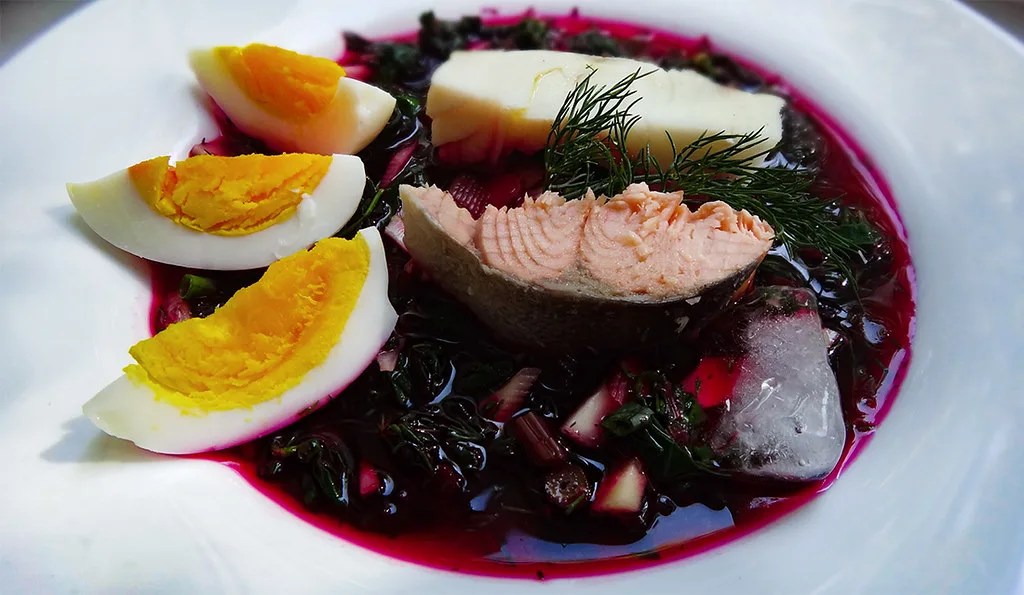
Last but not least, we conclude this list of the best Russian soups with one of the most peculiar and old Russian cold soups. Botvinya is like a sophisticated, gourmet relative of okroshka. It was served during imperial feasts during Tsarist times and is named after the beet greens or tops, which is the main ingredient of the dish, called botva.
Sorrel, spinach, dill, cucumber, horseradish, lemon juice and occasionally crushed ice are other ingredients which are frequently used and a frozen kvass base is used to add a touch of sourness and fizziness. The soup is usually served alongside a cold poached fish, (most commonly sturgeon, salmon or pike) carefully placed on top before serving. It was traditionally served in aristocratic families, alognside an additional glass of cool vodka or white wine.
How did you like this list of the best Russian soups? Did you ever try any of them? Feel free to share your thoughts and experiences in the comments below.
Like it? Pin it.


