
Dagestani cuisine is one of the least known jewels of the Caucasus—a cuisine filled with strong, nourishing, and hearty dishes that form a vibrant cuisine that was formed by the mountains, but also the sea for centuries. Reshaping Balkan, Persian, Russian, and Central Asian cuisines, Dagestan’s dishes are the same as people who live there – diverse, warm, and filling. From hot dishes of khinkal and stewed lamb to fragrant breads like khychin and chudu, Dagestan food has a lot of surprises, and in this article, we’ll cover some of our favorite Dagestani dishes.
Appetizers
We’re starting this list of the best Dagestan food with a few popular local appetizers.
Kazi Sausage


Kazi is a gourmet and a cultural delicacy from Dagestan and the Caucasus, a sausage made of horse meat crafted of expertly chosen horse meat seasoned using salt, garlic and pepper, and air-drying it for at least a few weeks. Some variations include smoking the sausage, which gives it a deeper flavor. The final result is a dark, chewy, and flavor-filled sausage with rich red color and marbled fat that melts in your mouth.
Kazi can be cut very thin and eaten cold as a snack with bread, onion, or pickled vegetables. Some would think that the idea is exotic or, even, repelling, whereas to locals it is just a conventional and respectful use of the animal that they admire every single detail of.
Suluguni


The brined Suluguni is one of the most popular cheese varieties in Dagestan, even though it technically originates from neighboring Georgia. It’s a semi-soft cheese with an elastic texture, kind of like mozzarella, just tangier and saltier. Historically, suluguni is a cheese that was traditionally prepared from cow milk or a blend of cow and buffalo milk, but nowadays, it’s common to find it prepared from goat milk too. It is usually served fresh, cut into portions, or grilled until golden and a little crispy, and is a popular breakfast item as well as an appetizer.
Urbech

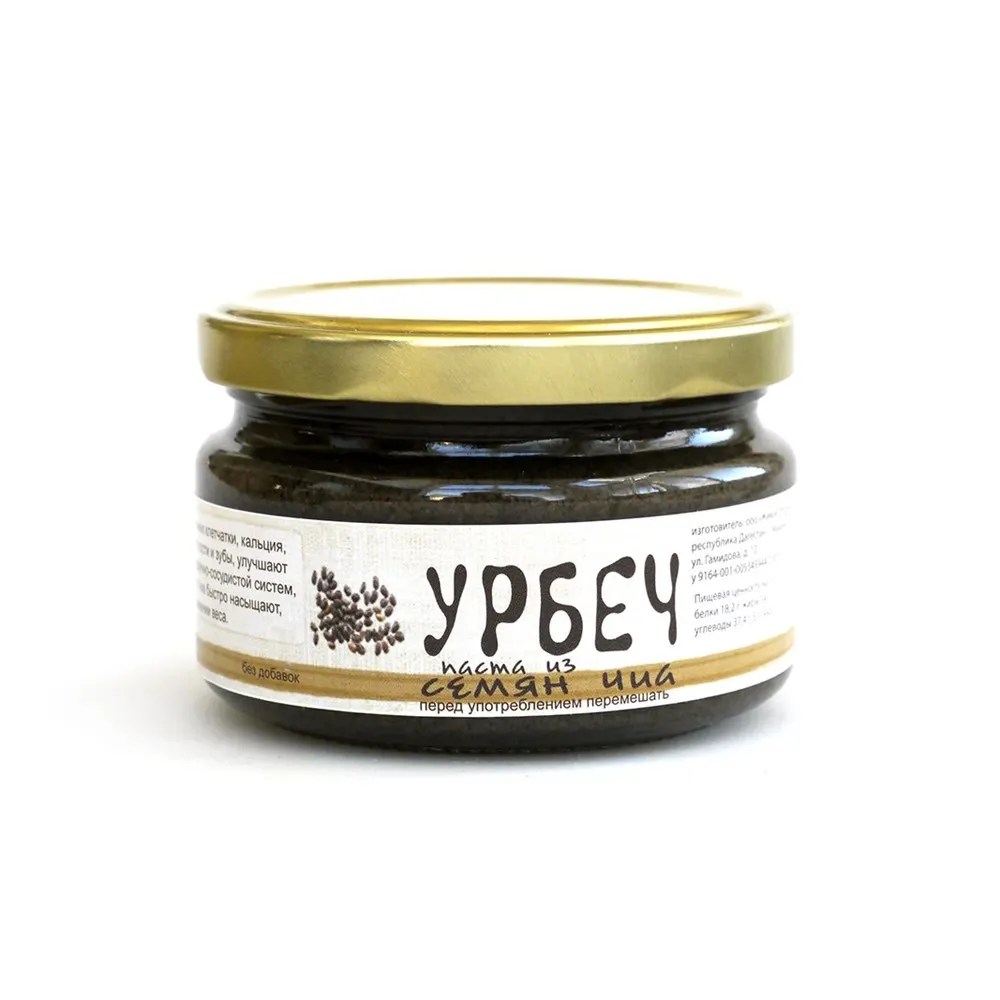
Urbech is Dagestan’s answer to nut butter, but one that actually predates most Western health food trends by centuries. It’s a thick, nutrient-rich paste that can be made by grinding roasted seeds or nuts into a smooth, oily spread, which usually consists of flaxseeds, sunflower seeds, apricot kernels, or walnuts.
It’s normally mixed with honey but it is also eaten by people right off the spoon to give them some energy boost and some locals even claim that it’s a natural aphrodisiac; it’s rich in healthy fats, protein, and minerals, which made it the energy food of shepherds, farmers, and everyone living in difficult conditions.
Baklazhany


Fried zucchini/eggplants make a popular side dish or appetiser in Dagestani cuisine- usually topped with chopped garlic, vinegar, and/or yogurt-containing sauces, baklazhany are frequently served at room temperature. Eggplants are thickly sliced or cut into strips and then sprinkled with salt and fried in sunflower oil until golden and soft. The final result is a soft and creamy snack with a smoky flavor, perfect for opening up one’s appetite. They are even sometimes stacked upon each other like a cold lasagna with pieces of tomatoes and herbs.
Adygei Cheese


Adygei cheese is a light, fresh, slightly salted cheese of the Adyghe people from the North Caucasus that is also very popular in Dagestan. It’s made of cow milk (and occasionally goat milk) and gelatin, resulting in a soft and spongy consistency and mild, creamy, and slightly salty after-taste. It’s normally sold in circular, flat-shaped wheels with light colored yellow crust.
In Dagestan, it’s usually served as an appetizer with tomatoes, cucumbers, and herbs or stuffed into bread like the khychin or chudu, which is the perfect time to mention this because this takes us to our next point…
Breads and Pastries
Bread is a crucial part of Dagestani cuisine, and pastries too. But when I say pastries, I don’t mean the sweet-savory pastries from your favorite patisserie, but bread-like pastries stuffed with meat.
Chebureki


Chebureki is the ultimate food adventure of Eastern Europe and Central Asia– it’s basically a pastry/pie, deep-fried and stuffed with a succulent meat filling with an aroma capable of luring you from miles away. In its essence, Chebureki is a deep-fried turnover similar to burek, Karjalanpiirakka, and samsa with a filling of minced meat (often lamb or beef), onions, and various spices, enveloped in a thin dough. Kind of like an Eurasian version of the empanada. The filling is juicy, and the outside is perfectly crispy.
Khychin


Khychin is one of the most recognizable flatbreads of Dagestan. It originates from the Karachay and Balkar people and is very popular across the Caucasus. It is a stuffed, pan-fried bread with a thin, yogurt-based dough that is filled with mashed potatoes, farmer cheese, or finely chopped greens, like nettles or spinach. Before serving, the bread is smeared with melted butter and heaped into a high pile- and most often, consumed as soon as it reaches the table.
Khingalsh


Not to be mistaken with khinkal, Khingalsh is a little-known Dagestani pastry that consists of stuffed, pan-fried bread usually filled with spiced beef fat, garlic, or potato. This dish is frequently made when guests come or when there is a special celebration. In Avar lands, khingalsh is stuffed with delicious beef suet and generous amounts of black pepper, which gives it a bold, fatty taste that is perfectly accompanied by a glass of kefir or yogurt.
Enjoying this post? Then you may also like our pirozhki recipe and our syrniki recipe.
Chudu


The best way to describe Chudu is as the Dagestan version of the quesadilla. It is a thin, pan-fried flatbread folded in a basic filling that can be anything from spiced meat to sweet pumpkin, but also cheese or fried herbs. The dough uses simple ingredients- flour, water, and salt (no yeast) and is rolled as thin as paper, then stuffed and folded and cooked on a sizzling dry frying pan until it becomes golden brown with spots. Chudu is usually a tea-time snack, but some people like to eat it for breakfast too.
Kurze


Kurze are small dumplings filled with meat that closely resemble pelmeni, manti, or momos, but of course with a local twist (and flavor). These dumplings are usually stuffed with a mixture of minced lamb or beef, onion, and black pepper before being folded into little pouches and boiled until soft enough to eat, although in some places, the dumplings are steamed instead of boiled. The dumplings are usually served dry with spiced oil or yogurt-based sauces, and are frequently consumed as a comfort food.
Main Course
If it’s not clear by now, meat is a huge part of Dagestani cuisine, and if you’re a vegetarian, you might not have the best culinary experience in Dagestan.
Shashlik


Shashlik is actually the Russian word for a shish kebab, and that’s exactly what it is- a shish kebab prepared in the Dagestani way. The Dagestani Shashlik consists of barbecued cubes of beef, lamb, or (not so often) chicken on a stick. In some places, you can also find horse shashlik, but obviously, this isn’t very popular among tourists.
Enjoying this post? Then you may also like our guide to Tatar cuisine.
Avar Khinkal


One of the most popular dishes in Dagestan is Avar Khinkal, which, although it has the same name as its Georgian counterpart (khinkali) and also represents meat dumplings, it comes with a different, local twist. Avar Khinkal are pasta-like (thick, square, boiled dough) dumplings that are usually accompanied by lumps of boiled meat (beef or lamb), a thick garlic sauce, and sometimes, a ladleful of broth is served over it (usually in winter).
Enjoying this post? Then you may also like our guide to Siberian food.
Kharcho Stew


Originally a Georgian dish, Kharcho has been welcomed into Dagestan cuisine, just thickened and suited to local palates. The beef is prepared together with rice, onions, garlic, tkemali (sour plum sauce), crushed walnuts, and a mixture of spices such as coriander and bay leaves. The outcome is a sour, salty, warm, spicy soup, perfect for the cold Dagestani weather.
Manty


Manty are tasty steaming dumplings that originate from Central Asia, but are popular across the Turkic world, and that includes Dagestan. Dagestani manty are typically prepared using a thin wrapping of dough with a juicy filling of chopped lamb or beef, onion, black pepper, and at times a touch of no-fat lamb fat to provide richness. The dough is formed into large purses (not small like the Manti you get in Turkey) and is steamed in a layered pot known as a mantovarka in boiling water. The final result? Tender, juicy dumplings that explode with a flavorful juice when bitten.
Zhizhig-Galnash

Zhizhig-Galnash is a dish that is originally from Chechnya but is equally beloved in Dagestan. The name of the dish literally means “meat and dumplings,” not a very creative way to name it, but that doesn’t take anything away from its spectacular flavor.
The dumplings are small pieces of dough that are hand-rolled and then cooked in hot water until they become firm, while the meat—usually lamb or beef—is cooked separately by boiling until it becomes soft and in the end, everything is served together with a hot garlic sauce and sometimes broth on the side. The dumplings are sticky-chewy with a bit of irregular shapes (a sign of handmade care), and the meat is very soft to the extent it comes apart in the mouth.
Dagestani Lamb


Lamb is the most popular ingredient in the Dagestani cuisine, and each region of the republic has its unique recipes for it. In Dagestan, lamb is always the centerpiece of a meal. The most typical recipe features roasting the lamb on an open fire, using the intestines to make delicious stews with garlic and herbs, but the meat can also be cooked in a clay pot. A local farmer is usually the one who provides the meat, and the animals have the freedom to graze on mountain pastures, which creates plenty of space for them to develop the meat’s extraordinary taste…
Chorbas: Dagestan’s Soulful Soups


One of the most recognizable dishes of Dagestani cuisine is the chorba, which is a word used to describe different kinds of stews and broth-based soups rich in nutrients. The soup can be made with meat, vegetables, grains, or legumes, and unlike other parts of the world, here, they are not merely a starter for the main meal; they are the main meal. Ingredients can be different depending on the season and on the area of the region— for example, the mountain communities may use wild herbs and lamb, while the coastal towns rely on fish or root vegetables.
Desserts
Unlike many other regions, Dagestan food doesn’t feature a lot of chocolatey, heavy desserts. Most are plant-based, light, and actually healthy, which actually isn’t bad at all.
Halva (Xalva)


Dagestani halva, or xalva, is a dense, nutty dessert, distinctly different from Middle Eastern or South Asian versions. Usually made from toasted wheat flour (or sometimes ground seeds or nuts), sugar, and butter, this halva has a rich, roasted flavor and a slightly crumbly, dough-like texture. It’s shaped into loaves or cut into diamond-shaped blocks and sometimes sprinkled with crushed walnuts or cinnamon. The process includes grinding those seeds into a paste, sweetening the paste, and letting it set overnight, but ideally for a few days. The final result is a crumbly, melt-in-your-mouth block of goodness.
Chak-chak


Chak-chak is a typical Dagestani dessert prepared from balls of dough fried to a golden color and covered with a thick sticky honey syrup (yup, I know what you might be thinking- they sure love dumplings if they have them for breakfast, lunch, dinner, and dessert!). In Dagestan, the sweet is an irreplaceable part of local feasts and celebrations. To make the dough, typically rice or wheat dough, the dough is sliced into tiny pellets or strips, fried until crisp, then molded into mounds or pyramids prior to being bathed in honey, which has been warmed and mixed with sugar or butter.
Gozinaki


Gozinaki is a nutty dessert covered with honey and is typically prepared during winter festivals and New Year parties. Originally a dessert from Georgia, it is also found in the south of Dagestan, where the walnut trees grow in abundance. The nuts are chopped and roasted, then mixed into hot honey to get sticking, and then the mixture is spread out, pressed flat, and cut into rhombuses or bars once it cools (it’s like an organic, less sweet, and healthier version of Snickers).
Kisel


Kisel is a very popular drink/dessert among kids in Dagestan. It’s a thick, sweet, fruity drink that is served for dessert. The main ingredients are fruit juice (usually from berries, cherries, or apples), cooked with sugar and starch. Kisel is something in between a liquid, a sauce, and a pudding. It can be served either warm or cold, in glasses or in bowls, which makes it very versatile. Some consume it directly like juice, while others spoon it like jelly. It is commonly offered as an afternoon snack or a light dessert after dinner.
Drinks
Last but not least, we conclude this guide to Dagestan food with a few popular drinks from Dagestan, starting with…
Kefir


Kefir is a dairy drink made from the milk of cows, goats, or sheep. In Dagestan, it represents much more than a simple health initiative – it is a basic daily item. Thanks to its slightly bubbly nature and mild acidity, kefir serves as an ideal palate cleanser and a natural remedy for digestion, which is why it is often paired with rich dishes such as khinkal or manty. Packed with probiotics, calcium, and protein, it is widely recognized for its beneficial effects on the digestive system, but locals also consider it a thirst quencher in summer and a mild drink for dinner all year round.
Nogai Tea

Nogai Tea is no doubt a hot drink, but it is a ritual in a much deeper sense, the Turkic Nogai communities of Dagestan being the ones to come to mind. This black tea of utmost strength is frequently prepared in small glasses, with a cube of sugar between the teeth.
And that which makes it most special is the side dish: in Dagestan, tea is hardly ever consumed on its own. It is almost invariably accompanied by jams and other homemade sweets, honey, and even if savory, like the khychin. In the Nogai family, toasts and good wishes are nothing compared with the warmth of the tea, which is served to the guests right after their arrival.
Ayran

Ayran is a Turkish dairy drink that consists of salty, delicious yogurt frothed up to perfection, which is very popular in Dagestan. The traditional ayran recipe is quite simple, requires only 3 ingredients (yogurt, water, and salt), and can be done in only a few minutes. Most non-Turkish people consider ayran to be a summer drink because it’s refreshing and savory, but most locals know that ayran is not a seasonal drink. People in all Turkic countries (Azerbaijan, Kazakhstan, Kyrgyzstan, Turkmenistan, Turkey, Uzbekistan) as well as the Middle East and the Balkans, drink ayran throughout the year.
How did you like this Dagestan food guide? Did you try any of these dishes? before? Feel free to share your thoughts in the comments below.
Like it? Pin it.


.
Thursday 9th of July 2026
Khingalsh is a Chechen dish, not Dagestani or Avar.
Daniel Kiteski
Tuesday 21st of July 2026
it's popular in all of those regions actually.