
Bulgarian pastries are a rich and comforting reflection of the country’s culinary heritage, blending simple ingredients with time-honored techniques. In Bulgaria, you can find different pastries, from flaky filo-based classics like banitsa to deep-fried treats like mekica, ranging from savory to sweet, and are enjoyed throughout the day—from breakfast tables to festive gatherings. Whether baked, fried, or layered, Bulgarian pastries carry a strong sense of tradition, often tied to holidays, family rituals, and everyday moments of indulgence, and in this article, we’ll introduce you to some of the most famous ones.
Bulgarian Pastries Food Tours
Bulgarian food is flavorful and hearty, relying on fresh vegetables that can be found in abundance and a variety of mild spices. The most commonly used meats include chicken and pork, although seafood and fish are also popular in the areas around the Black Sea coast.
If you’re thinking of visiting Bulgaria and are looking for some great tours that will help you enjoy Bulgarian food to the fullest, here are a few of our favorite choices.
Sofia walking tour with food tasting
Sofia by night+ a traditional folklore dinner
Sofia- wine and cheese tasting experience
Varna cruise + traditional lunch and drinks
Bansko- traditional folklore experience
Varna gourmet tour and wine tasting
Plovdiv walking tour+ traditional lunch
Mekica


Mekica is among the most popular comfort foods in Bulgaria, which is basically deep-fried dough that is crispy on the outside and soft and airy on the inside. Prepared from a plain dough of flour, yeast, water, and occasionally yogurt or eggs, mekici are usually fried until golden and a little puffed. They are very versatile: they can be served sweet with powdered sugar, honey, or jam, or savory with sirene (Bulgarian white cheese) or even yogurt.
Mekici are often served as a snack or breakfast and are best eaten fresh and hot. They are served at Bulgarian households and roadside restaurants, and they provide a simple, but fulfilling, flavor of tradition.
Banitsa


The most traditional pastry in Bulgaria is probably banitsa, which is prepared using a combination of eggs, yogurt, and crumbled sirene cheese, and is made of layers of thin filo dough. The layers are laid flat or rolled into spirals and baked until they turn golden and crispy on the surface and soft on the inside. Banitsa is usually served as a breakfast meal, usually with yogurt or ayran.
It also has cultural implications- particularly at such holidays as New Year, when they are baked in with some luck charms or wishes. It can be spinach (spanachena banitsa), pumpkin (tikvenik), or even sweet, so it is a very flexible and well-established element of Bulgarian cuisine.
Tikvenik


Tikvenik is a sweet form of banitsa, which is usually made in autumn and winter, particularly around Christmas. It is made of filo pastry stuffed with grated pumpkin, sugar, cinnamon, and crushed walnuts and rolled and baked until golden. The taste is warm, aromatic, and a little caramelized, which is suitable in colder seasons.
Pumpkin is a very soft fruit to bake, and it mixes with spices to produce a comforting dessert-like pastry. Tikvenik is commonly sprinkled with powdered sugar prior to serving, and it is served with tea or coffee. Although it is traditional, it is a favorite homemade pastry in Bulgaria.
Funiiki s krem


Funiki s krem are pastry cones stuffed with cream, which is usually rich, and are often likened to cream horns. The outer is prepared of thin dough–sometimes puff pastry–wrapped round a cone shape and baked till crisp and golden. After chilling, the hollow centre is filled with whipped cream, custard, or sweetened cream cheese.
They are light, airy, and a little bit crunchy, which makes them the ideal balance between texture and sweetness. These are pastries that are usually available in local bakeries and are served during celebrations or as an afternoon snack. Their graceful design and creamy interior make them not only attractive to the eye but also luxurious.
Kazanlŭshki ponichki


Kazanlujshki ponichki are small, round Bulgarian doughnuts, which were first prepared in the town of Kazanlak. They are not large like the Western-style doughnuts, but bite-sized and deep-fried bits of dough that are crispy on the outside and soft on the inside. They are normally served with powdered sugar sprinkled or syrup, honey, or chocolate drizzled.
Others are filled with jam or custard, but most are eaten without any filling, due to their light texture. They are usually served in huge amounts and are therefore ideal to share. These mini doughnuts are particularly common in fairs, markets, and informal events.
Luchnik

Luchnik is a classic Bulgarian savory pie, which is based on onions and has a rich, slightly sweet, and deeply fragrant taste. It is usually prepared in layers of dough or a single crust with sauteed onions, and may include eggs, cheese, or herbs. The onions are gradually cooked to release their natural sweetness, which is in perfect contrast with the savors.
Luchnik is particularly common in country areas and is commonly linked with seasonal festivals or fasting times, depending on the ingredients. It is served either warm or at room temperature and is both a main dish and a hearty snack.
Kifli

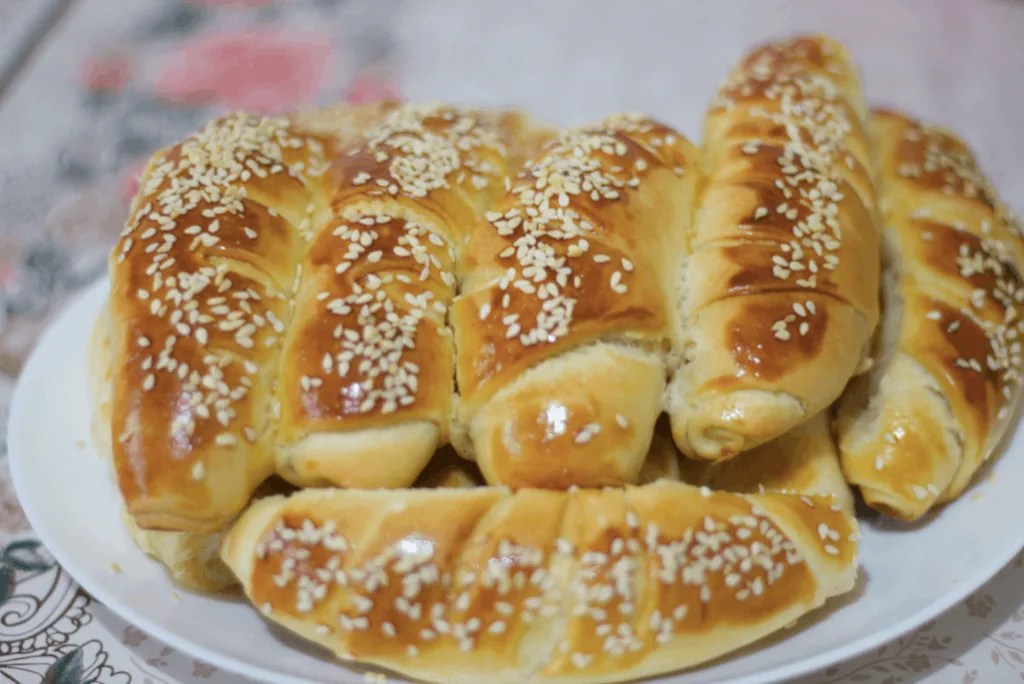
Kifli are crescent-shaped soft rolls that are either sweet or savory, which is why they are so versatile. Milk, butter, and occasionally yogurt are added to the dough to make it tender and fluffy. Sweet ones are usually stuffed with jam, chocolate, or sweet cheese, whereas savory ones can be stuffed with sirene or ham.
They are usually taken as breakfast or a snack with coffee or tea. Kifli is a typical dish in the Bulgarian bakeries and homes, and they are valued because they are simple and comforting. Their lightness and fillings make them appropriate at any time of the day.
Marudnik (Bulgarian Pancake)

Marudnik is a hearty, coarse Bulgarian pancake, which is more substantial than the usual thin crepes. It is prepared using eggs, flour, milk, and occasionally cheese or herbs, which make it soft inside and a little crisp on the edges. It may be made in either sweet or savory form, with sweet versions possibly containing sugar or jam, and savory ones usually having sirene or yogurt as a side.
Piroshki


Piroshki are fried/baked yeast-leavened buns shaped like a boat that can be filled with a variety of different fillings. The snack originates from Russia and Ukraine and is a famous street food snack and one of the most popular comfort foods in Eastern Europe. Throughout the years, the recipe spread across Eastern Europe, and in this post, you can find many different local varieties with different fillings that range from savory to sweet, but the most common choices include ground meat (mostly beef or pork), sauteed cabbage, ham and cheese, mushrooms, or stewed fruits.
Marudnik is typically cooked in a pan and served warm in slices like a cake. It is a plain, home-cooked meal that is representative of the countryside cuisine of Bulgaria: wholesome, utilitarian, and fulfilling.
Zelnik


Zelnik is a traditional Macedonian dish made of thin crust filled with cabbage (or sauerkraut) or spinach (that’s also popular in Bulgaria), which is an irreplaceable part of Macedonian cuisine. The closest equivalent to zelnik in English-speaking countries is the spinach filo pie or Bulgarian banitsa. In recent years, you can find more different variations that include fillings with cheese, eggs, minced meat, leeks, sorrel, or even rice. Zelnik is usually served hot and paired with a glass of yogurt, ayran, or kefir. Most often, it’s served for breakfast or as a light dinner
Revane (Eggy Bulgarian Sponge Cake)


Revane is a wet, syrup-dipped sponge cake that has a heavy Middle Eastern influence. It is prepared using eggs, flour, sugar, and occasionally semolina, baked until light, and then soaked in a sweet sugar syrup that is flavored with lemon or vanilla.
The outcome is a dense, soft cake that is light and decadent. Revane is usually served in squares and occasionally with coconut flakes or powdered sugar. It is a favorite party or celebration dessert, and it is light and syrupy at the same time, which makes it particularly gratifying.
Milinka

Milinka is a tender, tear-away pastry of small balls of dough, in a clustered or spiral form. Every dish is butter-covered and usually stuffed or topped with crumbled Sirene cheese, which makes it very savory. It is baked, then it turns golden on the top and fluffy and tender inside.
Milinka is usually served hot, usually as breakfast or as a side dish with yogurt. It is tear-and-share, which makes it ideal when it comes to family meals. The buttery pastry is addictive and comforting due to the combination of salty cheese and buttery dough.
Kozunak

Kozunak is the Bulgarian Easter bread, which is soft and fluffy in texture and slightly sweet in taste. It is prepared using enriched dough with eggs, sugar, milk, and butter and is braided and baked until golden. The interior is a unique, stringy texture that tears apart easily.
Kozunak can be filled with raisins, chocolate, or nuts, and is commonly flavored with vanilla, lemon zest, or rum. It has a great cultural importance in the Easter festivals, which is a sign of good luck and custom. It is served in thick slices and can be served with coffee or tea.
Gevrek


Gevrek is a ring-shaped bread that is covered with sesame seeds, and it looks like a bagel with a slightly crispier crust and a lighter interior. Depending on the preparation, it may be savory or slightly sweet. The dough is usually boiled or brushed and then baked, which contributes to the formation of the typical texture of the dough, crunchy on the outside, soft on the inside.
Gevrek is usually sold by street vendors and bakeries and is usually consumed on the spot. It goes well with cheese, yogurt, or even jam. It is a basic but delicious snack that is representative of the culture of Bulgarian street food.
Printsesa


Printsesa is a fast and common open-faced sandwich that is usually taken as a snack or light meal. It is made of a slice of bread with a layer of eggs, sirene cheese, and occasionally yogurt or minced meat, and baked until golden and a little crispy.
The top is fluffy and savory, but the bottom of the bread is soft. It is simple to cook and is usually prepared at home, particularly when you are in a hurry, but you want something that is satisfying. Printsesa is usually warm and may be tailored with other ingredients such as spices or vegetables, thus it is convenient and tasty.
Enjoying this post? Then you may also like our guide to Greek pastries, Serbian pastries, and Turkish snacks.
Parlenka

Parlenka is a soft, flat bread that is traditionally cooked on a hot surface and is usually used as a side dish in Bulgarian cuisine. It is prepared using a basic dough of flour, water, yeast, and salt, and cooked until slightly burnt and airy. It is usually brushed with butter and sprinkled with garlic or herbs to add additional flavor.
Parlenka is particularly common in restaurants, where it is eaten with grilled meat or dips such as lyutenitsa. It is warm and pillowy and thus ideal to tear and share. It is either plain or flavored, but it is a comforting and necessary addition to many Bulgarian meals.
Pogacha


Pogacha is a round bread that is usually made during special events, celebrations, and family meetings. It is made of enriched dough that makes it soft and fluffy, and occasionally it is topped with elaborate designs. Pogacha may be simple or may have fillings such as cheese or herbs.
It is culturally important in Bulgaria, commonly a sign of hospitality and togetherness- it is often broken and distributed among the guests instead of being cut. It is also used on occasions such as weddings, holidays, and welcoming ceremonies. It has a mild taste and is therefore versatile and can be used with savory or simple spreads like ajvar, pindzur, or kaymak.
Burek


Burek is a pastry that is very popular in the Balkans, including Bulgaria, and is characterized by its flaky layers and fillings. It is prepared using thin filo dough and is usually stuffed with minced meat, cheese, or spinach and baked or even fried till crispy and golden. The layers provide a pleasing contrast between the crunchy outside and the soft and tasty inside.
Burek is served as a hearty breakfast or a fast meal, and usually accompanied by yogurt or ayran. It is one of the most popular and filling Bulgarian pastries, and can be found in bakeries and street shops.
How did you like our guide to Bulgarian pastries? Did you ever try any of them? Feel free to share your thoughts and experiences in the comments below.
Like it? Pin it.
