
Romanian desserts provide a fulfilling and varied experience of tradition, history, and comfort. Having their roots in rustic and home-style desserts prepared with basic ingredients and bakery-style cakes inspired by French and Central European cuisine, Romanian desserts can be seen as a manifestation of the crossroads between the cultures.
Some are closely associated with holidays and rituals, others are associated with periods of scarcity, and ingenuity transformed plain pantry goods into favorite delicacies. The peculiarity of Romanian desserts is in their balance – they are not very sweet, are often stratified in flavors, and are always tied to tradition and nostalgia.
But first things first…
Tours to try Romanian sweets
If you’re trying to find some nice tours where you can taste Romanian desserts, here are a few nice suggestions…
Bucharest Sweet Delights History Walking Tour not only introduces you to some tasty Romanian sweets but also gives you a chance to learn a bit more about them.
Bucharest local food and history tour is a nice way to get introduced to Romanian cuisine and history, and try a few popular local sweets along the way.
Bucharest: Dining like a local is another great comprehensive local food tour.
If you’re a fan of street food tours, we strongly recommend this great tour in Bucharest.
Traditional Holiday & Ritual Desserts
We start this guide with a few traditional Romanian desserts that are difficult to make and usually reserved only for special occasions like Christmas, Easter, weddings, celebrations, etc.
Cozonac

Cozonac is a special pastry that is strongly associated with Romanian holidays, namely Christmas and Easter. It has its origins in the Eastern European and Balkan baking culture, and it represents celebration and family get-togethers. Dough is thick and airy with a hint of sweetness, normally stuffed with walnuts, cocoa, Turkish delight, or raisins. It is nearly ritualistic in its preparation, and frequently includes several steps of kneading and proofing. Cozonac is not only popular because of its taste but also because of its cultural meaning- no great Romanian holiday is complete without it on the table.
Pasca

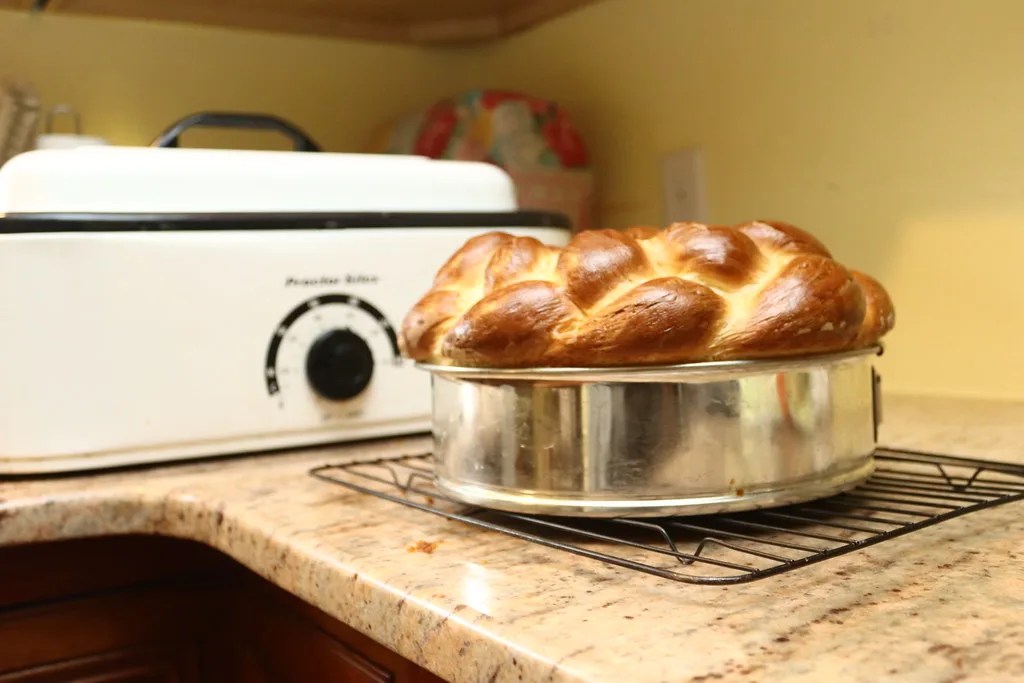
Pasca is a traditional Easter pastry that is made of a mixture of cheesecake and sweet bread in a single symbolic dish. It is prepared using a spongy, cozonac-like dough base stuffed with sweetened cheese, which is usually tinted with vanilla, lemon zest, and raisins. It has a strong religious background, symbolizing renewal and feast in the Orthodox Christian community. Pasca is rarely baked, and when it is baked, it is a special occasion. It balances textures perfectly (creamy filling and soft crust), and it’s closely associated with Romanian Easter traditions.
Mucenici Moldovenesti

Mucenici Moldoveneș are pastries, baked in the shape of figures of eight, made on March 9th, when it celebrates the Forty Martyrs of Sebaste. These delicacies are prepared using sweet dough, baked, and topped with honey and ground walnuts, and originate from the Moldavia region. Their form is an indication of infinity or eternity, which is related to their religious context. These, in contrast to their southern version, are dry and bread-like, yet very aromatic.
Mucenici Muntenesti

Mucenici Muntenești are made in southern Romania, and are entirely different in shape and preparation from the Moldavian version. They are made of little, pasta-like pieces that are boiled in a sweet, spiced stock flavored with cinnamon, sugar, and walnuts instead of baked dough. It turns out more like a dessert soup than a pastry. This food is indicative of a more primitive, coarse culinary tradition. It is known to be very comforting and warm, and has a strong symbolic meaning, and is commonly cooked in large amounts and served to family members and neighbors.
Colac Secuiesc – Kurtos Colac


This pastry, which is cylindrical in shape, originates in the Hungarian-speaking parts of Transylvania, and is also called Kürtőskalacsi. The dough is shaped into a spit, baked over an open fire, and covered with sugar that caramelizes into a crispy crust. Topping options such as cinnamon, nuts, or cocoa are also available. It has a strong connection to street food culture and festivals. It is known for its spectacular shape, crunchy outer layer, and soft inner layer, and thus is one of the most recognizable desserts in the area.
Enjoying this post? Then you may also like our guide to Romanian soups and our guide to Bulgarian food.
Classic Homemade Cakes & Layered Desserts
Next, we cover a few popular homemade Romanian cakes and layered desserts, starting with…
Amandina

Amandina is a legendary chocolate cake in Romania, with thick layers of syrup-laden cake and a strong taste of cocoa. It is made up of fluffy chocolate sponge steeped in rum syrup, stuffed with chocolate cream, and covered with a glossy fondant glaze. It was inspired by French methods of confectionery, but adapted locally, becoming a common pastry in Romanian pastry shops in the 20th century. It is commonly known due to its wet consistency and rich chocolate flavor, which is commonly regarded as a classic dessert in a conventional Romanian bakery.
Joffre Cake

The Joffre Cake is a rich, fancy chocolate cake whose origins are tied to French Marshal Joseph Joffre’s visit to Romania in the early 20th century. In contrast to light sponge cakes, it is a dense, almost truffle-like cake cooked with good-quality chocolate and butter. It is an indication of great French influence on Romanian pastry-making. Its known taste, simplicity, and luxurious texture are usually related to high-quality confectionery and festive events.
Albinita

Albinita, which translates to little bee, is a honey cake that is layered with semolina cream and fruit jam. The sheets made of honey give the cake a soft and tender texture that basically melts in your mouth. The origins of this dessert are traditional rural baking, in which honey was used as a key sweetener. It takes time to prepare, and it gets better with time.
Carpati Cake

Carpați Cake is a very impressive layered cake named after the Carpathian Mountains, which is depicted in its rugged and uneven look. It is usually made up of thin pastry layers, stuffed with creamy vanilla or chocolate, then arranged randomly to form more of a mountain-like formation. It is aesthetically distinct and texturally intricate and was inspired by the Eastern European layered cakes. It is well-known for its theatrical presentation and contrast between crunchy layers and creamy filling.
Arlechin

Arlechin is a Romanian sponge cake that is colored and decorated with layers of sponge, cream, fruit jelly, and frequently whipped cream or custard. It is named after the harlequin since it has a multi-layered, vibrant appearance. Also common in celebrations in the late 20 th century, it was popular because of its conspicuous nature; a mixture of several textures and flavors in a single dessert, and a more modern and more aesthetically pleasing alternative to more conventional cakes.
Pastries, Pies & Filled Dough Treats
This guide to Romanian desserts wouldn’t be complete without mentioning a few popular local pastries and filled dough desserts.
Placinta cu Mere – Apple Pie

Placinta cu Mere is a Romanian version of apple pie, though with a lighter, more country flavor than the Western versions. It is normally made up of thin layers of dough, stuffed with grated apples, cinnamon, and sugar, and baked until golden. This is a dessert with deep rural origins, with apples easily accessible and simple to store. It is known to be simple and comforting- it is not as heavy as traditional pies and yet has a wonderful scent and taste that is filling and even better when topped with powdered sugar.
Placinta cu Branza Dulce – Sweet Cheese Pie

Placenta cu Branza Dulce is a local favorite prepared using thin layers of dough with sweetened fresh cheese, eggs, and vanilla. Like other Eastern European cheese pies, it is a mirror of the local dairy culture in which fresh cheese was a major ingredient in daily meals. The texture is smooth and slightly creamy with a slight sweetness that renders it a dessert and a snack. It is particularly good in its moderation, not too sweet but saturated enough to taste decadent.
Prajitura cu Visine – Sour Cherry Cake

Pragjitura cu Visine is a traditional Romanian cake that emphasizes the strong, slightly sour taste of sour cherries. Usually prepared using a fluffy sponge base, it is served or filled with cherries, which form an ideal match between sweet and sour. The popularity of this dessert was influenced by the fact that cherry trees can be found everywhere in Romania. It is known to have a refreshing taste and bright appearance, commonly served in summer when cherries are in season.
Cornulete cu Nuca – Walnut Cookies
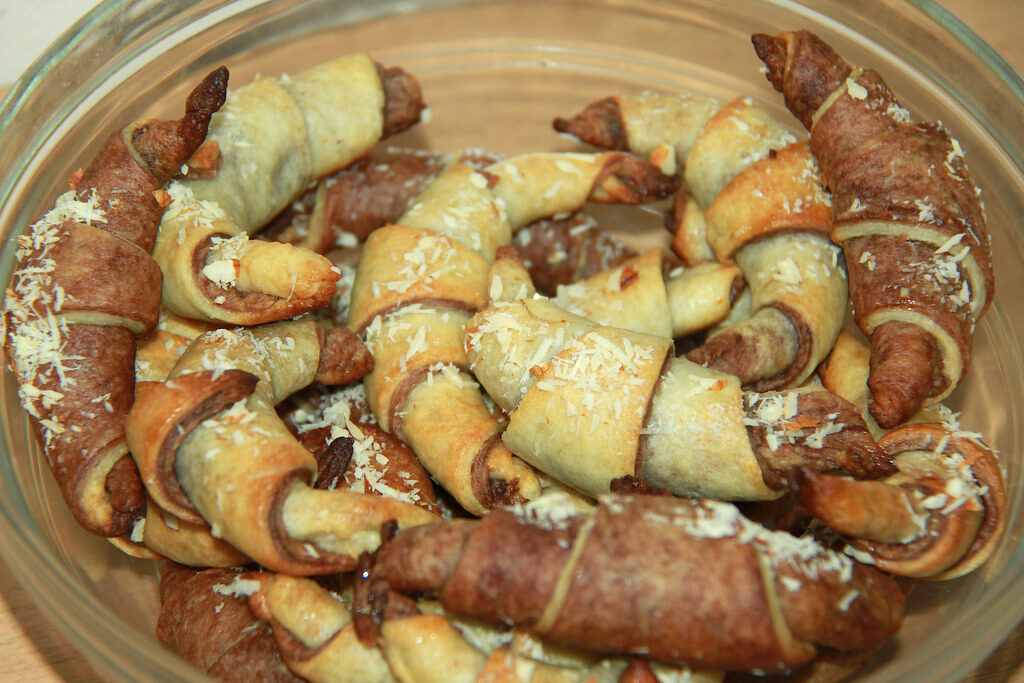
Cornulete cu Nuca are small, crescent-shaped cookies stuffed with a mixture of walnuts, sometimes spiced with sugar and sometimes with cocoa or rum essence. The cookies are closely connected with the baking traditions of Central and Eastern Europe, where walnuts are one of the main ingredients. It is soft and a bit crumbly, and the filling is very rich in flavour and sweetness. They are particularly common for holidays like Christmas, and are known to have a delicate shape and a nutty taste.
Cornulete cu Gem si Rahat – Jam and Turkish Delight Cookies

Cornulețe are stuffed with fruit jam or Turkish delight (rahat), a lighter, sweeter version of the walnut version. The rahat was influenced by Ottoman culinary traditions and showcases Ottoman influence on both Romania and the wider region. The cookies are rolled into small crescents and baked till lightly golden. They are well known because they are melt-in-your-mouth good and come in a wide range of fillings, making them an all-purpose favorite at parties, events, and even to satisfy your daily sweet tooth.
Poale’n Brau

Poale n Brau: This is a traditional pastry of Moldova, prepared using soft dough, with sweet cheese and sometimes raisins, before being rolled into an envelope shape. It is excellent, rural, and monastic in nature, made using traditional baking techniques. It is known for its rich, creamy filling, soft and slightly sweet dough, which makes it one of the highlights of Romanian pastries.
Fried & Street-Style Sweets
Next, this guide to Romanian desserts couldn’t be complete without a few fried snacks that you can often find being sold by street vendors across the country…
Papanasi

One of the most typical desserts in Romania, papanași are immediately identified by their peculiar form, a fried base of doughnut and a smaller ball of dough, topped with sour cream and fruit jam. They are based on traditional Romanian and Moldavian cuisine, and they represent a blend of peasant simplicity and decadent taste. They are prepared with fresh cheese and are slightly tangy in flavor, which is perfectly matched with sweet toppings. The papanași are crispy on the edges and soft on the inside, and are said to be a must-try meal for every visitor.
Gogosi – Romanian Doughnuts

Gogoș are deep-fried doughnuts, usually sprinkled with powdered sugar or stuffed with jam, chocolate, or cream. They are comparable to other European fried dough desserts, but have local variations. They are soft, fluffy, and slightly crispy on the outside and are usually available in fairs, bakeries, and home kitchens. They are known to be gourmet and universal, and they are one of the locals’ favorite Romanian desserts.
Clatite – Romanian Pancakes

Clatite are very thin crepe-like pancakes stuffed with various sweet fillings like jam, chocolate, or sweet cheese. They are a popular dessert in Romania, influenced by the French crêpes. The batter is light, which means that one can make pancakes that can be rolled or folded. They are known to be versatile and universal, and can be used at breakfast, dessert, or even as casual snacks.
Savarine

Savarine are sponge cakes soaked in syrup, in the shape of small rings, stuffed with whipped cream, and usually topped with jam or fruit. They have close relations with the French baba au rhum, with obvious Western European influence. They are very wet and airy and absorb a sweet syrup, which gives them their characteristic texture. They are known to be light even when wet, and are a staple of the pastry shops in Romania more generally, among those who do not want desserts that are so dense.
Creamy, Milk-Based & Comfort Desserts
Next, we cover a few popular milk-based desserts from Romania, starting with…
Gris cu Lapte – Semolina Pudding

Gris cu Lapte is a simple yet cozy dessert prepared from semolina cooked in milk and sweetened with sugar. Topped frequently with jam, cinnamon, or cocoa, it’s a popular sweet dish among Romanian families and particularly among children. It is a derivative of simple European porridge-type dishes, which have been transformed into a sweeter one. It is known due to its creamy texture and easy preparation, which provides a warm and nostalgic dessert that is light and satisfying.
Lapte de Pasare

Lapte de Pasăre, meaning “bird’s milk,” is a delicate dessert made of poached meringue floating on vanilla custard. It has origins in French cuisine (île flottante) and was adapted to Romanian cuisine, becoming a family favorite. Its texture is unique due to the contrast between the airy egg whites and creamy custard. It is known to be light and have a beautiful presentation, and it is commonly regarded as a more sophisticated, traditional dessert.
Budinca Pudding

In Romania, budinca is a broad term describing many types of baked or boiled desserts, which frequently include milk, eggs, and a thickening agent such as semolina, rice, or bread. Being influenced by other Western European cuisines, it can range from light and creamy to thick and rich. It is usually infused with vanilla, chocolate, or different kinds of fruits. It’s popular because it’s flexible and soothing, a basic home-cooked dessert, and a foundation for more extravagant forms.
Crema de Zahar Ars – Burnt Sugar Cream

Crema de Zahar Ars is the Romanian equivalent of crème caramel, prepared using eggs, milk, sugar, and vanilla, with a top of caramelized sugar. It became popular due to its simple ingredients and elegant result. It is baked in a water bath and acquires a smooth custard-like texture and a rich caramel flavor. It is famous for its smooth texture with a moderate level of sweetness, usually served chilled in elegant yet affordable settings.
Orez cu Lapte – Rice Pudding

Orez cu Lapte is the Romanian variant of rice pudding, a dessert which is common in most cultures, but has been modified with local flavors, such as vanilla, lemon zest, or cinnamon. Prepared by cooking rice gradually in milk, it acquires a creamy and luxurious texture. It has been a staple in Romanian households since it is affordable and easy to prepare. It is known to be flexible, whether warm or cold, bare or with jam, and has a universal appeal with a comforting flavor.
Simple & Nostalgic Everyday Sweets
Last but not least, we conclude this guide to Romanian desserts with a few other simple yet nostalgic local delicacies…
Salam de Biscuiti – Biscuit Salami

Salam de Biscuiți is a no-bake Romanian dessert, which is similar to a roll of salami, but all sweet. It is prepared using crushed biscuits, cocoa, butter, sugar, and is usually enriched with Turkish delight, nuts, or raisins, and was popular in communist times when food was scarce. It became a household staple due to its simplicity and the fact that you could make it without using an oven. It is known for its intense chocolatey flavor, thick texture, and nostalgic worth, as many Romanians relate it to childhood and hastily prepared snacks.
Fidea cu Lapte – Angel Hair Pasta with Milk

Fidea cu Lapte is a simple dessert consisting of boiled pasta in milk, sweetened with sugar and vanilla. It is an unusual way of doing things for a foreigner, but it is a sign of an ingenious culinary culture whereby basic food in the pantry is made into comfort food. It is of older European milk-based cuisine and was particularly prevalent during hard times.
Paste cu Pesmet si Zahar – Pasta with Breadcrumbs and Sugar

This dessert is a good illustration of how simple things can be made to be satisfactory. Pasta cooked is combined with toasted breadcrumbs, sugar, and occasionally cinnamon or walnuts. It is Austro-Hungarian and particularly prevalent in small families. It is simple, but it offers an unexpected mixture of textures, soft pasta, and crunchy crumbs. It is well-known for its retro, vintage feel and is a fast, comforting meal for numerous families.
Galuste cu Prune – Plum Dumplings


Galushte cu Prune are dumplings made of potatoes stuffed with whole plums, and then rolled in breadcrumbs and sugar. This sweet dish is of Central European origin and was deeply incorporated into the Romanian cuisine, where plums are always abundant. Soft dough, juicy fruit, and slightly crunchy coating make a balanced texture. It is known as a seasonal dish and a comfort food, usually cooked around plum harvest.
Ciocolata de Casa – Homemade Chocolate

Last but not least, we conclude this guide to Romanian desserts with a popular homemade sweet. A classic no-bake chocolate dessert, Ciocolată de Casă is prepared using cocoa, milk powder, butter, and sugar, sometimes with nuts or Turkish delight. It was popular in communist times when chocolate in stores was in short supply. Although it is simple, it has a good, full-flavored taste and a rather crumbly texture.
How did you like this guide to Romanian desserts? Did you ever try any of them? Do you know of a few others we didn’t mention but could have? Feel free to share your thoughts in the comments below.
Like it? Pin it.