
Turkish appetizers, known collectively as meze, are an essential part of the country’s culinary culture and the local meze scene is very diverse, featuring things from rich cheese spreads and smoky eggplant dips to refreshing salads and meaty bites. Each dish brings a different texture and flavor—yet all are meant to complement one another and awaken the palate and prepare you for the meal ahead. In this article, we’ll cover some of the most popular Turkish appetizers divided into a few different categories for easier navigation.
Pastries & Fried Bites
We start off this guide to Turkish appetizers with a few delicious pastries and fried bites.
Pide

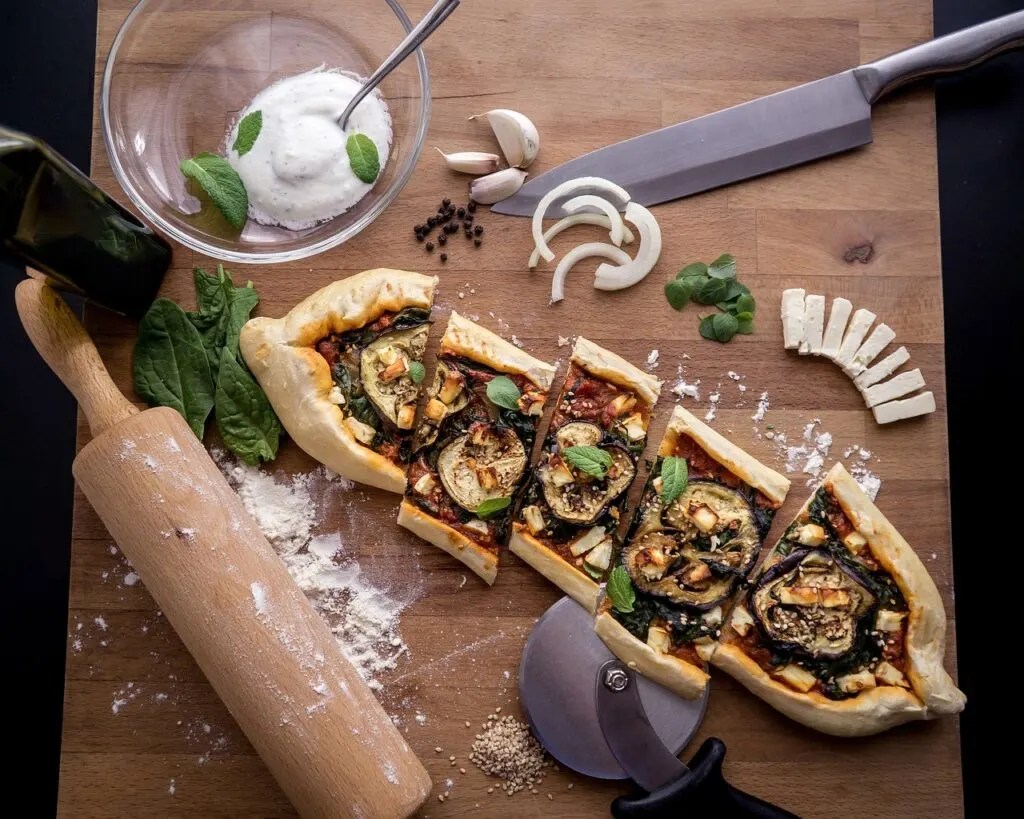
Pide is frequently referred to as the “Turkish pizza,” but the epithet does not convey much of the diversity and cultural importance of this beloved dish. This boat-shaped flatbread can be found with an endless array of fillings – cheese, spinach, sucuk (spicy sausage) or minced lamb. It can be eaten as a light lunch but it’s also frequently paired with other mezes as a part of a large meze plaatter.
Lavash


Lavash is a thin, soft flatbread that is an indispensable part of the dining culture of Turkey. Lavash that is traditionally made in stone ovens or tandoors swells up and gets its delicate, airy layers that when cooled become soft and pliable in texture. In meze spreads, lavash is the platform over which such dips like hummus, haydari, or muhammara are laid, and consequently, it is the one which is most commonly manually torn to pick up the food.
Authentically, the bread goes back to Central Asia and the Caucasus, and is the one of the oldest Turkic breads that has been brought to Anatolia by the migrations of Turkic peoples. Being light, cheap, and one of the oldest, lavash is the silent, yet very strong, and the most elemental part of not only Turkish cuisine but also Turkish gastronomy.
Simit


Also known as a Turkish bagel in the United States, simit is a popular Turkish pastry that looks a lot like a bagel but has a slightly different texture and is covered in sesame seeds. It’s one of the most popular street food snacks in Istanbul sold by street vendors in what they call simit trolleys or on trays that street vendors place on their heads. In addition to sesame seeds, the baked circular pastry is often garnished with sunflower seeds, fax, or poppy seeds.
Simit is very popular all across Turkey, the Middle Eastern, the Balkan countries, and parts of North Africa (in other words, the countries where the former Ottoman empire ruled in the past).
Börek


Börek is one of the most famous of all pastries in Turkey, it’s made with yufka – thin layers of dough and filled with cheese, spinach, potatoes, or minced meat. The different ways to make it (baked, fried or rolled into countless shapes—spirals, cigars, or layered trays) each give the pastry different texture and taste. The history of börek goes way back to the Ottomans, where it was an elite dish of the palace, but now it can be seen everywhere from streets and families’ homes to fancy restaurants.
The mere fact that börek tastes really good is not the main reason people really love it because after all, it is always connected with nostalgia: it is more frequently linked with holidays, parties, and mornings spent with family.
Sigara Boregi


The name of Sigara Boregi is based on its shape; it’s basically a burek variety with a cigarette-like shape, thin and cylindrical. They are prepared using phyllo dough (yufka), stuffed with beyaz peynir (white cheese) and parsley, and occasionally mashed potato or minced meat. These are rolled up, oiled, and fried till golden and crisp. Sigara Boregi is a common meze (appetizer) and tea-time snack, which is served during family get-togethers, weddings, or Sunday breakfasts. Although the most typical is the cheese version, spicy and meaty are becoming popular in the Turkish cafes.
Pacanga Böreği


Pacanga Böreği is a richer, meatier cousin of the more common Sigara Böreği. Instead of a slim cigar shape, this börek variety is rolled or folded into plump parcels and stuffed with pastırma (Turkish cured beef), cheese, peppers, and sometimes tomatoes before being deep-fried to golden perfection. The pastırma gives it an umami-rich, garlicky depth that pairs beautifully with the gooey, melted cheese inside and after you have a bite of it, you’ll understand why it’s one of the most popular mezes in meyhaneler (traditional taverns).
Lahmacun


Often called “Turkish pizza,” Lahmacun is a thin, round flatbread with a minced meat, vegetable, and spice mixture on top, which is then baked until crispy and topped with a combination of ground lamb or beef with the addition of onions, tomatoes, parsley, and spices like paprika and cumin. Its a popular street food all over Turkey and is therefore, a local bakeries’ favorite (and their main golden goose).
Meat-Based Appetizers
Next, we continue with a few meat-based snack, usually in bite-sized pieces and served before the main course, starting with…
İçli Köfte


İçli Köfte is a dish made of a bulgur shell of a crispy texture that holds a a mixture of meat, onion, walnuts and spices, with golden and crunchy outside with soft and flavorful inside. This dish is the lifeblood of the southeast Turkey, where it is frequently made for the celebrations, weddings, and relatives. It’s served hot with a slice of lemon or a spoonful of yoghurt, making the perfect bite-sized snack.
Mücver


Mücver is Turkey’s answer to the zucchini fritter, a rustic yet elegant dish made of simple ingredients, featuring zucchini eggs, flour, dill, and parsley. The dish is fried until crispy on the outside yet tender and moist on the inside. Mücver is typically served warm with a dollop of garlicky yogurt sauce on the side but what makes it so special is its versatility: it can be eaten as a light appetizer, a side dish, or even the main course of a vegetarian meal.


Arnavut Ciğeri, or “Albanian liver,” is a tasty starter that thoroughly presents the Turkish passion for offal meals. The tiny cubes of lamb or veal liver are flavorized, dusted with flour, and then fried in a way that the outer layer is crunchy and inside is tender. It is served with raw onions, parsley, and sumac.
Çöp Şiş


Çöp Şiş, literally meaning “scrap skewers,” is a delicious snack that originates from the Aegean region which consists of small trimmings of lamb left over from butchering. The lamb is marinated with yogurt, olive oil, garlic, oregano, and sometimes grated onion— and then grilled on thin skewers that gives it a juicy, smoky flavor.
Dips & Spreads
Next, we’ll cover a few dips and spreads and there are a lot- the meze platter is never complete without at least a few different dips and spreads.
Hummus


Though hummus has roots in the broader Levant, it has become a part of Turkish cuisine over the years. If you’re not familiar with it, it’s made by blending chickpeas, tahini, garlic, and lemon juice into a creamy nutritious and delicious paste. In Turkey, it is often served slightly warmed and topped with melted butter infused with paprika, pine nuts, or parsley, eaten with a fresh bread like pide or lavash and can be eaten as a simple appetizer, a side dish, a breakfast, or even a main course for those following plant-based diets.
Haydari


Haydari is a thick and sour yogurt-based dip made from strained yogurt, garlic, dill, and olive oil. It’s less liquid than cacık and has a concentrated, herbaceous flavor which matches very well with rich and spicy foods. Generally decorated with crushed mint or Aleppo pepper, haydari provides a fresh, cooling sensation to meats like kebabs or içli köfte. Without a doubt, haydari is a must-have for meze spreads, where it plays the roles of both a palate cleanser and a flavor enhancer.
Ezme


Ezme is a fiery, tangy spread that literally awakens the appetite with its loud flavors, made of finely chopped ripe tomatoes, onions, peppers, garlic, and parsley, seasoned with pomegranate molasses, lemon juice, and chili flakes- basically the perfect fusion of sweet, sour, and spicy tones. Ezme is not mashed completely but rather left in small pieces, allowing each ingredient’s taste to be experienced and it goes perfectly with kebabs or other grilled meat snacks and can also be used not only as an appetizer but as a side dish as well.
Cacık


Cacık is the ultimate refreshing Turkish dip, a cousin of the Greek tzatziki but with its own identity. Like its Greek cousin, it’s also made of strained yogurt , grated cucumber, garlic, olive oil, and fresh herbs like mint or dill, but it’s thinner with almost soup-like consistency. It’s a real hit in the summer and the perfect refreshment on a hot summer day but also a palate cleanser and a great side dish for grilled meats, pilafs, or spicy dishes.
Muhammara


Muhammara is a vibrant red pepper and walnut dip which originates from southeastern Turkey made of roasted red peppers, blended with walnuts, breadcrumbs, pomegranate molasses, garlic, and olive oil. The dip has smoky, nutty, sweet, and tangy all at once and in some regions, people add chili flakes for a gentle spicy hit. Muhammara is often served with warm bread like lavash or pita, inviting diners to scoop up its creamy richness.
Fava (Bakla Ezmesi)


Fava, or broad bean purée, is a smooth, velvety dip made of humble ingredients—dried fava beans, olive oil, lemon, and dill. Cooked beans are puréed until silky, then chilled to firm up into a mousse-like texture and topped with fresh dill and a drizzle of olive oil. Particularly popular in the Aegean and Marmara regions, fava is a staple in fish restaurants, where its subtle earthiness complements grilled seafood.
Labneh (Süzme Yoğurt Spread)


Labneh (or süzme yoğurt) is an appetizer that can best be described as halfway between a dip and cheese. Before serving, it’s usually drizzled with olive oil and sprinkled with herbs like mint, thyme, or za’atar. It’s a traditional breakfast food but at the same time it’s also a part of the meze spread in Turkey, perfectly complimenting the heat and texture of spicy dips such as acılı ezme or robust bites like içli köfte. It’s nutritious, light, and can be used in many different ways.
Acılı Ezme

Acılı Ezme is the one of the most fiery and loved dips of Turkey, some even call it the “salsa” of Turkish cuisine. It’s made by finely chopping tomatoes, onions, peppers, parsley, and garlic, and then seasoning it with pomegranate molasses, olive oil, lemon juice, and chili flakes. The mixture has a spicy, sour, and slightly herbal flavor.
Köpoğlu


Köpoğlu is a meze from the Thrace region with a rustic character, made of fried eggplant and green peppers, on top with garlicky yogurt and tomato sauce. The eggplant and peppers are fried until they become golden, then they are layered with creamy strained yogurt, and at the end, they are drenched with a bright tomato-garlic sauce.
Stuffed Specialties & Salads
Lastly, we’ll round up this selection of Turkish appetizers with a few stuffed specialties and salads.
Dolma / Sarma


To explain in the simplest way possible, dolma is a rolled grape leave most commonly stuffed with rice, minced meat, and a myriad of warm spices and herbs (most often, cumin, allspice, parsley, dill, and mint). Dolma is very popular in Turkey, Tatarstan, the Balkans (especially Greece, Macedonia, Albania, and Bulgaria), practically all Arab countries, and Central Asia (especially in Uzbekistan and Turkmenistan). Sarma is basically the same thing only using sauerkraut leaves for wrapping instead of grapevine ones.
Midye Dolma


Midye Dolma is one of the most loved street foods of Turkey. It’s a dish made of mussels stuffed with rice cooked with onions, cinnamon, pine nuts, currants, and allspic. Before serving, it’s topped with lemon juice that’s squeezed onto the filling. This dish can be found in Istanbul and most coastal cities, where street vendors carry around large trays of mussels and invite people who are walking by to have a taste but today, it has become so popular, you can even find it in many fancy restaurants.
Patlıcan Salatası

Patlıcan Salatası is an appetizer made of eggplants, grated with charcoal or grilled over a fire until the skins and the inside is soft and mushy. After peeling, the eggplant is mashed and topped with olive oil, garlic, lemon juice, and yogurt, giving it a soft, velvety texture and a profound smoky flavor.
Kısır

Kısır is a salad made from fine bulgur wheat softened with hot water, mixed with tomato paste, olive oil, pomegranate molasses, lemon juice, parsley, mint, green onions, and sometimes cucumbers or lettuce. The result is a vibrant, tangy, and slightly sweet salad that’s both light and filling, ideal for summer and pairing wonderfully with other mezes or grilled dishes.
Deniz Börülcesi

Deniz Börülcesi is a refreshing coastal meze popular along the Aegean and Mediterranean shores of Turkey made of this wild green known as samphire or sea beans that grows naturally by the sea shore, and has a typical briny, mineral-rich taste. To prepare it it, the stalks are briefly boiled, then cooled and dressed with olive oil, garlic, and lemon juice and goes perfectly with grilled fish or seafood.
Havuç Salatası

Havuç Salatası is a light and refreshing meze whose main ingredients are grated carrots that are gently sautéed in olive oil until they are tender, mixed with creamy yogurt, garlic, and a little bit of salt. The yogurt serves as a cooling base of the dish, and the carrots add their mild sweetness to it, giving the appetizer a unique sweet-sour flavor. Before serving, the salad is topped with a garnish of dill and a drizzle of olive oil.
Şakşuka

Şakşuka is one of Turkey’s most colorful and versatile vegetable mezes, made of fried eggplant, zucchini, and peppers, cooked in a rich tomato and garlic sauce, served cold or at room temperature. The beauty of şakşuka lies in its adaptability—you can add potatoes or carrots, or even chili but all variations have one thing in common- the smoky, caramelized flavors that soak up the sweet-sour tomato sauce.
Çiğ Köfte


Last but not least, we close this list of the best Turkish appetizers with Çiğ Köfte, an appetizer that has been turned from carnivorous to vegetarian; it used to use minced meat as the main ingredient but the modern version only uses fine bulgur, tomato paste, pepper paste, cumin, isot (Urfa chili flakes), and pomegranate molasses. The final result is a tasty and slightly chewy paste, molded into small oval patties, and usually eaten wrapped in lettuce leaves, and topped lemon and fresh herbs.
How did you like this list of the best Turkish appetizers? Did you ever try some of these? Feel free to share your thoughts in the comments below.
Like it? Pin it.

